


{{product.productLabel}} {{product.model}}
{{#if product.featureValues}}{{product.productPrice.formattedPrice}} {{#if product.productPrice.priceType === "PRICE_RANGE" }} - {{product.productPrice.formattedPriceMax}} {{/if}}
{{#each product.specData:i}}
{{name}}: {{value}}
{{#i!=(product.specData.length-1)}}
{{/end}}
{{/each}}
{{{product.idpText}}}
{{product.productLabel}} {{product.model}}
{{#if product.featureValues}}{{product.productPrice.formattedPrice}} {{#if product.productPrice.priceType === "PRICE_RANGE" }} - {{product.productPrice.formattedPriceMax}} {{/if}}
{{#each product.specData:i}}
{{name}}: {{value}}
{{#i!=(product.specData.length-1)}}
{{/end}}
{{/each}}
{{{product.idpText}}}


Easily implement laboratory-based FT-NIR performance in a ready-for-plant package using the Thermo Scientific™ Antaris™ II FT-NIR Analyzer. With industry-leading method transfer performance, the Antaris II FT-NIR Analyzer provides robust and reliable ...
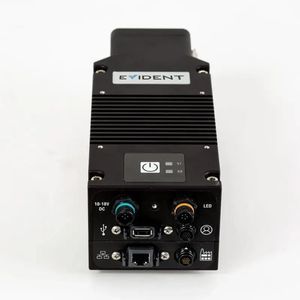

Vanta iX In-Line XRF Analyzer for Automated Material Analysis Keep Your Process Up to Speed The Evident Vanta iX in-line X-ray fluorescence (XRF) analyzer gives you confidence in your products by automating material analysis and alloy identification on ...


... A single device to measure greenhouse gases and air pollutants. MIRO’s MGA10-GP analyzers utilize mid-infrared laser absorption spectroscopy with Quantum Cascade Lasers to directly measure the concentrations of various gases. Your advantages: • 10 ...

... A single device to measure all the critical greenhouse gases. MIRO’s MGA5-GHG analyzers utilize mid-infrared laser absorption spectroscopy with Quantum Cascade Lasers to directly measure the concentrations of various gases. Your advantages: • 5 gases ...

... A precise device to measure the critical greenhouse gases. MIRO’s MGA3-GHG analyzers utilize mid-infrared laser absorption spectroscopy with Quantum Cascade Lasers to directly measure the concentrations of various gases. Your advantages: • 3 gases ...
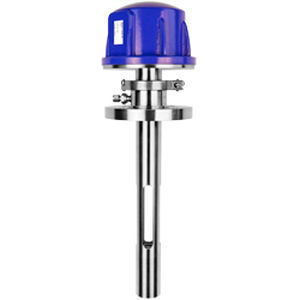

... The probe adaption for the GPro 500 tunable diode laser (TDL) gas analyzer converts analyzer complexity into an easy-to-install probe for accurate, in situ gas analysis. Measure Gas In Situ The probe-type adaption makes measuring gas in situ, easy. ...

... Online Measurement of Chloride & Sulfate. The 3000CS is a reliable, online analyzer for the direct measurement of chloride and sulfate in pure water and power plant cycle chemistry. This instrument detects these highly corrosive ions to prevent damage ...

... Innovative Sub-ppb Silica Monitoring. The 2850Si 1/ENC Silica Analyzer offers fast, reliable and effective silica monitoring for power plant water chemistry. Maximize uptime and achieve superior performance in this compact analyzer with intelligent diagnostics. Save ...


... Providing complete confidence in water treatment The Aztec 600 aluminium analyzer provides reliable and accurate measurement of residual aluminium to improve drinking water quality and optimise chemical usage. The Aztec 600 Aluminium is an on-line ...
ABB Measurement & Analytics
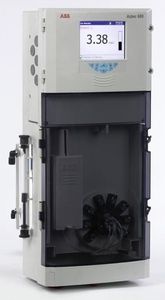
... Providing complete confidence in water treatment The Aztec 600 colorimetric iron analyzer provides reliable and accurate measurement of iron concentrations to improve drinking water quality and optimize chemical usage. Overview The Aztec 600 colorimetric ...
ABB Measurement & Analytics

... The Aztec 600 low range manganese analyzer provides accurate measurement of manganese levels in final water to optimize chemical dosing control and improve drinking water quality. The Aztec 600 low range manganese analyzer provides a very low limit of ...
ABB Measurement & Analytics
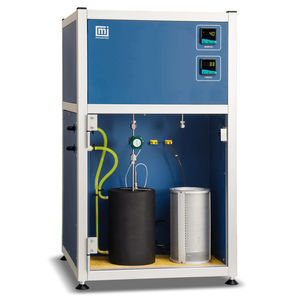

... The Micromeritics HPVA II (High-Pressure Volumetric Analyzer) uses the static volumetric method to obtain high-pressure adsorption and desorption isotherms utilizing gases such as hydrogen, methane, and carbon dioxide. Analyze a variety of materials, ...
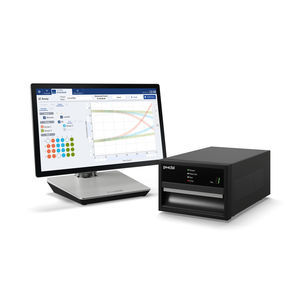

... Revolutionizing Cell Metabolism Analysis Continuous, sampling-free measurement of glucose and lactate in culture medium. Visualize real-time changes in cell metabolism. Cells are constantly growing and differentiating, and these processes are known ...
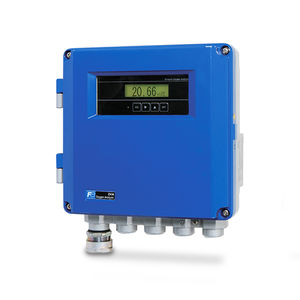

... ZIRCONIA OXYGEN CONTROLLER - ZKM: OPTIMIZED COMBUSTION MONITORING, GUARANTEED INDUSTRIAL RELIABILITY The zirconia oxygen controller - ZKM from Fuji Electric, together with the ZFK8 zirconia oxygen probe, performs in-situ measurement of oxygen concentration ...


... How to use multipoint NIR spectroscopy for your production processes GOALS By analyzing 100 % of your production, you can significantly reduce the risks and check on any drift affecting your product’s critical properties. SAM-Spec is essential for ...
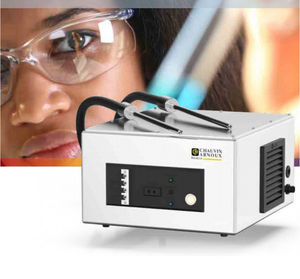
... How can you measure sometimes diverse high added-value molecules of interest, compounds and concentrations? OBJECTIVES Proteins, which are highly reactive molecules, are present in very small quantities, so they require a spectroscopy method suitable ...


... The 2060 IC Process Analyzer enables customized online ion chromatography monitoring of industrial processes with multiple parameters and streams. Based on the 2060 online analysis platform, the 2060 IC Process Analyzer is a complete and flexible system ...

The 2060 Raman Analyzer is a non-destructive inline process analyzer that implements Raman spectroscopy to deliver accurate and real-time process monitoring. Thanks to its self-monitoring capabilities, high-throughput spectrometer, and long-lasting laser ...

The ADI 2045TI Ex proof Process Analyzer is used in hazardous environments where explosion proof protection is a critical safety requirement. The analyzer fulfills EU Directives 94/9/EC (ATEX95) and is certified for Zone-1 and Zone-2 areas. The analyzer ...


Liquiline System CA80COD offers constant online measurement of the chemical oxygen demand (COD). It supports you in monitoring the cleaning capacity of wastewater treatment plants and enables load-based billing for industrial dischargers. Automatic calibration ...
Endress+Hauser AG
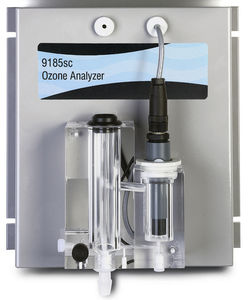

The 9185 sc Ozone sensor is an online, single-channel industrial sensor that measures Ozone in drinking water treatment plants, distribution networks, and other applications that require monitoring of ozone at the ppb and ppm levels. This instrument uses ...
HACH LANGE


... Complete pH system: featuring P53 controller and PEEK Body, wide-range sensor * Model P53 pH and ORP Analyzer is a full-featured, easy-to-use instrument. The large backlit LCD graphic display shows the measured pH, process temperature, both analog ...
Hach
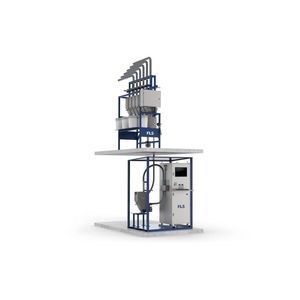

... Overview
The PERI™ online slurry analysis system provides fast, configurable elemental analysis for mineral processing plants. Using solid-state energy dispersive X-ray fluorescence (EDXRF) with a high-rate silicon drift detector, the system ...


... Unmatched analytical performance, reliability, and ease of use Manufacturers need simpler and more efficient analytical testing solutions for quality control and process monitoring. Whether it's pharmaceutical or semiconductor production, industrial ...


... Utilizing proprietary technologies of Tunable Diode Laser Absorption Spectroscopy (TDLAS), FPI delivers the LGA system to satisfy in-situ mesurements with high accuracy, fast response, strong reliability and virtually maintenance free. FPI LGA system ...
Focused Photonics Inc.


There has been growing concern regarding particulate matter (PM) pollution and its affects on health. For effective preventative measures, source appointment of PM is extremely important. Therefore, indication of PM elemental concentration is also necessary ...


... The LaserCEM® is a turnkey multi-gas emissions monitor for environmental compliance, using two patented technologies: OFCEAS® (Optical Feedback Cavity Enhanced Absorption Spectroscopy) and LPS® (Low Pressure Sampling). QAL 1 certified by MCERTs and ...
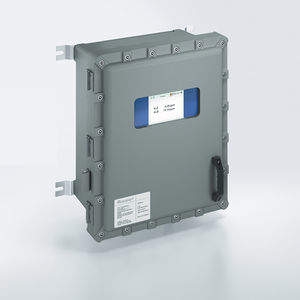
Using trace gas analysis for purity control in carbon capture and storage (CCS) ensures high CO2 quality, preventing pipeline corrosion and enhancing storage integrity. ProCeas detects impurities precisely, optimizing capture efficiency and reducing maintenance ...
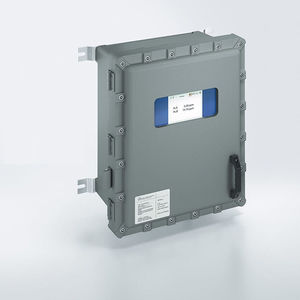
... Is a complete pre-calibrated multicomponent (H2S, CO, CO2, CH4, H2O, O2, NH3, H2O, HCHO, etc.) laser infrared spectrometer for measurements of impurities in hydrogen. The ProCeas® uses the patented OFCEAS technology, based on extractive absorption ...


... Gasboard-3000E is an analyzer for control of exhaust gases from gasoline, petrol, alcohol or LPG engines. It is developed based on Micro-flow NDIR technology for the measuring CO, CO2, O2 and NO exhaust gases. Features • Simultaneous measuring CO, ...
Cubic Sensor and Instrument Co.,Ltd

... NDIR exhaust gas gas bench Introduction: Gasboard-2000 is a NDIR gas bench for measuring exhaust gases from gasoline, petrol, alcohol or LPG engines. It is designed based on dispersive infrared (NDIR) principle for measuring CO, CO2, HC gases. It is ...
Cubic Sensor and Instrument Co.,Ltd
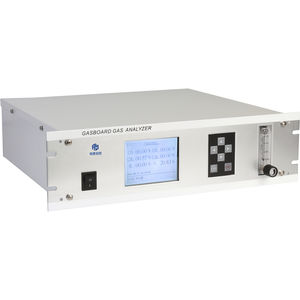
... PCT approved Gasboard-3100 is a stationary syngas analyzer based on NDIR & TCD technologies, NDIR ,TCD and electrochemical technology, it can be used for long term measurement of CO, CO2, CH4, H2 , O2 , CnHm, C2H2 , C2H4 or any of their combination and ...
Cubic Sensor and Instrument Co.,Ltd


... Introduction Gasboard-5020 emission gas analyzer is designed for measuring the emissions of all gasoline, LPG or CNG vehicles, it is developed based on the dual beam non-dispersion infrared (NDIR) principle to measure CO, CO2, HC, and electrochemical ...
Cubic Instruments (Wuhan) Ltd.
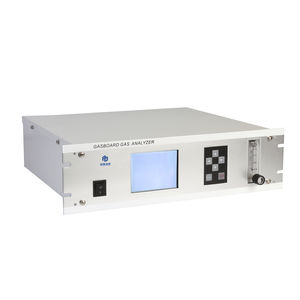
... Introduction It is fixed type model can continuous monitor concentration of SO2, CO2, O2 , NO and CO components in the flue gases for longtime. It is based on the micro-flow infrared method for SO2 ,NO ,CO ,CO2.This model is fixed type can sample gas ...
Cubic Instruments (Wuhan) Ltd.

... Description Based on long-life ECD technology and NIDR gas analysis technology, equipped with integrated, automated sampling and pre-processing unit and control unit, Gasboard-9082 can simultaneously measure the gas concentration of NO, SO2, O2, CO and ...
Cubic Instruments (Wuhan) Ltd.


... Eco-designed, ultra-compact, smart & connected instrument, the MIR 9000e is your next tool to measure combustion exhaust gas from boiler, or gas from different industrial furnaces and process applications. It offers superior metrological performances ...
ENVEA
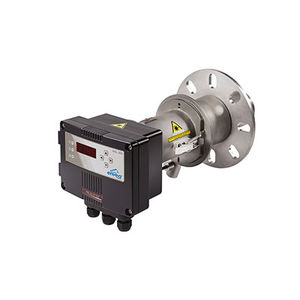
... TUV QAL1 and MCERTS Approved, Stand alone or networked system option Particulate CEM providing high quality emission measurement for dust concentrations from industrial processes Having a 0–7.5 mg/m³ certification range, the QAL 360 sensor can be used ...
ENVEA

... IN-SITU CLOSE-COUPLED MULTI-GAS ANALYZER A complete “all in one compact” system, for multi-gas measurements, based on the field-proven MIR 9000 analyzer and on-board SEC sampling system Fast & simultaneous measurement of up to 10 gases among: HCl, ...
ENVEA
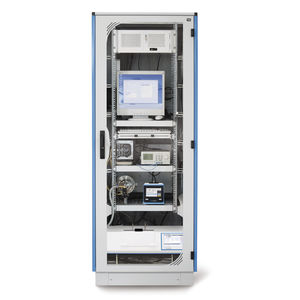

... The SCHMIDT + HAENSCH automatic Purity Analyzer is the first system worldwide capable of on-line measurements of factory juices, e.g. sugar juices. Samples are automatically taken from various selection points during processing, e.g. pipes or pans, and ...
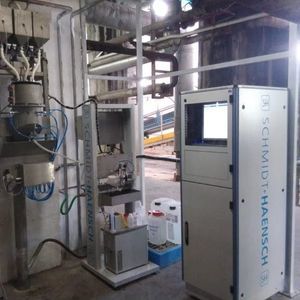
A fast and accurate analysis of the liming process is an important step in juice purification in a sugar factory. The on-line process analysis enables continuous process monitoring of the beet juice, enabling immediate process regulation. The automated ...
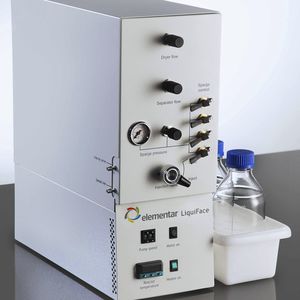

... High performance carbon isotope analysis of LC separated compounds The LiquiFace is the ideal solution for research applications requiring high-performance carbon isotope analysis of dissolved organic compounds. LiquiFace offers significant benefits ...


... True TOC Measurements Across Many Industrial Applications Our LAR™ QuickTOCultra™ online TOC water analyzer is one of the most reliable TOC measurement systems for the roughest wastewater applications on the market today. Due to an unrivaled injection ...
Process Insights

... EASILY MONITOR DE-ICING AGENTS & RUN-WAY RUNOFF Our LAR™ QuickTOCairport™ TOC COD water analyzer is the ultimate online measuring system for the determination of Total Organic Carbon (TOC) and Chemical Oxygen Demand (COD) for required airport applications. ...
Process Insights

... Our LAR™ QuickTOCultra™ online TOC water analyzer is one of the most reliable TOC measurement systems for the roughest wastewater applications on the market today. Due to an unrivaled injection and oxidation technique, the QuickTOCultra online TOC water ...
Process Insights
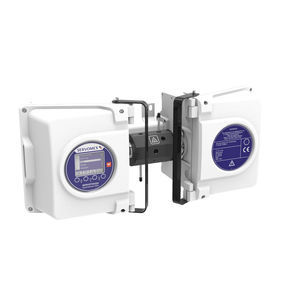

The SERVOTOUGH SpectraExact 2500F brings a new level of precision for liquid water analysis. Its rugged, reliable, and user-friendly design requires minimal maintenance. This iconic, industry-leading photometric analyzer from Servomex is capable of measuring ...
the best suppliers