


{{product.productLabel}} {{product.model}}
{{#if product.featureValues}}{{product.productPrice.formattedPrice}} {{#if product.productPrice.priceType === "PRICE_RANGE" }} - {{product.productPrice.formattedPriceMax}} {{/if}}
{{#each product.specData:i}}
{{name}}: {{value}}
{{#i!=(product.specData.length-1)}}
{{/end}}
{{/each}}
{{{product.idpText}}}
{{product.productLabel}} {{product.model}}
{{#if product.featureValues}}{{product.productPrice.formattedPrice}} {{#if product.productPrice.priceType === "PRICE_RANGE" }} - {{product.productPrice.formattedPriceMax}} {{/if}}
{{#each product.specData:i}}
{{name}}: {{value}}
{{#i!=(product.specData.length-1)}}
{{/end}}
{{/each}}
{{{product.idpText}}}


Length: 65 mm
Width: 8 mm
Measuring range: 2 mm
Inductive standard sensor Dimension Ø 8 x 65 mm Style Housing M8x1 Installation for flush mounting Range 2 mm Switching output PNP normally open (NO) Switching frequency 600 Hz Housing material Die-cast zinc, ...
Balluff GmbH

Measuring range: 4 mm
Process temperature: -25 °C - 70 °C
Dimension Ø 12 x 65 mm Style M12x1 Installation for flush mounting Switching output PNP normally open (NO) Switching frequency 2500 Hz Housing material Brass, Nickel-free coated Material sensing surface PBT Connection Connector, ...
Balluff GmbH

Measuring range: 2 mm
Process temperature: -40 °C - 85 °C
Dimension Ø 8 x 45 mm Style M8x1 Installation for flush mounting Switching output PNP normally open (NO) Switching frequency 5000 Hz Housing material Stainless steel Material sensing surface PBT Connection Connector, ...
Balluff GmbH
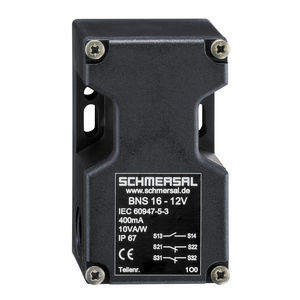

Measuring range: 8 mm - 18 mm
Schmersal's 52 mm x 90 mm x 32 mm BNS 16 safety sensors are enclosed by thermoplastic material and free from mechanical wear making them rugged but hygienic. They have the capability of concealed mounting and are resistant ...
SCHMERSAL
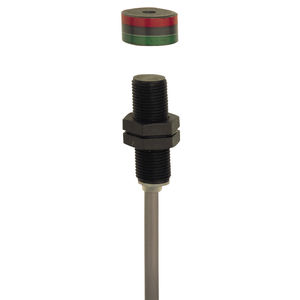
Measuring range: 20, 22, 32, 10 mm
The Schmersal BNS 120 high performance safety sensor is enclosed in a durable thermoplastic housing that is resistant contamination making it suitable for food processing industry. The sensor also ...
SCHMERSAL
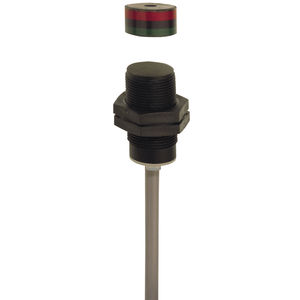
Measuring range: 10, 20, 22, 32 mm
The Schmersal BNS 180 safety sensor is enclosed in a highly durable thermoplastic housing that is resistant contamination making it suitable for food processing industry. The sensor also features a ...
SCHMERSAL
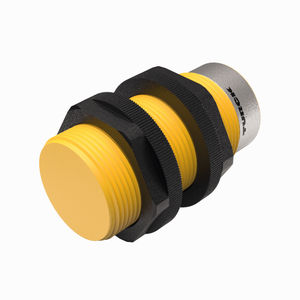

Length: 60 mm
Measuring range: 15 mm
Process temperature: -10 °C - 60 °C
With Potentiometer M30 × 1.5 threaded barrel Plastic, PA12‐GF30 Fine adjustment via potentiometer DC 4-wire, 10…30 VDC Complementary contact, PNP output M12 × 1 connector Country ...
TURCK

Measuring range: 4.5 mm
Process temperature: -10 °C - 60 °C
With Potentiometer Threaded barrel, M12 × 1 Plastic, PA12‐GF30 Fine adjustment via potentiometer DC 3-wire, 10…30 VDC NO contact, PNP output Cable connection Country of origin ...
TURCK
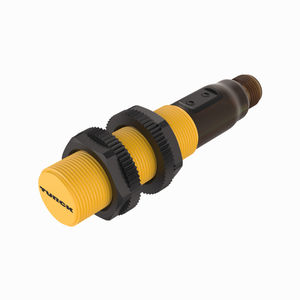
Measuring range: 7.5 mm
Process temperature: -25 °C - 70 °C
M18 × 1 threaded barrel Plastic, PA12‐GF30 Teach-in and configuration via buttons on the device, pin 5 and IO-Link Country of origin - DE Weight - 38 g Technical Data Design - Threaded barrel Construction ...
TURCK


Length: 22 mm
Width: 3 mm
Measuring range: 0.8 cm
Inductive miniature sensors IFRM 03/04/05 When space for sensors is limited – Compact sensor sizes allow installation even in limited spaces. Baumer has ranked among the market leaders ...
Baumer Group


Safety slave Contactless safety sensor (magnetic technology) Low coded according to ISO 14119 (type 4) Switching status indicator AS-i status display Suitable for concealed installation Suitable ...
BERNSTEIN AG

Safety slave Contactless safety sensor (magnetic technology) Low coded according to ISO 14119 (type 4) Switching status indicator AS-i status display Suitable for concealed installation Suitable ...
BERNSTEIN AG

Measuring range: 0.6 mm - 1.5 mm
These BERNSTEIN microsensors with fully Integrated electronics are available in sizes of 3 mm, 4 mm, 6,5 mm, M4 and M5. They provide switching frequencies up to 3000 Hz and can operate at temperatures from -25 °C to +70 °C. They are ...
BERNSTEIN AG


... robustness of sensors. These rugged and durable "Metal Face“ sensors are enclosed in stainless steel making them the best selection for these tough applications. Applications such as machine tools or ...
Pepperl+Fuchs SE

Measuring range: 2 mm - 40 mm
Inductive analog output sensors are used to detect metal objects within specific operating ranges. This object distance is then translated into an analog output signal proportional to distance, making these sensors ...
Pepperl+Fuchs SE

... programmable logic controller. Using our AS-interface proximity sensors the user can network up to 31 (specification 2.0) or 62 (specification 2.1) proximity switches ...
Pepperl+Fuchs SE


Measuring range: 0 mm - 2 mm
Process temperature: -25 °C - 120 °C
The DJ3-G Series of Proximity Sensor, manufactured Nidec-SHIMPO, is specifically designed for the detection of metal in front of its flush-mount sensing surface. It is mainly used to metal objects adjacent ...

Measuring range: 0 mm - 2 mm
The BI2-S12 Model is a 3-wire inductive proximity sensor developed by Nidec-SHIMPO. It is protected against overload and short circuit due to its protection rating of IP 67. This unit comes with LED output ...


Measuring range: 1.5 mm - 40 mm
Inductive sensors - Constant sensing range on all metals •Resistant to oils and coolants •Correction factor 1: Constant sensing range on all metals •Very high switching frequency •Permanently legible laser type ...
ifm electronic

Measuring range: 4 mm - 30 mm
Inductive sensors - Suitable for industrial, mobile, cooling and lubricating applications •Wide operating temperature range •High protection rating for the requirements of harsh industrial environments •Reliable ...
ifm electronic

Measuring range: 0.38 mm - 26 mm
Inductive sensors - With IO-Link •For a precise position monitoring on machines •Flexible use thanks to large operating temperature range •Very high repeatability •Normally closed / normally open and PNP/NPN adjustable ...
ifm electronic


Process temperature: -10 °C - 80 °C
The magnetic proximity switches define the position of the piston in cylinders or grippers. When the internal contact isactuated by a magnetic field, the sensors complete an electrical ...

The electrical proximity switch Mod. CSN 2032-0 consists of a Reed switch complete with an electronic protection circuit and a red LED indicator. The resin inside the casing ensures high protection ...


Measuring range: 5, 1.5, 2.5 mm
FEATURES Shorter, space saving sensor bodies with high detection sensitivity and long detection distances. Compact sensor head Visible output indicator built into sensor ...
Keyence
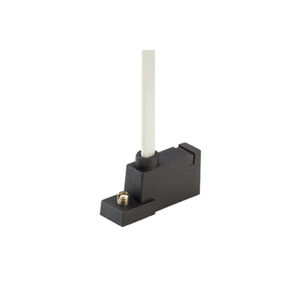

•Reed or GMR sensors. •PNP or NPN logic output for magnetoresistive sensors. •No problems in case of vibrations. •Cable or M8 connector output. •100% traceability. •Standard T-slot inline mounting. •Optional ...

Measuring range: 1 mm
• Inductive sensors with anti-interference function. • Stainless steel body material and PBT sensitive surface. • Built-in LED indicator. • PNP or NPN logic outputs.
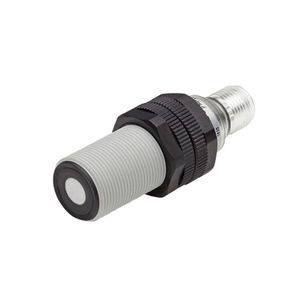
Measuring range: 40 mm - 300 mm
• M18x1 mm ultrasonic sensors. • PNP/NPN digital output with NO or NC programmable logic. • 40-300 mm sensing range with programmable point via External Teach. • M12, 4 pin connector output. • Short and lightweight ...


Measuring range: 2 mm
The OsiSense XT series of capacitive sensors is made to detect insulated or conductive materials. These are built in stainless steel, with a 50 mm cylindrical M12 sensor design. The sensors ...
Telemecanique Sensors


Measuring range: 50 mm
Process temperature: -20 °C - 70 °C
... the MSI 400 safety controller. Mission time - 20 years, EN ISO 13849-1 Category - Up to 4, depending on evaluation, 1 sensor connected, EN ISO 13849-1 B10d - 20,000,000 number of cycles Protective circuit - Current ...
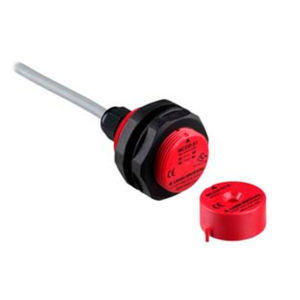
Measuring range: 50 mm
Process temperature: -20 °C - 70 °C
... the MSI 400 safety controller. Mission time - 20 years, EN ISO 13849-1 Category - Up to 4, depending on evaluation, 1 sensor connected, EN ISO 13849-1 B10d - 20,000,000 number of cycles Protective circuit - Current ...
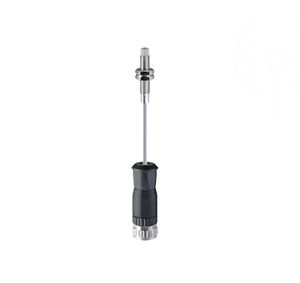

Measuring range: 2 mm
Process temperature: -25 °C - 70 °C
• Metal enclosure • M8 x 1 thread • Non-flush mounting • To be connected to RF 96 ST or RF I/O universal transmitter • With M12 coupling, 4-pole • Applied standards - EN 60947-5-2, EN 61000-6-2, EN 61000-6-3 Enclosure - stainless ...
steute Schaltgeräte


Measuring range: 2 m - 25 m
Process temperature: -25 °C - 105 °C
Hall coded non-contact switches monitor the status of guarding doors. Stainless steel housing for high hygiene demands in the food industry are available. Based on hall technology Connect up to 20 switches in series LED ...
Omron Electronics GmbH
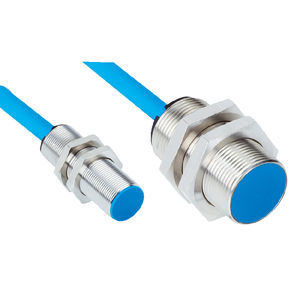

Measuring range: 1 mm - 15 mm
Process temperature: -20 °C - 70 °C
... to DIN EN 60947-5-6 NAMUR sensors for explosive zones Safe detection in ATEX areas. The IMN sensors are available for this due to their high quality and reliability. No whether in category 1G or ...
SICK


Measuring range: 0 mm - 1.6 mm
The GX cylindrical inductive sensor series with a built-in amplifier comes in two versions - with and without a threaded section. Numerous special types allow you to select the optimum sensor for your ...
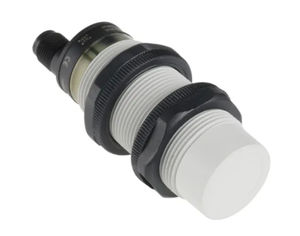

Length: 91 mm
Measuring range: 15 mm
Process temperature: 70 °C
Introducing the range of RS PRO Capacitive Proximity Sensors. These versatile and high-quality sensors are an essential addition to any environment where measurement of attributes like ...


Sensors of the sensor PRO series ensure the effective protection of people in machine building and system engineering. The sensor PRO series includes contactless safety sensors, ...


Measuring range: 8 mm - 50 mm
Process temperature: -52 °C - 100 °C
... mission-critical machinery choose our proximity probe sensors to monitor machine conditions and protect important equipment assets. More than 60 years ago Don Bently launched his first industrial product: ...


Measuring range: 2 mm - 10 mm
Adjustable Proximity Sensor for clamp check in Machine tool Feature1 Using the 2 outputs,sensing in 4 areas Eliminates the need for troublesome positioning of multiple switches Feature2 Automatic setting ...
Azbil Europe NV
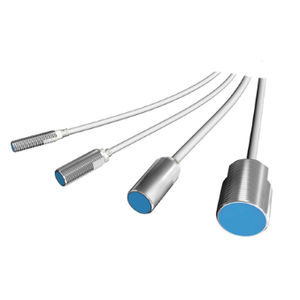
Rigid structure, highly waterproof DC 2-wire switches with improved visibility of indicator lamps. Features DC 2-wire, for reduced wiring costs Stable sensing area is shown by the setting indicator Rigid housing allows ...
Azbil Europe NV

... conventional models, additionally it can easily perform 3 to 5 times longer - or even more! Description The FL7S is a proximity switch boasting a stainless steel sensing face and housing, and is specially ...
Azbil Europe NV


Measuring range: 2 mm - 2 mm
Process temperature: 0 °C - 120 °C
Small Inductive Sensor for extreme Conditions, 120° / IP 69 / Temperaturexchange-Proof If the installation space is limited and the ambient temperature can reach 120 °C, this inductive proximity switch ...
EGE-Elektronik Spezial-Sensoren GmbH

Measuring range: 2 mm - 10 mm
Metal face sensors • Plug connection Series IGVU - Proximity switches M12 / M18 / M30 One piece stainless steel housing DC 10...30 V Shock resistant Impact proof Inductive proximity ...
EGE-Elektronik Spezial-Sensoren GmbH

Measuring range: 2 mm - 10 mm
Metal face sensors • Cable connection Series IGV - Proximity switches M12 / M18 / M30 One piece stainless steel housing DC 10...30 V Shock resistant Impact proof Inductive proximity ...
EGE-Elektronik Spezial-Sensoren GmbH


Length: 60 mm
Width: 12 mm
Measuring range: 0 mm - 6 mm
sensor capacitive, Connector M12 3pin, IP67, V2A, LED, Manual adjustment including 2x Nut, 1x Screwdriver Description Capacitive sensors - Norm switching distance Capacitive proximity ...
ipf electronic gmbh
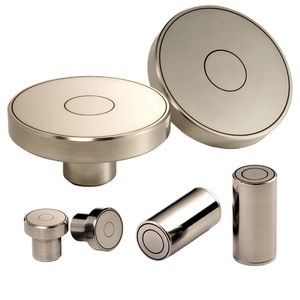

Measuring range: 0 mm - 10 mm
... capacitor is influenced by the distance of its electrodes. This correlation can be used for the distance measurement. The sensor heads measure without contact and with an extremely high resolution the distance to conductive ...


Measuring range: 8 mm - 30 mm
Process temperature: -20 °C - 70 °C
Detection of ferrous metal objects by inductive principle Ø8, Ø12, Ø18 or Ø30 mm models DC 2-wire or 3-wire Non-flush LED status indicator Non-contact measurement of ferrous metal objects by inductive principle; DC 2-wire or 3-wire; ...
ATEK SENSOR TECHNOLOGIE
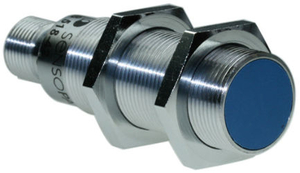
A proximity sensor detects the presence of an object or a person within its operating range.
ApplicationsThese devices are used in robotics, on assembly lines and conveyors. They are found in machine tools and in processing and transforming industries. Photoelectric sensors are particularly common for detecting human presence in elevators and buildings, and vehicles at parking lot access points.
TechnologiesProximity sensors may be capacitive, inductive or photoelectric; they do not require contact with the target. The first two types are short range. Inductive sensors react to a change in the magnetic field they generate, indicating the presence of a metal object. Capacitive types use an electrical field to detect any type of object.
Photoelectric sensors use a beam of light, usually infrared, between an emitter and a receiver. Activation occurs if the beam is broken by an intrusive person or object. Passive infrared detectors react to the presence of a person or object in the area under surveillance. Hall-effect sensors detect magnetic field variations and are sensitive to the presence of metal objects. Other models use ultrasound.
Choice will depend on the type of target to be detected and whether the output is two- or three-wire.
- No wear
- No moving parts
- Waterproof
Please specify:
Help us improve:
remaining