|
|
|
|
|
|
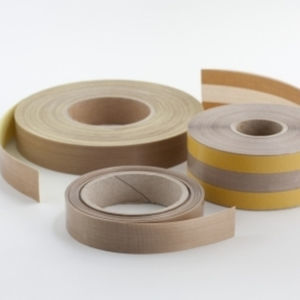
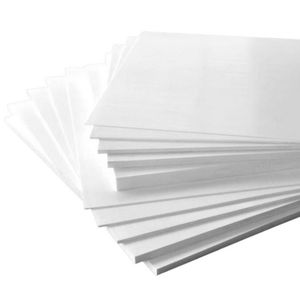
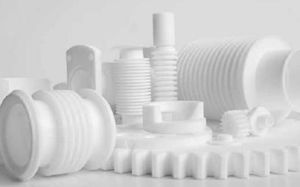
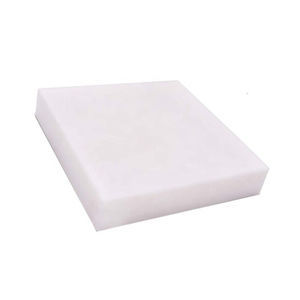
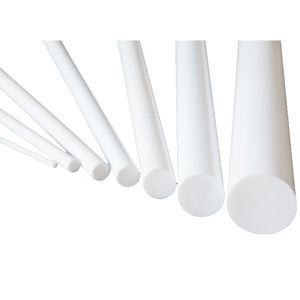
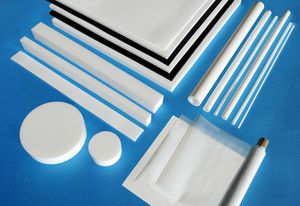
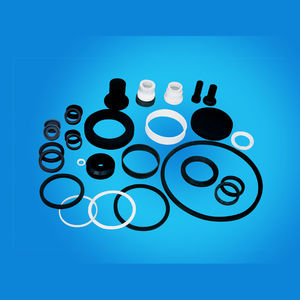
PTFE gaskets are one of the most suitable types of gaskets for a variety of sealing applications and are mostly based on virgin PTFE, PTFE compounds, filled PTFE or expanded PTFE. And what provides the PTFE gaskets with such an extensive range of applicability? The answer is PTFE. PTFE is a fluoropolymere, which features an outstanding chemical resistivity to almost all chemicals, good thermal insulation properties, and useful mechanical and processing characteristics. The above-mentioned PTFE features can be usefully applied in PTFE gaskets. They can be mostly used in valve seats, bearings, requested to resin sliding and chemicals, elastic bands for an-lubricated compressors, O-rings where elastomers can not withstand.
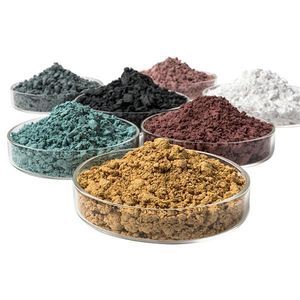
An extended range of improved mechanical and processing properties can be additionally reached by a combination of virgin PTFE and different fillers.
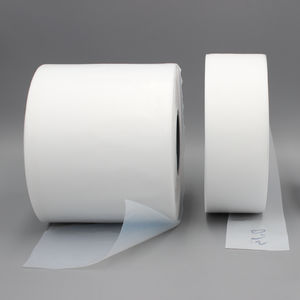
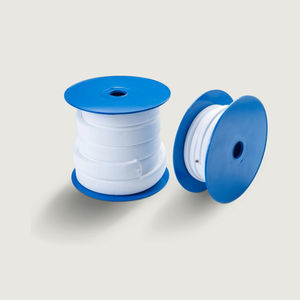
Expanded PTFE Gaskets and Seal materials consist of virgin PTFE with multidirectional fibrous and/or porous structure, which the extruded PTFE consists of. A special manufacturing process provides the material with special chemical and physical properties. This can be of advantage in wide range of the applications.
Advantages
Virgin PTFE, PTFE compounds and expanded PTFE offer a wide range of compounded products with good mechanical properties, electrical properties, thermal properties, chemical resistance, low friction coefficient and good resistance to wear.
Shape and construction
Several types pf DONIT TESNIT® - PTFE gaskets are produced to meet the most demanding applications.
|
|
Canted-coil™ spring energized seals provide high performance and long seal life.
Bal Seal offers numerous designs and materials uniquely suitable for a wider range of reciprocating applications.
|
|
- Dedicated manufacturing facilities
- Quick quote ability
- Multiple material colors
- Banded piston technology
- Global manufacturing
- Small lot manufacturing
- Custom material compounding
- Facility locations : Troy, OH; Findlay, OH
- Certifications: ISO 9001, ISO 9002, QS-9000
|
|
The requirement for low coefficients of friction, less than .08, temperatures ranging from -300F to +550F, pressures in excess of 5000 psi, the need to seal a corrosive acid .....These are the typical kinds of factors that tell you that an elastomeric seal probably wont fit your application.
Seal Science PTFE or Teflon® Seals and Seal Science Perflex perfluoroelastomer are often the answer. Possibly something as simple as a PTFE O-Ring, or a PTFE compound cap to protect the elastomer will do. Or maybe, spring energized PTFE U-Cups, like those in our Polyspring line might be needed.
|
|
|
|
|
|
The new generation of GFD-rotary shaft lip seals were especially developed for use under difficult and extreme conditions.
The superior properties of PTFE as lip material combined with a corrosion resistant stainless steel housing provide the particular advantages of these GFD-rotary shaft seals.
Advantages and applications:
- Temperature range from -70°C to +260°C
- Lowest friction and power draw
- Long seal life because of wear resistant lip materials
- Almost universal chemical resistance (depending on lip material)
- Suitable for dry running and poorly lubricated conditions
- High shaft speed up to 36 m/s
- Exchangeable with standard lip seals according to DIN 3760
- For food or pharmaceutical industry
Applications:
- Chemical processing equipment
- Hydraulic motors
- Compressors
- Shafts on gearboxes
- Rotary
- Blowers
- Ventilators
- Actuators
- Rotary unions
- Encoders
- Mixers and Dryers
- Robotics
- Milling-machines
- Pumps of all kinds
- Pharmaceutical and food processing equipment
- Centrifugal machines
- Engines and Compressors crankshaft
|
|
OmniLip™ and DynaLip© seals are PTFE-based rotary lip seals. These seals are used in pumps and compressors, engine crankshafts, robotics, diesel engines, pharmaceutical and food processing, blowers, mixers, heavy industry and steel mill applications.
>Sizes to DIN3760 dimensions.
>Low friction, long life.
>Up to 3 meter diameter.
>To suit specific industry needs.
>Broad chemical compatibility.
>Temperature: -50°C up to +200°C.
|
|
Spring Energized PTFE-Seals
The GFD spring energized PTFE seal is the newest generation of spring actuated Teflon seals. These seals consist of a special precision jacket/lip made of Teflon (or other high performance polymers) and a corrosion resistant stainless steel spring.
In this combination, the spring is forcing the seal lips against the gland and the rod walls. The pressure assists the spring force.
The spring compensates the lip wear, hardware tolerances, eccentricities and provides permanent resilience to the seal lips. The GFD design with sealing lip and spring arrangement guarantees more leakage protection than conventional lip seals.
More than 50 different PTFE compounds (and other high performance polymers) are available or can be composed for jacket fabrication within a very short time.
The standard designs cover radial and axial seals for dynamic as well as static applications.
|
|
OmniSeal® seals are high performance spring energized PTFE seals. These are capable of handling extreme service conditions and are used in a variety of applications, such on high temperature / high pressure (HTHP) Ball Valves, rocket and jet engines, robotics, racing cars, oil and gas applications and others.
>Temperature: -260°C to +300°C.
>Pressure: Vacuum to 10,000 bar.
>Surface speeds: 40m/s.
>Low and controlled friction, low wear.
>Broad chemical compatibility.
>High pressure and temperature combinations.
|
|
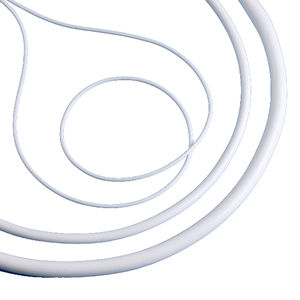
Conceived to obtain an excellent level of sealing whatever the pressure level or temperature, the O rings are used in all the fields of industry, in static and dynamic application. It is the integration of a ring with circular section (torus) in a throat dimensioned according to the diameter of the joint which ensures the perfect sealing of the product.
O rings PTFE require a weak tightening torque and adapt to a large range of operating conditions:
- resistance to temperatures of - 200 to + 260 °C
- adaptation to all the aggressive chemical fluids, with cryogenics, the vacuum and the gas
- diameters available from 1 to 12 mm according to the standards
- various materials of composition: rubber, materials plastic or various metals.
Available out of PTFE, silicone, Viton®, EPDM, nitrile, fluorocarbon, chloroprene, perflouélastomère, the Group Eynard Robin also proposes a broad range of O rings metal or covered out of alloy nickel, stainless steel or hastelloy (EYTOR and EYCAP).
|
|
|
All SENTINEL® Filter Bags utilize the patented SENTINEL® seal. It's all plastic, polypropylene, polyester or Santoprene® construction, provides a flexible, chemically resistant seal which adapts to any filter housing. This unique design employs a pressure activated sealing lip which responds to increases in differential pressure. As the pressure increases, the seal of the ring improves, insuring by-pass free performance over all ranges of pressure, temperature and micron rating. The elevated bag handles make removal of the bag from the vessel quick and easy. When a SENTINEL® Filter Bag is installed into an Eaton Filtration Housing, the ring snaps into place, holding its position until the housing is closed.
|
|
| ... products without technical information |
| |
CHO have been designing and manufacturing PTFE Rotary shaft seals for over 20 years, for applications ranging from large diesel engines to Racing Cars, and serve both OEM and aftermarket requirements.
CHO are the only sealing company that offer all 3 styles of PTFE seal construction, these being, moulded, clamped and crimped. As we are not constrained to a particular style, like most companies are, we can offer the best technical and commercial solution to suit your application and quantities.
|
|
PTFE diaphragms are used in metering devices, the pharmaceutical and food industries, in pumps for the chemical industry and in painting technology. Diaphragms are available made of PTFE, PTFE-elastomer-composites or as multi-layered PTFE-diaphragms.
Highlights
virtually universal chemical resistance
high temperature range between –60°C and +200°C
high service life
Typical Applications
metering pumps
chemical technology
valves
|
|
|
|
|
|
Particularly adapted to the drug companies and agroalimentary (conformity FDA), the joints "jacket" PTFE are used for all the aggressive processes. They are composed of a heart which confers necessary mechanical qualities to them, and of an envelope PTFE which protects it from corrosion.
The Group Eynard Robin manufactures and distributes:
- the joints jacket PTFE EYRFLON: gone up on metal supports out of glass, graphite, plastic, or covered or vitrified steel (enamel)
- the joints jacket PTFE EYRTEX: especially developed for applications ATEX, they are equipped with a metal leg connected to the mass of the apparatus which avoids the risks of lighting and explosion. This system collects the static electricity generated by the circulation of the product and makes it possible to evacuate the electric potential with the support.
The Group Eynard Robin proposes a broad choice of dimensions, matters and profiles of heart and envelopes.
The joints jacket PTFE EYRFLON and EYRTEX can be used
- in standard and/or severe applications
- in corrosive ambient condition or ultra-aggressive
- on the vacuum
- at temperatures being able to reach until 220°C
|
|
|
|
|
|
PTFE gaskets are one of the most suitable types of gaskets for a variety of sealing applications and are mostly based on virgin PTFE, PTFE compounds, filled PTFE or expanded PTFE. And what provides the PTFE gaskets with such an extensive range of applicability? The answer is PTFE. PTFE is a fluoropolymere, which features an outstanding chemical resistivity to almost all chemicals, good thermal insulation properties, and useful mechanical and processing characteristics. The above-mentioned PTFE features can be usefully applied in PTFE gaskets. They can be mostly used in valve seats, bearings, requested to resin sliding and chemicals, elastic bands for an-lubricated compressors, O-rings where elastomers can not withstand.
An extended range of improved mechanical and processing properties can be additionally reached by a combination of virgin PTFE and different fillers.
Expanded PTFE Gaskets and Seal materials consist of virgin PTFE with multidirectional fibrous and/or porous structure, which the extruded PTFE consists of. A special manufacturing process provides the material with special chemical and physical properties. This can be of advantage in wide range of the applications.
Advantages
Virgin PTFE, PTFE compounds and expanded PTFE offer a wide range of compounded products with good mechanical properties, electrical properties, thermal properties, chemical resistance, low friction coefficient and good resistance to wear.
Shape and construction
Several types pf DONIT TESNIT® - PTFE gaskets are produced to meet the most demanding applications.
|
|
The sealing insert is made of corrugated stainless steel, soft gasketing material or rubber. This insert is coated with PTFE and open on one side, usually on the outside. Thanks to the high chemical stability, good mechanical properties and permanent resistance in the atmosphere (humidity, gases, temperature changes) they are suitable for all types of gaskets and different media, mostly for aggressive chemicals.
Advantages
Thanks to the high stability of C-F bond virgin PTFE, which is used for the envelope, exhibits extraordinary chemical resistance. Combinations of two or more insert materials allow a large number of different applications.
|
|
- Dedicated manufacturing facilities
- Quick quote ability
- Multiple material colors
- Banded piston technology
- Global manufacturing
- Small lot manufacturing
- Custom material compounding
- Facility locations : Troy, OH; Findlay, OH
- Certifications: ISO 9001, ISO 9002, QS-9000
|
|
The requirement for low coefficients of friction, less than .08, temperatures ranging from -300F to +550F, pressures in excess of 5000 psi, the need to seal a corrosive acid .....These are the typical kinds of factors that tell you that an elastomeric seal probably wont fit your application.
Seal Science PTFE or Teflon® Seals and Seal Science Perflex perfluoroelastomer are often the answer. Possibly something as simple as a PTFE O-Ring, or a PTFE compound cap to protect the elastomer will do. Or maybe, spring energized PTFE U-Cups, like those in our Polyspring line might be needed.
|
|
Conceived to obtain an excellent level of sealing whatever the pressure level or temperature, the O rings are used in all the fields of industry, in static and dynamic application. It is the integration of a ring with circular section (torus) in a throat dimensioned according to the diameter of the joint which ensures the perfect sealing of the product.
O rings PTFE require a weak tightening torque and adapt to a large range of operating conditions:
- resistance to temperatures of - 200 to + 260 °C
- adaptation to all the aggressive chemical fluids, with cryogenics, the vacuum and the gas
- diameters available from 1 to 12 mm according to the standards
- various materials of composition: rubber, materials plastic or various metals.
Available out of PTFE, silicone, Viton®, EPDM, nitrile, fluorocarbon, chloroprene, perflouélastomère, the Group Eynard Robin also proposes a broad range of O rings metal or covered out of alloy nickel, stainless steel or hastelloy (EYTOR and EYCAP).
|
|
|
All SENTINEL® Filter Bags utilize the patented SENTINEL® seal. It's all plastic, polypropylene, polyester or Santoprene® construction, provides a flexible, chemically resistant seal which adapts to any filter housing. This unique design employs a pressure activated sealing lip which responds to increases in differential pressure. As the pressure increases, the seal of the ring improves, insuring by-pass free performance over all ranges of pressure, temperature and micron rating. The elevated bag handles make removal of the bag from the vessel quick and easy. When a SENTINEL® Filter Bag is installed into an Eaton Filtration Housing, the ring snaps into place, holding its position until the housing is closed.
|
|
| ... products without technical information |
| |
|
|