


{{product.productLabel}} {{product.model}}
{{#if product.featureValues}}{{product.productPrice.formattedPrice}} {{#if product.productPrice.priceType === "PRICE_RANGE" }} - {{product.productPrice.formattedPriceMax}} {{/if}}
{{#each product.specData:i}}
{{name}}: {{value}}
{{#i!=(product.specData.length-1)}}
{{/end}}
{{/each}}
{{{product.idpText}}}
{{product.productLabel}} {{product.model}}
{{#if product.featureValues}}{{product.productPrice.formattedPrice}} {{#if product.productPrice.priceType === "PRICE_RANGE" }} - {{product.productPrice.formattedPriceMax}} {{/if}}
{{#each product.specData:i}}
{{name}}: {{value}}
{{#i!=(product.specData.length-1)}}
{{/end}}
{{/each}}
{{{product.idpText}}}
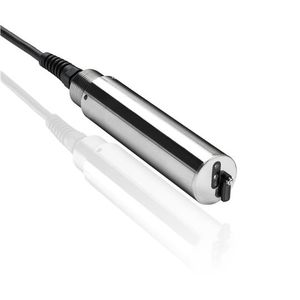

... compliant with turbidity and TSS level monitoring Certified by MCERTS for measuring turbidity and featuring ABB’s innovative adaptive TSS calibration technology, the ATS430 can be counted on to provide ...


... solids (TSS) sensor for municipal or industrial wastewater applications. It offers an excellent price-performance ratio and is suitable for quality control and sedimentation processes in biological wastewater treatment. ...

... OPTISYS TUR 1060 is a turbidity measuring system with cost-efficient cuvette calibration and automated ultrasonic cleaning system. Due to its optimised cuvette measuring system, it has a very fast measuring response time. ...

... 2000 is a turbidity sensor for use in open channels. Its robust design is especially suitable for potable water and wastewater applications. The NIR-LED (90° scattered light acc. to ISO 7027) guarantees ...
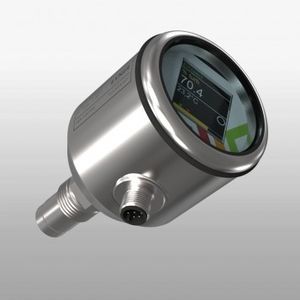

EXspect 271 is a high precisely compact NIR turbidity sensor monitoring production processes in the food industry, e.g. in dairies, as well as in many ranges of process and chemical applications and waste ...
Exner Process Equipment GmbH
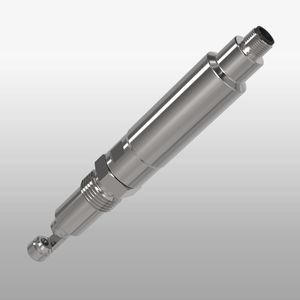
EXplore 131 is a NIR turbidity sensor for monitoring production processes in the food and beverage industries as well as in many areas of further process applications. The robust and compact design in ...
Exner Process Equipment GmbH
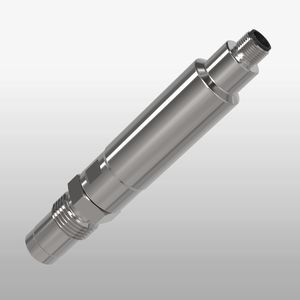
EXplore 171 is a NIR turbidity sensor for monitoring production processes in the food industry, e.g. in dairies, as well as in many areas of other process applications with medium and high turbidity. ...
Exner Process Equipment GmbH
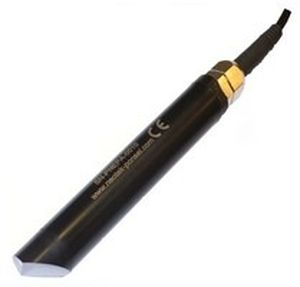

The Digital Turbidity Sensor RS 485/SDI 12 is ideally designed to provide a good quality functionality and performance. It aims to meet the requirements and standards of the users. The sensor ...
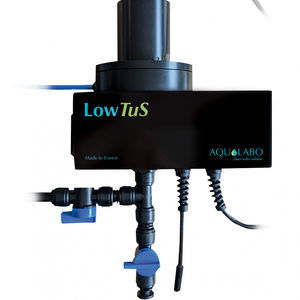
LowTUS Premium version 7m cable: turbidity sensor drinking water Ranges 0-10; 0-100 NTU ISO 7027 IR measurement method Automatic brush cleaning Solid tare for quick calibration RS485-Modbus/SDI12 communication ...
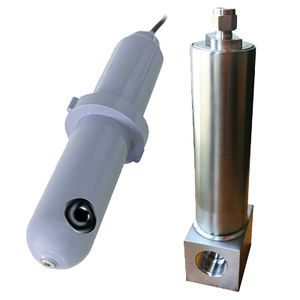

... water applications. The turbidity sensor measures two optical densities and two scattering intensities at two wavelengths. This helps measure a large turbidity range and yet maintain ...
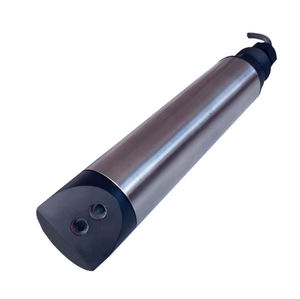

Sensor for the measurement of turbidity in pure and process water up to 1000 NTU. Measurement accuracy ± 2% to ± 10% 90 ° light scattering measurement method Measurement range from 10NTU to 1000NTU Max ...
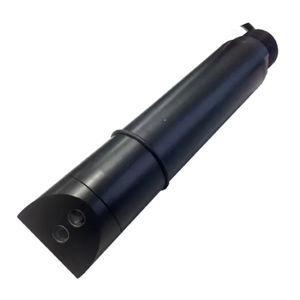
Sensor for the measurement of turbidity in pure and process water up to 100 NTU. Measurement accuracy ± 1% to ± 5% 90 ° light scattering measurement method Measurement range from 10NTU to 100NTU Max ...
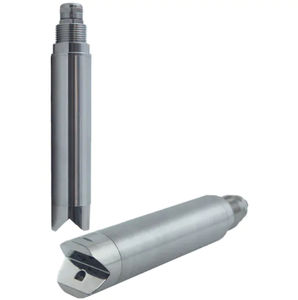
... with MCA800 control unit Description The 164CU sensor, connected to the MCA800, is used for the optical measurement of suspended solids in industrial and process water up to 30 g / l. The 164CU sensor, ...
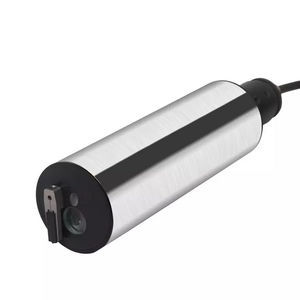

... critical. The key features of a turbidity sensor include its ability to detect minute particles and suspended solids in the liquid sample, and its high accuracy and sensitivity. The main advantage ...
Supmea Automation
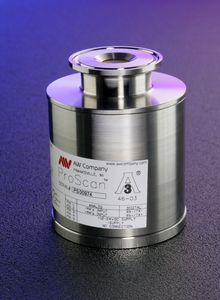

Ideal turbidity sensor for detection of product transitions, monitoring turbidity and measuring product concentration, such as in dairy processing, brewing and juice processing. Features: ...
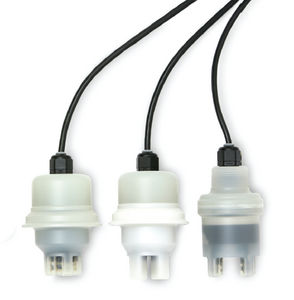

... • Simple user interface. The T30 sensor is designed for use with the MXD70 series instrument • Accurate, repeatable & reliable. T30 Measurement range 0 to 50 through to 0 to 1000 FNU/FTU/NTU The T30 turbidity ...
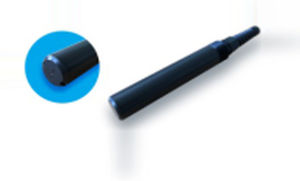

Turbidity Sensor Non-SeUnself-cleanning Fiber turbidity sensor Used in Water Quality Measurement or Aquaculture Industry 1. Description Every year, a large amount ...
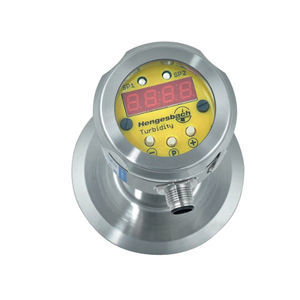

... agents’ pollution degree during CIP detection of filter breakdown detection of yeast and cloudy fruit juice Features turbidity sensor with 2-wire 4….20 mA output process connections Clamp; Varivent; ...


We offer Turbidity measurement for very low turbidities in pipes from DN25 • Active phase separation also for media with low turbidity from 0 to 5000 NTU • Glass-free sapphire optics ...
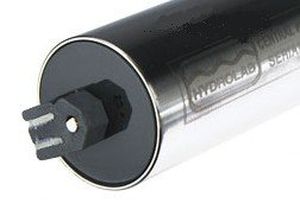

Hydrolab's Self-Cleaning Turbidity sensor measures from 0 to 3000 NTU and includes a user-programmable cleaning system to remove any fouling or debris that could otherwise affect readings. Features: - ...
Hach Hydromet
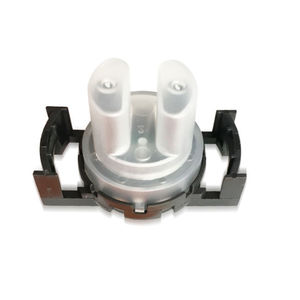

The current signal of the sensor itself is converted into the module voltage output through the circuit, which is convenient for customers to use to measure the turbidity in water FEATURE: 1.The sensor ...
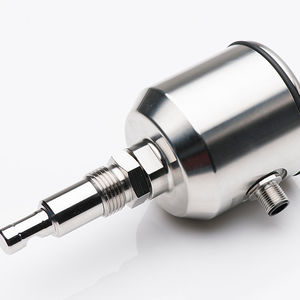

Features secure phase separation quick product change-over reduced waste water costs filter monitoring concentration measurements colour-independent compact design with integrated electronics and display for configuration resilient sapphire ...
Seli GmbH Automatisierungstechnik
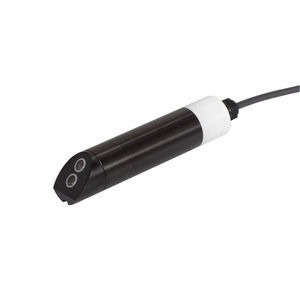

The TTurb is a digital sensor used for optical turbidity measurement according to the 90° IR scattered light method. Depending on the sensor version, it can be used in both pure water ...
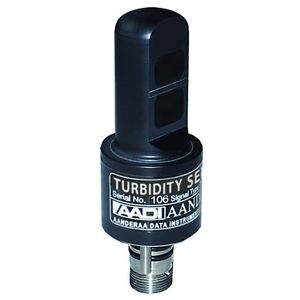

... pollution. The sensor generates an output voltage proportional to the turbidity or suspended solids. The low power consumption makes it ideal for applications where battery drain is a concern. Turbidity ...
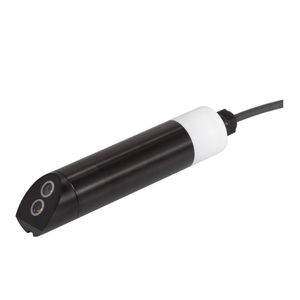

The TTurb is a digital sensor for optical turbidity measurements according to the 90° IR scattered light method. Depending on the sensor it can be used in pure water up to 100 FNU as ...
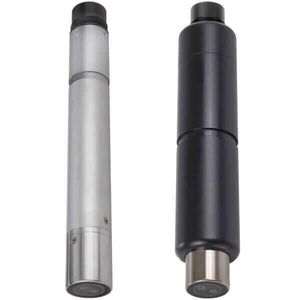

Turbidity sensor with ultrasonic cleaning, connectable to the IQ SENSOR NET VisoTurb®: Optical turbidity sensors according to nephelometric principle ...
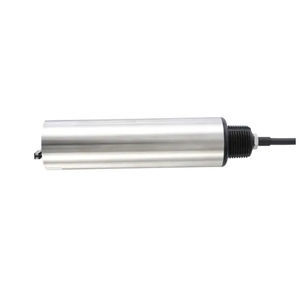

ZDYG-2088-01QX turbidity sensor light scattering method based on combination of infrared absorption, infrared light emitted by the light source after the scattering of turbidity in the ...
Shanghai Boqu Instrument Co.,Ltd.
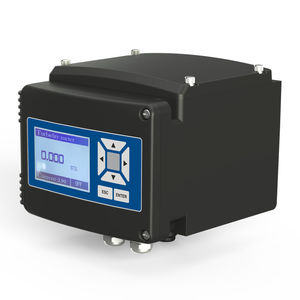
... reclaimed water reuse systems. ★ A continuous reading turbidity meter designed for low range turbidity monitoring ★ EPA principle 90-degree scattering method, specially used for low-range turbidity ...
Shanghai Boqu Instrument Co.,Ltd.
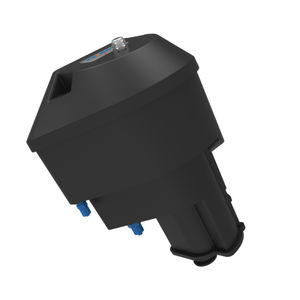
The high-precision turbidity sensor directs the parallel light from the light source into the water sample in the sensor, and the light is scattered by the suspended particles in the ...
Shanghai Boqu Instrument Co.,Ltd.
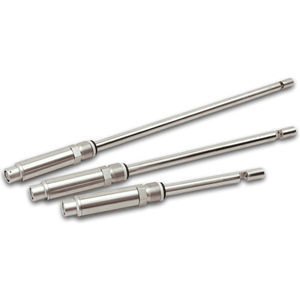

The Optek-ASD sensors are mounted in a port (12 mm or 25 mm) on the top plate of the vessel. Using the NIR absorption the sensors provide data on the growth of microorganisms and cell cultures Control ...


The low-range turbidity sensor guides the parallel light emitted by the light source downwards nto the water sample in the sensor. The light is scattered by the suspended particles in ...

This sensor is based on the combined infrared absorption and scattering of light, and the IS07027 method can be used to continuously and accurately measure turbidity. The infrared light emitted by the ...
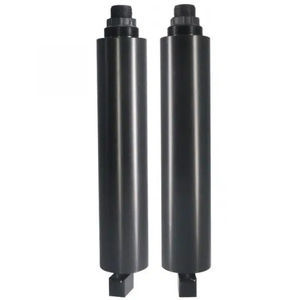

The self-cleaning turbidity sensor applies optical fiber technology to the turbidity sensor, and the principle of scattered light detection at a 90° angle has better ...
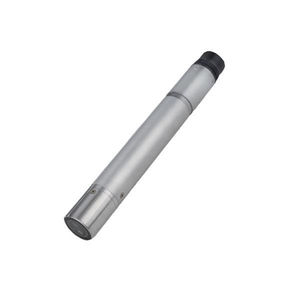

The VisoTurb® is an optical based turbidity or TSS (total suspended solids) sensor for the IQ SensorNet process monitoring and control system. - The VisoTurb sensors are precisely ...
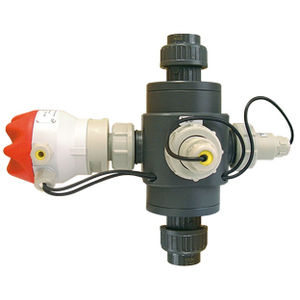

Continuous turbidity measurement Application drinkable and waste water plants, well water monitoring, filtration control, flocculants dosage, phase separation, pollution survey
Please specify:
Help us improve:
remaining