


- Electricity - Electronics
- Switch and Relay
- Electrical network surge arrester
- Siemens Energy – Power transmission
Class IEC 2 surge arrester 3EP seriesclass IEC 3class IEC 4class IEC 5

Add to favorites
Compare this product
Characteristics
- Type
- class IEC 2, class IEC 3, class IEC 4, class IEC 5
- Applications
- for substations
- Other characteristics
- high-voltage, in-line
- Voltage
Min.: 123 kV
Max.: 800 kV
- Primary current
Min.: 40,000 A
Max.: 65,000 A
Description
Siemens Energy 3EP porcelain surge arresters offer outstanding protection against overvoltages in networks of up to 800 kV.
3EP porcelain surge arresters are ideally suited for the reliable protection of:
- Transformers
- Circuit breakers
- Generators
- Motors
- Capacitors
- Bushings
- Switchgear
The cage, made of fiberglass-reinforced plastic (FRP) rods, provides a rigid, reinforced structure ensuring high mechanical strength.
The excellent sealing system prevents moisture ingress and partial discharges.
In the extremely rare event of an overload, the arc can escape directly through the directional pressure relief devices. Strong, high-quality porcelain prevents the ejection of internal parts. The Siemens Energy porcelain design offers extremely safe overload performance.
3EP porcelain surge arresters are ideal for areas with heavy seismic activity and extremely strong winds.
Catalogs
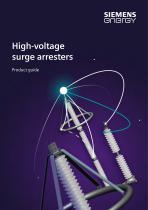
Other Siemens Energy – Power transmission products
Surge arresters


Related Searches
- SIEMENS surge arrester
- Isolator switch
- SIEMENS circuit breaker
- Multipole isolator switch
- Class II surge arrester
- AC surge protector
- Class I surge arrester
- Varistor surge protector
- Switchgear
- Compact surge protector
- Voltage circuit breaker
- Voltage switchgear
- Single-pole circuit breaker
- Distribution circuit breaker
- Insulator
- Electrical installation surge protector
- IEC isolator switch
- 2-pole isolator switch
- Class I surge protector
- MOV surge protector
*Prices are pre-tax. They exclude delivery charges and customs duties and do not include additional charges for installation or activation options. Prices are indicative only and may vary by country, with changes to the cost of raw materials and exchange rates.