


- Electricity - Electronics
- Switch and Relay
- Class II surge arrester
- Siemens Energy – Power transmission
Class II surge arrester EGLAoutdoorhigh-energyfor electrical networks

Add to favorites
Compare this product
Characteristics
- Type
- class II
- Applications
- for transient current protection, anti-surge, for electrical networks, outdoor, high-energy
- Other characteristics
- MOV, high-voltage, with housing, polymer
- Voltage
Min.: 0 kV
Max.: 800 kV
- Primary current
Min.: 0 A
Max.: 500,000 A
Description
Overview
Transmission line surge arresters (LSAs) protect overhead transmission lines from lightning strikes and switching overvoltages by diverting excessive surge energy to ground, preventing flashovers, equipment damage, and power outages.
Key functions
Non-Gapped Line Arrester (NGLA) — Direct connection to overhead lines
Non-gapped line surge arresters provide exceptional mounting flexibility and high operational reliability. They can be installed on insulators, conductors, or tower structures depending on tower design and insulator arrangements. Key benefits include:
Externally Gapped Line Arrester (EGLA) — Insulated by series spark gap
EGLA devices feature an external spark gap in series, galvanically isolating the arrester’s active components from line voltage under normal conditions. Upon a lightning strike the spark gap flashes over, limiting ground fault current and extinguishing arcs quickly. Key benefits include:
Technical highlights
Optimized software analysis for LSA applications
Siemens Energy provides simulation-based analysis (based on Cigré studies) to determine optimal, cost-effective LSA solutions. The software examines customer-specific line parameters and recommends where and how many arresters are required to ensure sufficient lightning protection while minimizing installed equipment. Considered factors include:
Why choose Siemens Energy transmission line surge arresters?
Caractéristiques / Spécifications techniques
Transmission line surge arresters (LSAs) protect overhead transmission lines from lightning strikes and switching overvoltages by diverting excessive surge energy to ground, preventing flashovers, equipment damage, and power outages.
Key functions
- High voltage capability: Designed for system voltages up to 800 kV with an energy discharge capability of up to 3.6 C.
- Lightning protection: Externally gapped spark gap flashes over during lightning events, limiting ground fault currents from kiloamperes to amperes, extinguishing arcs within ~10 ms, and avoiding circuit-breaker operation.
- Enhanced system reliability: Proprietary simulation software (based on Cigré studies) optimizes LSA placement and quantity to provide robust lightning protection while minimizing costs.
- Reduced power interruptions: LSAs eliminate overvoltages above an insulator’s lightning-impulse withstand level (LIWL), preventing insulator flashovers and voltage dips.
- Advanced simulation and support: Detailed software analysis models customer-specific line conditions to enable precise LSA selection and placement.
Non-Gapped Line Arrester (NGLA) — Direct connection to overhead lines
Non-gapped line surge arresters provide exceptional mounting flexibility and high operational reliability. They can be installed on insulators, conductors, or tower structures depending on tower design and insulator arrangements. Key benefits include:
- Highly flexible installation: Suitable for mounting on conductor, tower, or insulator; adapts to various line configurations.
- Superior protection: High energy absorption capacity for robust defense against lightning and switching overvoltages.
- Thermal overload safety: Integrated disconnector isolates the arrester during thermal overload, allowing continued line operation until replacement.
- Standards compliance: Designed and tested to IEC 60099-4.
- Optional monitoring: ACM monitoring system available for wireless condition assessment and detailed insight into leakage currents and energy dissipation.
Externally Gapped Line Arrester (EGLA) — Insulated by series spark gap
EGLA devices feature an external spark gap in series, galvanically isolating the arrester’s active components from line voltage under normal conditions. Upon a lightning strike the spark gap flashes over, limiting ground fault current and extinguishing arcs quickly. Key benefits include:
- Zero leakage current: Series gap disconnects the MOV blocks from system voltage during normal operation.
- Material efficiency: Lower rated voltage arrester can be used, reducing MOV quantity and material use.
- No disconnector or ground lead required: Simplifies installation and maintenance.
- Compact design: Suitable for multiple-circuit towers with short clearances and live-line installation.
- Standards compliance: Conforms to IEC 60099-8.
Technical highlights
- Installation: Direct connection (NGLA) / External spark gap (EGLA)
- Voltage range: Up to 800 kV
- Energy discharge: Up to 3.6 C
- Disconnector: Built-in (NGLA) / Not required (EGLA)
- Leakage current: Present in normal operation (NGLA) / None in normal operation (EGLA)
- Standards: IEC 60099-4 (NGLA) / IEC 60099-8 (EGLA)
- Housing: Silicone rubber
- Mounting options: Tower, insulator, conductor (NGLA) / Tower, insulator (EGLA)
- Maintenance: Minimal
Optimized software analysis for LSA applications
Siemens Energy provides simulation-based analysis (based on Cigré studies) to determine optimal, cost-effective LSA solutions. The software examines customer-specific line parameters and recommends where and how many arresters are required to ensure sufficient lightning protection while minimizing installed equipment. Considered factors include:
- Line parameters: operating voltage, number of circuits, ground wire data, line length, span length and sag, conductor type and diameter, clearances.
- Tower data: tower surge impedances, footing resistance, tower geometry and phase positions.
- Insulator data: arcing distance, connection length, rated lightning impulse withstand voltage.
- Lightning activity: keraunic level (strokes per year per km²), network topology and elevation profile.
- Customer priorities: fewer short interruptions, prevention of phase and multisystem short-circuits, elimination of ground wires where applicable.
Why choose Siemens Energy transmission line surge arresters?
- Proven technology: Decades of field experience ensuring reliable performance in diverse environments.
- Tailored protection strategies: Simulation-based design optimizes protection for specific system needs.
- High-voltage support: Products capable of supporting system voltages up to 800 kV with high energy discharge ratings.
Caractéristiques / Spécifications techniques
- System voltage capability: up to 800 kV.
- Energy discharge capability: up to 3.6 C.
- NGLA installation: direct connection (tower, insulator, conductor).
- EGLA installation: external spark gap (tower, insulator).
- Disconnector: NGLA built-in; EGLA not required.
- Leakage current: NGLA present during normal operation; EGLA isolated in normal operation.
- Housing material: silicone rubber.
- Standards: NGLA — IEC 60099-4; EGLA — IEC 60099-8.
- Maintenance: minimal for both NGLA and EGLA.
Catalogs
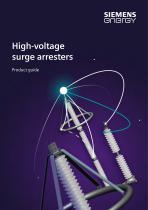
Other Siemens Energy – Power transmission products
Surge arresters


Related Searches
- SIEMENS surge arrester
- SIEMENS circuit breaker
- Type 2 surge protector
- Isolator switch
- Class II surge arrester
- AC surge protector
- Multipole isolator switch
- Plug-in surge protector
- Class I surge arrester
- Remote signaling surge protector
- SIEMENS varistor surge arrester
- Surge protector with fault indication
- 3-pole isolator switch
- Type 3 surge protector
- Single-pole circuit breaker
- Distribution circuit breaker
- Electrical installation surge protector
- Anti-surge surge protector
- MOV surge protector
- Class I surge protector
*Prices are pre-tax. They exclude delivery charges and customs duties and do not include additional charges for installation or activation options. Prices are indicative only and may vary by country, with changes to the cost of raw materials and exchange rates.
About DirectIndustry
DirectIndustry is a marketplace that offers B2B players a complete experience, from product sourcing to purchase. DirectIndustry is an entity of VirtualExpo Group.
Are you a buyer?
Are you a supplier?
About Us
- VirtualExpo Group
- Our Partners
- Recruitment
- Testimonials