


- Company
- Products
- Catalogs
- News & Trends
- Exhibitions
Synchronous belt MXLtoothedtrapezoidalrubber

Add to favorites
Compare this product
Characteristics
- Type
- synchronous, toothed, trapezoidal
- Material
- rubber, mesh, polyurethane
- Product applications
- pulley, industrial, profile
- Sector
- industrial
- Thickness
Max.: 8 mm
(0.31 in)Min.: 1.14 mm
(0.04 in)- Pitch
Max.: 20 mm
(0.787 in)Min.: 2.032 mm
(0.08 in)
Description
The Industrial Synchronous Belt is a high - performance power transmission component designed to meet the demanding requirements of modern industrial machinery. It stands out for its ability to provide precise and efficient power transfer, making it an essential part of various manufacturing and production processes.
2. Design and Structure
Teeth and Profile
The most distinctive feature of the synchronous belt is its toothed design. The teeth on the inner surface of the belt are precisely shaped to mesh with the grooves on the corresponding synchronous pulleys. There are different tooth profiles available, such as the trapezoidal and curvilinear (e.g., HTD - High Torque Drive) profiles. The trapezoidal profile is a common choice for general - purpose applications. Its simple shape allows for easy manufacturing and provides good meshing characteristics. The curvilinear profiles, like HTD, are designed for high - torque and high - speed applications. They offer reduced vibration, noise, and higher power - transmission capacity due to their improved tooth - pulley engagement.
Belt Body
Rubber Compound: The body of the synchronous belt is made from high - quality rubber materials. Synthetic rubbers, such as neoprene or polyurethane, are commonly used. Neoprene is known for its excellent resistance to abrasion, oil, and ozone, making it suitable for industrial environments where the belt may be exposed to these elements. Polyurethane, on the other hand, offers high tensile strength, good flexibility, and better resistance to wear and chemicals. It can withstand the repeated flexing and tension during operation, ensuring a long service life.
Catalogs
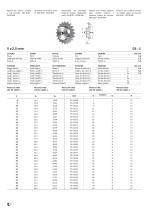
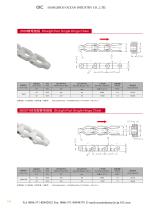
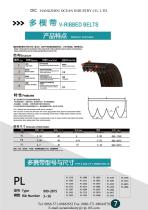
Other Ocean Industry products
Belt


Related Searches
- Planetary gearbox
- Coaxial gearbox
- Power transmission belt
- Precision gearbox
- Right angle gearbox
- Compact gearbox
- Solid-shaft gearbox
- Hollow-shaft gearbox
- Flexible shaft coupling
- Gear train gearbox
- Shafts coupling
- Industrial power transmission belt
- Transmission gearbox
- Rubber power transmission belt
- Transmission chain
- Shaft gearbox
- Metal chain
- Industrial belt
- Torque shaft coupling
- Bevel gearbox
*Prices are pre-tax. They exclude delivery charges and customs duties and do not include additional charges for installation or activation options. Prices are indicative only and may vary by country, with changes to the cost of raw materials and exchange rates.
About DirectIndustry
DirectIndustry is a marketplace that offers B2B players a complete experience, from product sourcing to purchase. DirectIndustry is an entity of VirtualExpo Group.
Are you a buyer?
Are you a supplier?