


Strain gauge extensometer G1- EST Pwire

Add to favorites
Compare this product
Characteristics
- Options
- strain gauge, wire
Description
The deep wire extensometer is a device designed to monitor the displacement of landslide masses, particularly to detect the different movement between unstable surface layers and deeper, more stable rock layers.
To understand how a deep extensometer works, it's important to know that the instrument measures the relative displacement between geological layers, providing a direct assessment of deep ground deformation.
Extensometer: Operation and Components
The system consists of one or more stainless steel cables anchored at different depths and connected to a surface measurement head, which can be configured in either a single or multi-point version.
This type of extensometer functioning is particularly effective even under critical conditions, as it can be installed externally to an inclinometer casing, ensuring continuous measurements even after casing deformation.
Applications and Benefits
Among its key advantages is the ability to recover data from inclinometer tubes that are damaged or no longer accessible by a mobile probe. Additionally, the steel cable is attached to a terminal with improved bonding, optimized for grouting and long-term measurement stability.
This technology can be compared with other deformation measurement tools, such as the rosette extensometer and the traditional strain gauge. Understanding how a strain gauge works is essential to evaluate the differences in working principles and practical applications of each system.
Catalogs
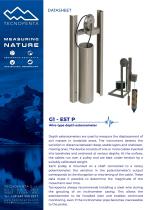
G1-EST P
2 Pages
Other Tecnopenta SRL products
Geotechnics


*Prices are pre-tax. They exclude delivery charges and customs duties and do not include additional charges for installation or activation options. Prices are indicative only and may vary by country, with changes to the cost of raw materials and exchange rates.
About DirectIndustry
DirectIndustry is a marketplace that offers B2B players a complete experience, from product sourcing to purchase. DirectIndustry is an entity of VirtualExpo Group.
Are you a buyer?
Are you a supplier?