

- Hydraulics - Pneumatics
- Pump
- Peristaltic pump
- Watson-Marlow Fluid Technology Group


- Products
- Catalogs
- News & Trends
- Exhibitions
Peristaltic pump Bredel CIPbeveragefor food productslever

Add to favorites
Compare this product
Characteristics
- Technology
- peristaltic
- Fluid
- for food products, beverage
- Operation
- lever
- Priming
- self-priming
- Mobility
- stationary
- Domain
- sanitary
- Material
- stainless steel, cast iron
- Flow
Max.: 3.2 m³/h
(113.00693 ft³/h)Min.: 0.6 m³/h
(21.1888 ft³/h)- Pressure
Max.: 16 bar
(232.06 psi)Min.: 10 bar
(145.038 psi)- Fluid temperature
Max.: 80 °C
(176 °F)Min.: -20 °C
(-4 °F)- Weight
Max.: 133 kg
(293.21 lb)Min.: 42 kg
(92.59 lb)
Description
Overview
The Bredel CIP peristaltic (hose) pump is designed for food and beverage and other sanitary processes requiring reliable clean-in-place (CIP) performance. The pump features an innovative CIP rotor with automatic retractable shoes to enable contamination‑free cleaning, simplify maintenance and minimise component count.
Features and benefits
Technical summary
Max. flow rate continuous: 3200 L/h (844 USGPH)
Volume per revolution: 0.152–0.625 L
Max. continuous operating speed: 65–100 rpm
Max. operating pressure: 16 bar (232 psi)
Min. starting torque: 85–210 N·m (752–1,859 in·lbs)
Weight: 42–133 kg
Performance (by model)
CIP 20 — Max. flow rate continuous: 600 L/h (158 USGPH); Max. flow intermittent: 820 L/h (216 USGPH); Volume per revolution: 0.152 L (0.0402 USG); Max. continuous speed: 65 rpm; Max. intermittent speed: 90 rpm; Max. operating pressure: 10 bar (145 psi); Max. inlet pressure: 2 bar abs (30 psi abs); Weight: 42 kg.
CIP 25 — Max. flow rate continuous: 1800 L/h (475 USGPH); Max. flow intermittent: 2740 L/h (723 USGPH); Volume per revolution: 0.3 L (0.079 USG); Max. continuous speed: 100 rpm; Max. intermittent speed: 155 rpm; Max. operating pressure: 16 bar (232 psi); Max. inlet pressure: 3.5 bar abs (51 psi abs); Weight: ~92 kg (203 lbs as shown in some tables).
CIP 32 — Max. flow rate continuous: 3200 L/h (844 USGPH); Max. flow intermittent: 5250 L/h (1,385 USGPH); Volume per revolution: 0.625 L (0.165 USG); Max. continuous speed: 85 rpm; Max. intermittent speed: 140 rpm; Max. operating pressure: 16 bar (232 psi); Max. inlet pressure: 3 bar abs (44 psi abs); Weight: up to 133 kg.
Key technical specifications
Max. suction capability: ~9.5 mWC (374 inWC) for CIP 20/25; CIP 32 suction capability ~9 mWC (354 inWC) at 80% flow.
Operating temperature (ambient): -20 °C to 45 °C (-4 °F to 113 °F).
Fluid temperature: -20 °C to 80 °C (-4 °F to 176 °F).
Pumphead weights (examples): CIP 20 pumphead ~25.2 kg (56 lbs); CIP 25 pumphead ~50 kg (110 lbs); CIP 32 pumphead ~76 kg (168 lbs).
Rotor weights (examples): CIP 20 rotor ~5.8 kg (13 lbs); CIP 25 rotor ~8 kg (18 lbs); CIP 32 rotor ~13 kg (29 lbs).
Hose lubricant required (examples): CIP 20 ~0.7 L (0.2 USG); CIP 25 ~2 L (0.53 USG); CIP 32 ~3.5 L (0.92 USG).
Port configurations: Down, Left, Right, Up.
Pumping direction: Clockwise or Counterclockwise.
Compatible hose materials: CSM, EPDM, F-NBR, NBR (including NBR for food), NR-Metering, NR-Transfer.
Flange assembly types: ANSI, DIN, JIS.
Sanitary connector options: DIN 11851, DIN 11864, IDF, RJT, SMS, Tri-clamp.
Materials of construction
Notes
Technical summary table lists features available within the range; model-specific information is provided in the Technical specifications section. For temperature ranges or configurations beyond those listed, consult product guidance or technical documentation (representative/technical contact).
Characteristics / technical specifications
The Bredel CIP peristaltic (hose) pump is designed for food and beverage and other sanitary processes requiring reliable clean-in-place (CIP) performance. The pump features an innovative CIP rotor with automatic retractable shoes to enable contamination‑free cleaning, simplify maintenance and minimise component count.
Features and benefits
- Enhanced hygiene: Meets CIP requirements for sanitary cleaning of product contact zones
- Automated shoe retraction: Reverse operation retracts shoes for cleaning; forward operation re-engages shoes for pumping
- Reduced energy use during cleaning: Shoes can be retracted allowing the rotor to be stopped or the pump to operate at low load
- Extended hose life: Fewer compressions during CIP cycles and high-temperature/chemical cleaning
- Retrofittable rotor: Allows upgrade or replacement to minimise investment and downtime
Technical summary
Max. flow rate continuous: 3200 L/h (844 USGPH)
Volume per revolution: 0.152–0.625 L
Max. continuous operating speed: 65–100 rpm
Max. operating pressure: 16 bar (232 psi)
Min. starting torque: 85–210 N·m (752–1,859 in·lbs)
Weight: 42–133 kg
Performance (by model)
CIP 20 — Max. flow rate continuous: 600 L/h (158 USGPH); Max. flow intermittent: 820 L/h (216 USGPH); Volume per revolution: 0.152 L (0.0402 USG); Max. continuous speed: 65 rpm; Max. intermittent speed: 90 rpm; Max. operating pressure: 10 bar (145 psi); Max. inlet pressure: 2 bar abs (30 psi abs); Weight: 42 kg.
CIP 25 — Max. flow rate continuous: 1800 L/h (475 USGPH); Max. flow intermittent: 2740 L/h (723 USGPH); Volume per revolution: 0.3 L (0.079 USG); Max. continuous speed: 100 rpm; Max. intermittent speed: 155 rpm; Max. operating pressure: 16 bar (232 psi); Max. inlet pressure: 3.5 bar abs (51 psi abs); Weight: ~92 kg (203 lbs as shown in some tables).
CIP 32 — Max. flow rate continuous: 3200 L/h (844 USGPH); Max. flow intermittent: 5250 L/h (1,385 USGPH); Volume per revolution: 0.625 L (0.165 USG); Max. continuous speed: 85 rpm; Max. intermittent speed: 140 rpm; Max. operating pressure: 16 bar (232 psi); Max. inlet pressure: 3 bar abs (44 psi abs); Weight: up to 133 kg.
Key technical specifications
Max. suction capability: ~9.5 mWC (374 inWC) for CIP 20/25; CIP 32 suction capability ~9 mWC (354 inWC) at 80% flow.
Operating temperature (ambient): -20 °C to 45 °C (-4 °F to 113 °F).
Fluid temperature: -20 °C to 80 °C (-4 °F to 176 °F).
Pumphead weights (examples): CIP 20 pumphead ~25.2 kg (56 lbs); CIP 25 pumphead ~50 kg (110 lbs); CIP 32 pumphead ~76 kg (168 lbs).
Rotor weights (examples): CIP 20 rotor ~5.8 kg (13 lbs); CIP 25 rotor ~8 kg (18 lbs); CIP 32 rotor ~13 kg (29 lbs).
Hose lubricant required (examples): CIP 20 ~0.7 L (0.2 USG); CIP 25 ~2 L (0.53 USG); CIP 32 ~3.5 L (0.92 USG).
Port configurations: Down, Left, Right, Up.
Pumping direction: Clockwise or Counterclockwise.
Compatible hose materials: CSM, EPDM, F-NBR, NBR (including NBR for food), NR-Metering, NR-Transfer.
Flange assembly types: ANSI, DIN, JIS.
Sanitary connector options: DIN 11851, DIN 11864, IDF, RJT, SMS, Tri-clamp.
Materials of construction
- Hose material options: CSM, EPDM, F-NBR, NBR, NBR for food, NR Endurance, NR-Transfer
- Housing, rotor assembly, cover assembly: Cast iron (ISO12944 category C4M)
- Brackets, fasteners, support frame, hose clamps: Galvanized steel or Stainless steel 316
- Coupling bush: Alloy steel
- Seals: EPDM, NBR
- Shoe material: Steel
Notes
Technical summary table lists features available within the range; model-specific information is provided in the Technical specifications section. For temperature ranges or configurations beyond those listed, consult product guidance or technical documentation (representative/technical contact).
Characteristics / technical specifications
- Series: Bredel CIP
- Models covered: CIP 20, CIP 25, CIP 32
- Max. continuous flow: up to 3200 L/h (844 USGPH)
- Intermittent flows: up to 5250 L/h (1,385 USGPH) depending on model
- Volume per revolution: 0.152–0.625 L
- Operating speeds: continuous 65–100 rpm (model-dependent); intermittent up to 155 rpm
- Max. operating pressure: up to 16 bar (232 psi)
- Fluid temperature range: -20 °C to 80 °C (-4 °F to 176 °F)
- Materials: cast iron pump components (C4M), stainless steel 316 / galvanized steel for fittings/brackets
- Sanitary connectors and flange types: ANSI/DIN/JIS and DIN 11851, DIN 11864, IDF, RJT, SMS, Tri-clamp options
- Designed for CIP processes with automated retractable shoes to minimise contamination risk and simplify cleaning and maintenance
Catalogs
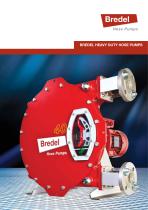
Bredel heavy duty pumps
11 Pages

BREDEL HEAVY DUTY HOSE PUMPS
11 Pages
Other Watson-Marlow Fluid Technology Group products
Hose pumps


*Prices are pre-tax. They exclude delivery charges and customs duties and do not include additional charges for installation or activation options. Prices are indicative only and may vary by country, with changes to the cost of raw materials and exchange rates.
About DirectIndustry
DirectIndustry is a marketplace that offers B2B players a complete experience, from product sourcing to purchase. DirectIndustry is an entity of VirtualExpo Group.
Are you a buyer?
Are you a supplier?