


{{product.productLabel}} {{product.model}}
{{#if product.featureValues}}{{product.productPrice.formattedPrice}} {{#if product.productPrice.priceType === "PRICE_RANGE" }} - {{product.productPrice.formattedPriceMax}} {{/if}}
{{#each product.specData:i}}
{{name}}: {{value}}
{{#i!=(product.specData.length-1)}}
{{/end}}
{{/each}}
{{{product.idpText}}}
{{product.productLabel}} {{product.model}}
{{#if product.featureValues}}{{product.productPrice.formattedPrice}} {{#if product.productPrice.priceType === "PRICE_RANGE" }} - {{product.productPrice.formattedPriceMax}} {{/if}}
{{#each product.specData:i}}
{{name}}: {{value}}
{{#i!=(product.specData.length-1)}}
{{/end}}
{{/each}}
{{{product.idpText}}}
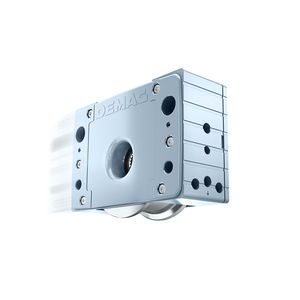

Our DRS wheel block system is a versatile travel wheel system for heavy-load handling applications. With the DRS-M, we have enhanced this system further and added new features to it. Both product ranges can be seamlessly integrated into Demag modular ...
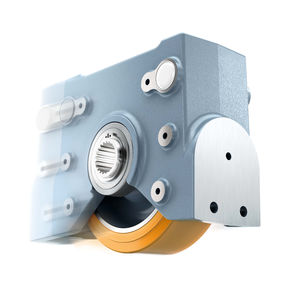
Using our LRS travel wheel system, you can meet your drive requirements quickly and reliably for transport, feed, transfer, distribution or merge applications. We can supply you with the travel wheels and drive units to suit every application. Ready to ...
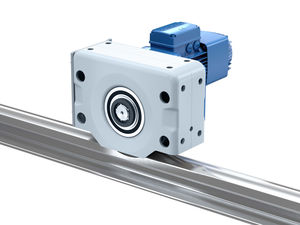
Inside diameter: 125 mm - 400 mm
Our RS wheel block system is suitable for applications in which a housing made of sheet steel is required, such as for impact loads. The RS system is also employed in high-temperature applications up to 250 °C or wherever a stainless steel housing is ...


Outer diameter: 100 mm - 800 mm
... Our wheel heads are ideal for gantry and semi-gantry cranes, and are available in a wide range of wheelbases, wheel channels and diameters to suit your unique requirements. If your cranes require end carriages, wheel heads or bogies, GH Cranes & Components ...
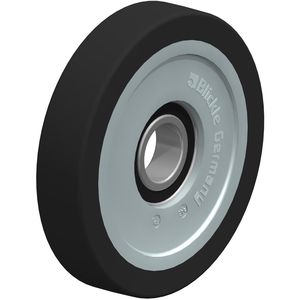

Outer diameter: 60 mm - 125 mm
Inside diameter: 15 mm - 25 mm
Load capacity: 20 N - 25 N
guide rollers use a thermoplastic polyurethane tread which is cast directly onto a nylon wheel centre, in contrast to FPU series wheels. With a hardness of 92 Shore A, the tread forms a chemically bonded and irreversible connection with the wheel centre ...
Blickle Räder+Rollen GmbH u. Co. KG

Outer diameter: 30 mm - 75 mm
Inside diameter: 5 mm - 25 mm
Load capacity: 200 N - 1,250 N
... The Blickle Extrathane® tread of the FTH guide roller series is cast directly onto the ball bearing. The ball bearings are sealed on both sides, providing outstanding protection against contamination. The wheels provide a low level of rolling resistance, ...
Blickle Räder+Rollen GmbH u. Co. KG

Outer diameter: 40 mm - 125 mm
Inside diameter: 10 mm - 25 mm
Load capacity: 450 N - 3,300 N
guide roller series has a steel wheel centre with a cast Blickle Extrathane® polyurethane tread. The ball bearing is sealed on both sides, pressed into the wheel centre and secured with a locking ring. Like the FSTH wheel series, the FTH guide rollers ...
Blickle Räder+Rollen GmbH u. Co. KG


... Ball joint heads GN 648.1 are similar to DIN ISO 12240-4, series K (formerly DIN 648 K).
Otto Ganter GmbH & Co. KG

... Ball joints GN 648.8 are similar to DIN ISO 12240-4, series K. These ball joints are integrated in the ball joint heads GN 648.1 and GN 648.2. ...
Otto Ganter GmbH & Co. KG

Owing to the anodized coating of the fork head, the bearing is virtually non-wearing.
Otto Ganter GmbH & Co. KG


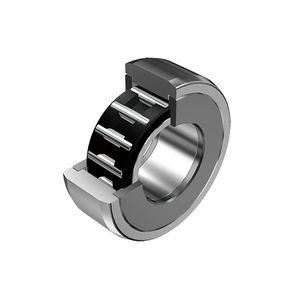

... This model is a non-separable type of bearing system whose inner ring is fixed to the side plates. Since the circumference of the outer ring is spherically ground, it helps lighten a biased load (symbol R). (Model number of the type attached with seals ...
THK
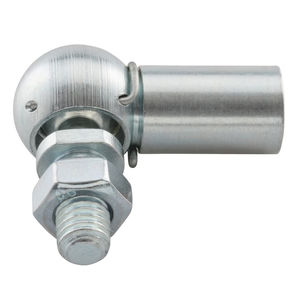

... Standards: DIN 71802 Form: CS Surface: Zinc plated Design: With circlip Thread type: Metric thread RoHS-compliant: Yes Ball joint with wrench flat and hex. nut ...
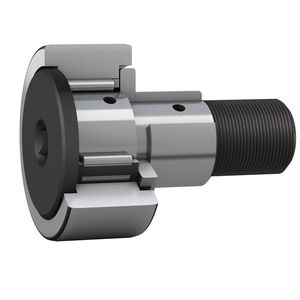

SKF cam followers (stud-type track rollers) are designed to run on all types of tracks and to be used in cam drives, conveyor systems, etc. They are based on either needle (fig. 1) or cylindrical (fig. 2) roller bearings. Instead of an inner ring, they ...
SKF
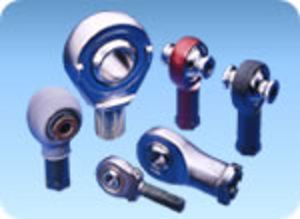

Used in aircraft components, such as wing flaps, engine and wing mounts and hatches, rod-end and spherical bearings function as joints. These bearings are also used extensively in helicopters, trains and automobiles.
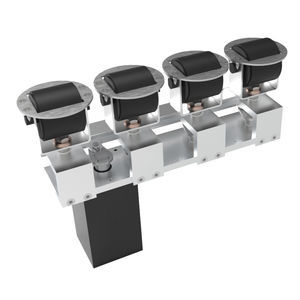

... Diverter and Singulator Systems Fast. Compact. Efficient. Double Your Throughput in a Smaller Design With proprietary small motor technology, Johnson Electric has developed a steerable wheel module that diverts up to twice as fast as similar small- ...
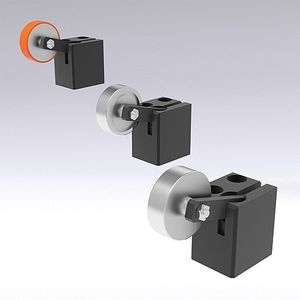

... Track roller, version 01: Standard Track roller, version 10: Standard, at high load of the track roller Track roller, version 20: Standard, for aluminium plates for skin panels Note: Delivery with cheese head screws DIN EN ISO 4762 M8x60 (2x). ...
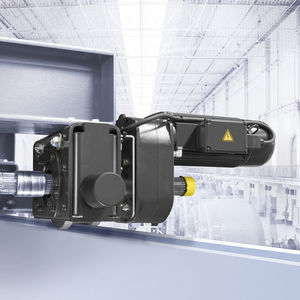

Outer diameter: 125 mm - 400 mm
Load capacity: 5,000 kgf - 30,000 kgf
The SR wheel block programme is used in crane, trolley and systems building as well as in custom applications and special constructions. The SR wheel block comes in six different sizes for wheel loads from 5,000 kg to 30,000 kg. Thanks to various mounting ...
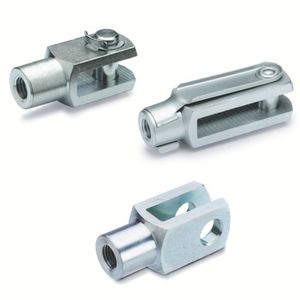

Emile Maurin Eléments Standard Mécaniques
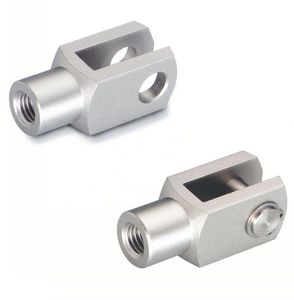
Emile Maurin Eléments Standard Mécaniques
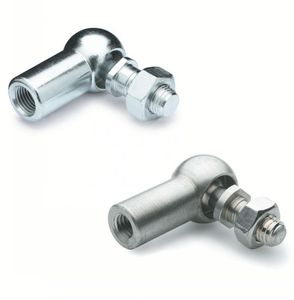
Emile Maurin Eléments Standard Mécaniques
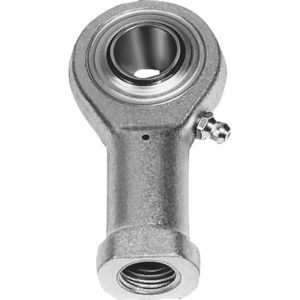

... Rod ends with ball bearing internal thread Material: Casing drop-forged steel, tempered. Version: Galvanized. Internal clearance 15 - 40 µm. Note: The hardened ball bearing is long-term greased and sealed with cover washers. The connection dimensions ...
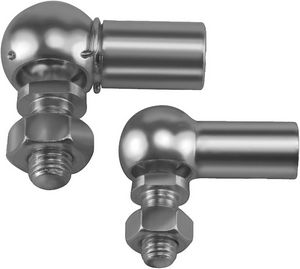
The 27650 by Norelem is a Ball joints DIN 71802 which is made of steel or 1.4305 stainless steel. It comes with a surface finish which is either galvanized or chromated. Plus, upon request, a left handed thread can be achieved. For its natural finish, ...
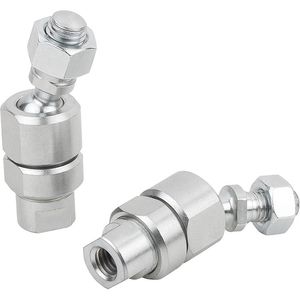
... Axial joints for tractive forces adjustable Material: Steel. Version: Ball thrust pins galvanized and chromed. Ball seat and nuts galvanized. Note: Axial joint suitable for taking up tractive forces. The ball's movement can be controlled or fully locked ...


Outer diameter: 85 mm - 85 mm
Width: 60 mm - 110 mm
Load capacity: 600 daN - 1,100 daN
... Perfect for use on electric pallet trucks, both walk-behind and with operator on board models, even in case of handling very heavy loads, at speeds above 12-16 km / h, and intensive use even over long terms. The excellent rolling resistance still allows ...
Tellure Rôta

Outer diameter: 85, 80 mm
Width: 40 mm - 100 mm
Load capacity: 700 daN - 1,000 daN
... Excellent for use on electric pallet trucks, also in case of heavy loads and high speed handling (up to 16 km/h). Their excellent values of rolling resistance make the manual handling of heavy loads easier. TECHNICAL FEATURES ROLLER TREAD: Vulkollan® ...
Tellure Rôta

Outer diameter: 85, 80 mm
Width: 70 mm - 100 mm
Load capacity: 650 daN - 1,000 daN
... Excellent for use on electric pallet trucks, also in case of heavy loads and high speed handling (up to 16 km/h). Their excellent values of rolling resistance make the manual handling of heavy loads easier.The model with electrowelded brackets allows ...
Tellure Rôta


... Construction: Stainless steel with nylon roller Temperature Range: 32 to 230°F Mounting: 31/64 dia. mounting hole fits #15/32-32 threaded mounting section of valve bodies Operation: Mounts to valve body, actuates valve when mechanically depressed; valve ...


... ► Lockable displacement position Be flexible in your application, customise the handling to your workpiece and lock the displacement position with process reliability ► Large locating flange The large mounting surface simplifies your design and allows ...
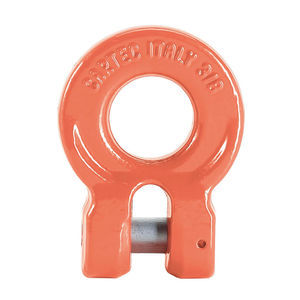

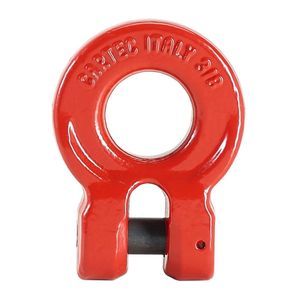


NEFF offers an extensive range of common accessory parts for screw jacks, from precise gimbal bearings to ready-to-install pillow block bearings. We also manufacture custom-tailored solutions in our modern machine park on request.

NEFF offers an extensive range of common accessory parts for screw jacks, from precise gimbal bearings to ready-to-install pillow block bearings. We also manufacture custom-tailored solutions in our modern machine park on request.

NEFF offers an extensive range of common accessory parts for screw jacks, from precise gimbal bearings to ready-to-install pillow block bearings. We also manufacture custom-tailored solutions in our modern machine park on request.
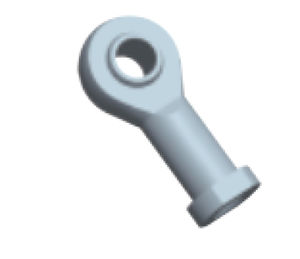

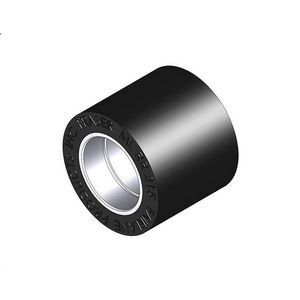

Outer diameter: 1.5 in
Inside diameter: 0.89, 0.88 in
Solid rollers have a smooth surface and are permanently bonded to a steel insert. The steel insert provides rigidity and allows the user to customize the mounting configuration based on the application. Rollers are available in neoprene, nitrile and urethane ...
Fairlane Products
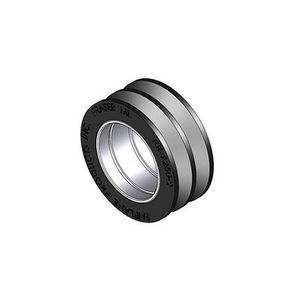
Outer diameter: 2, 2.5, 4 in
Inside diameter: 1.25 in
Finned rollers have grooves on the surface and are permanently bonded to a steel insert. The steel insert provides rigidity and allows the user to customize the mounting configuration based on the application. The grooves create less surface contact on ...
Fairlane Products
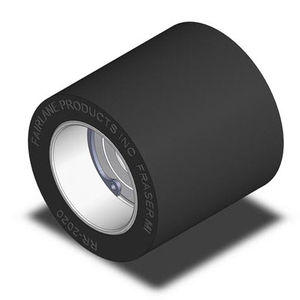
Outer diameter: 1.5 in - 6 in
Inside diameter: 0.5 in - 0.51 in
Solid rollers have a smooth surface and are permanently bonded to a steel insert with the bearings held into place with snap rings. Rollers are available in neoprene, nitrile and urethane materials with hardness ranging from 20 to 95 durometer. Supplied ...
Fairlane Products
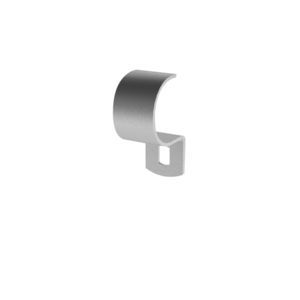

... 1-hole metal clevis Material zinc-coated steel Weight (Kg) 0,020 ...
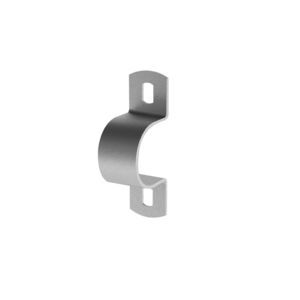
... 2-holes metal clevis Material zinc-coated steel Weight (Kg) 0,025 ...


... Threaded rods for leveling feet. Material: Zinc plated steel Color: Galvanized Packaging Unit: 10 pcs. Extras: Available in different lengths ...


Clevises DIN 71752 / DIN ISO 8140 / CETOP RP102P are some of the most frequently used linking elements in industry. These parts can be found everywhere where simple movements are required, e.g. linear pulling, pushing or even axle offset compensation.
mbo Oßwald GmbH & Co KG

MBO Clevises are U-shaped or forked metal connectors to which another part can be fastened by means of a bolt or pin passing through the ends of the connector. Clevises are used commonly in the industry for carrying out pulling, pushing, linear pulling ...
mbo Oßwald GmbH & Co KG

The MBO elongated hole is ideally used to link elements in the industry especially when adjustments are required in the area of the cross hole. This tool comes with the corresponding mating pieces and can be easily combined with a clevis instead of a ...
mbo Oßwald GmbH & Co KG
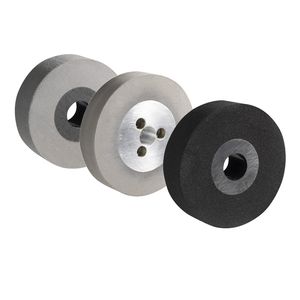

... Our foam rotation wheels (rollers) are specially designed for rotating glass bottles and containers on inspection machines. Their custom-made design ensures perfect compatibility with your equipment and optimizes the reliability of the rotation process. Technical ...

... Our rollers bearings for inspection machines, also known as star wheel rollers, are made of a ball bearing core coated with 92 Shore polyurethane (PU). Designed to ensure smooth and accurate rotation of glass bottles, these rollers are ideal for all ...