|
|
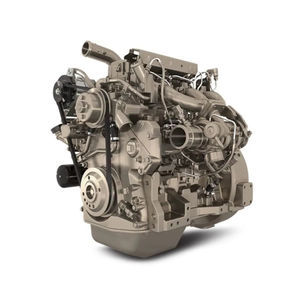
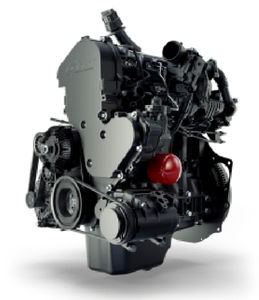
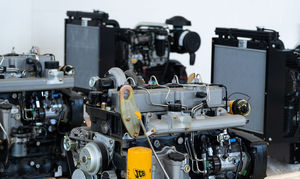
The design features of Perkins engines ensure their suitability for all power generation applications of up to 2264 kVA in diesel power or 1008 kWe on gas. For gen set applications Perkins has a comprehensive range of ElectropaK specifications complete and ready to run.
Where combined heat and power (CHP) is needed, Perkins has a dedicated range of engines offering maximum fuel efficiency and minimal running costs. Every year Perkins produces more than 90,000 diesel and gas engines specifically for electrical power generation. |
|
A highly integrated, low cost in-tank transfer fuel pump (lift fuel pump) that provides reliable, uninterrupted flow of fuel at systems pressure. The Delphi Diesel High Flow Transfer Fuel Pump is designed specifically for diesel and bio-diesel engine applications. It is a modular unit and features a compact package size and high performance capabilities.
The Delphi Diesel High Flow Transfer Fuel Pump meets the requirements of most direct injection diesel (DID) systems. Its maximum flow rate of 190 L/hr at 600 kPa and 12 V offers a common pump envelope that can fulfill many different application requirements for the manufacturer. It offers high efficiency performance: up to 23.8% efficiency at 12 V.
The small size and relatively light weight of the Delphi Diesel High Flow Transfer Fuel Pump enable greater packaging flexibility and greater ease-of-assembly into a fuel tank, compared with competitive transfer fuel pumps for diesel systems. |
|
A range of conventional diesel fuel injectors includes a variety of holder and nozzle combinations for all major engine configurations. Delphi Diesel Injectors are precision-engineered for both mechanically and electronically controlled pump line nozzle systems.
Delphi Diesel Injectors offer nozzle holders for either axial or side feed and are available in various ISO outlines, including: 17 mm, 19 mm, and 21 mm outside diameters. Nozzle options include multi-hole nozzles and printle nozzles. Low spring injector options include; two-stage injectors, start-of-injection sensor injectors, and unit pump injectors.
Delphi offers a wide range of cost competitive diesel fuel injectors to meet almost any customer requirement. |
|
An advanced light duty diesel fuel injection system that features a "breakthrough" injection technology. Delphi's Direct Acting Diesel Common Rail System's patented direct acting fuel injection concept uses a piezo-ceramic actuator to operate the injector needle valve directly to eliminate the need for a servo-hydraulic circuit. The technology enables the injector to spray fuel into the combustion chamber faster, with greater accuracy and at both higher pressures (up to 2000 bar) and with greater pressure efficiencies.
The system also eliminates the need for a return flow, thus all the fuel is injected and no fuel is wasted. This unique design distinguishes the system from competitive designs.
The system will help manufacturers of passenger cars and light duty trucks meet more stringent emissions standards for CO2, including Euro 6 and U.S. Tier II, Bin 5. And, it provides more sophisticated combustion control and includes greater use of electronics to balance emissions control, improved fuel economy and better performance. |
|
Re-circulate metered amounts of exhaust gas into the engine's intake system to help limit the formation of nitrogen oxides (NOx) emissions. Delphi offers a family of Diesel Exhaust Gas Recirculation Valves based on a proven electronically actuated diesel exhaust gas recirculation valve technology.
Delphi Diesel Exhaust Gas Recirculation Valves are available with single poppet, dual poppet, and butterfly valve designs to help meet all ranges of flow requirements for diesel engines. They are available with solenoid, torque motor, or direct current motor actuators to help meet individual customer requirements for force, response, cost and leak.
Delphi Diesel Exhaust Gas Recirculation Valves are designed for engine programs targeted to meet future exhaust emissions requirements in Europe, North America, and Asia. They are designed for both highway and off-highway applications. |
|
A complete engine management system for one- or two-cylinder, four-stroke gasoline engines ranging from 10 to 30 horsepower. Suitable for motorcycles, commercial lawn and garden equipment, power generators and small recreational vehicles.
Includes engine control unit with software and algorithms, fuel injection, throttle control with electronic governor control, air control, ignition coil, sensors and actuators, fuel pump and evaporative emissions canister.
Delphi's extensive experience in automotive fuel injection systems development provides manufacturers of small engine products with a unique systems-level knowledge and analysis resource. |
|
Control airflow to the engine. They feature a butterfly valve that opens and closes the passage into the intake manifold to increase or decrease the volume of incoming air.
Delphi's Electronic Throttle Bodies are designed to provide enhanced powertrain functionality including: drivability, selectable performance, cruise, and traction control. They have fewer components than a conventional system and feature an aluminum body in a smaller, cost-effective package with a single connection.
Delphi's Mechanical Throttle Bodies offer integrated idle air control and throttle position sensor functions. They are available in aluminum and composite material in a wide range of bore sizes.
Delphi has long been a leading manufacturer of mechanical throttle bodies and advanced electronic throttle controls (ETC). |
|
- Engine start/stop
- Engine protection
- Direct input for magnetic pick-up
- RS232 interface for PC based configuration
- RS485 interface for communication
- 50 hour burn-in before test
- Certified for marine use
The SELCO M2000 Engine Controller will control and protect any industrial combustion engine, which accepts discreet I/O signals for control of the crank, the fuel valve and the stop solonoid (if applicable). The engine must be able to supply potential free contacts for starter disengagement and over speed alarm (normally done through a standard tacho relay). The M2000 is typically used as an engine controller for diesel or gas driven generator sets. |
|
A cost-effective family of engine management systems that provide vehicle manufacturers with complete, easy-to-manage packages. The systems can help manufacturers meet demands for improved power, better fuel economy and reduced emissions. Manufacturers can tailor content to individual requirements.
Delphi can also provide necessary algorithms and calibration services as well components and on-board diagnostics to support most 4-, 6- and 8-cylinder gasoline direct injection engine programs including homogeneous mode and spray stratified combustion systems.
High Value, Mid-Function and High Function Engine Management Systems are also available. |
|
Are integral to evaporative emissions control systems in vehicles. Delphi Evaporative Emissions Canisters help limit the amount of gasoline vapors released into the environment by reducing evaporative emissions that occur from fuel storage and delivery in vehicle fuel systems.
Delphi develops Evaporative Emissions Canisters tailored to specific manufacturer requirements and has an extensive portfolio of canister designs to meet any packaging objective. Delphi also offers a range of products to help manufacturers meet a variety of adsorption level requirements for specific engine programs, fuel tank sizes, and emissions regulations.
Delphi employs an exhaustive analysis, testing, and validation process to verify that an Evaporative Emissions Canister will work properly before it is manufactured.
Delphi has more than 35 years' experience in evaporative emissions systems and an in-depth knowledge of canister design. Delphi is one of the world's leading manufacturers of evaporative emissions canisters, producing more than six million units annually. |
|
| For over 35 years GUASCOR has been gaining experience in the marine area, where the engines are exposed to extremely hard working conditions. As a consequence GUASCOR engines have designed and manufactured for such a big duty, keeping fuel consumption at low levels. |
|
Fuel modules are designed to provide uninterrupted flow of fuel to an automotive engine at system pressure. Delphi's Series 7000 Fuel Module can integrate a pump, fuel level sensor, fuel filter, reservoir with active and passive filling mechanisms, and regulator, and in-tank fuel filter in a compact, modular package that is easy to install.
The Delphi Series 7000 Fuel Module is suitable for any gasoline engine in passenger car and light truck applications with a returnless fuel system. The module can be used with gasoline and gasoline-ethanol fuels.
Delphi offers global design, validation and manufacturing capabilities for fuel modules. Delphi has proven experience in fuel delivery modules with more than 100 million produced since 1982. |
|
Highly integrated fuel delivery modules designed for a wide range of small engine electronic fuel injection applications. Delphi Small Engine Fuel Modules are suitable for 50cc to 1500cc engines that operate on gasoline and gasoline-ethanol blended fuels. Common applications include: motorcycles, motor scooters, commercial lawn mowers, marine engines as well as many other small engine products.
Delphi's portfolio of small engine fuel modules includes:
· Top-mount in-tank modules
· Bottom-mount in-tank modules
· In-line modules for external or chassis-mount requirements
Delphi Small Engine Fuel Modules feature the Delphi-T-11 Small Engine Fuel Pump, which can be regulated for flow and pressure, and provides superior low-fuel delivery performance. Its compact size enables greater packaging flexibility when space is at a premium. |
|
VSG%u2122 Series Gas Engine 166 - 260 BHP: F11GSID
BASE ENGINE
CAMSHAFT %u2013 Forged alloy steel, quiet helical gear drive.
CONNECTING RODS %u2013 Forged alloy steel. Angle split.
CRANKCASE %u2013 Integral alloy cast iron crankcase and cylinder frame with nodular iron main bearing caps.
CRANKSHAFT %u2013 Forged alloy steel with precision ground and induction hardened main and crankpin
journals, statically and dynamically balanced. Viscous vibration damper.
CYLINDERS %u2013 Replaceable wet cylinder liners of centrifugally cast alloy iron.
FLYWHEEL %u2013 With 148 tooth ring gear (for Delco electric and Ingersoll Rand air/gas starters). Flywheel
machined for Twin Disc 14%u2033 industrial clutch.
FLYWHEEL HOUSING %u2013 SAE #1 with provision for three magnetic pickups and vertical mounting pads.
PISTONS %u2013 Aluminum alloy, with cast iron top ring insert. Oil cooled. Top ring is chrome plated keystone
type. 10:1 compression ratio. |
|
Waukesha Engine%u2019s VHP%u2122 Series Four line-up offers lower-cost horsepower with the simplicity, dependability and low emissions potential of a simple, rich burn design. Our engineers took a "clean sheet" approach in developing this series%u2019 cylinder head. We combined the best features of existing Waukesha Engine products with the latest engineering technologies. Finite element analysis and solid modeling were used to create a head that%u2019s 33% stronger at increased BMEP levels.
Realizing that the permitting process for air quality standards can vary greatly, Waukesha Engine%u2019s VHP engines are available in a variety
of configurations %u2013 rich burn or lean burn ... standard or pre-chamber %u2013 and with your choice of two control types. Here are the most
popular models:
GSI: The VHP GSI rich burn engine can be combined with a catalytic converter to meet the strictest emissions regulations. In addition,
the GSI Series provides low-cost maintenance, good fuel tolerance and excellent load response.
GL: Waukesha Engine%u2019s VHP GL engines provide both low emissions and high efficiency. The GL Series features a pre-chamber combustion
system to assure low emissions across a wide load and speed range, without a loss of combustion stability at lean air/fuel ratios.
LT: The VHP LT offers the flexibility and reliability of rich burn engines while still meeting regulatory standards for emissions. |
|
In an era where more power and lower life-cycle costs are expected,
the Waukesha ATGL delivers. More power. More fuel efficiency. More emissions control. More uptime. More productivity.
Built on the proven strength of a diesel frame and key diesel components such as crankcase, crankshaft, and connecting rods, the ATGL also incorporates some of the most sophisticated combustion and control
technologies available. The result is an engine series that not only
extended Waukesha%u2019s legendary reputation for hard-working, reliable gas engines but sets the industry standard for high-horsepower, high-torque productivity.
The sixteen-cylinder ATGL
As customer requirements for power, reliability and performance
increased, Waukesha went to work to make the ATGL meet the greatest
demands. The new 16V-AT27GL achieves world-class emissions and fuel
economy, while increasing torque and horsepower by 37% relative to
the 12V-ATGL. It also offers better turndown, better altitude capability,
longer service intervals, lower environmental impact and reduced
maintenance requirements. |
|
This compact engine is purposely designed from the ground up for stationary, spark ignited, gaseous fuel applications. The VGF is not limited to weight-sensitive mobile equipment requirements. Its high weight-to-power ratio provides a solid foundation for years of consistent and dependable operation. For the size and price of other high speed engines, the VGF provides full power around the clock, with substantially reduced maintenance and operating costs. You get more engine, more reliability, more performance, more uptime, and more value - at less cost.
Because of their size to power ratio and high speed continuous-duty capability, VGF engines are remarkably cost-effective to their "clean" design requires less piping. |
|
Cat gas engines fit a wide range of industrial applications. Gas engines carry ratings from 55-4705 bhp (41-3509 bkW).
|
|
APG3000: Gas Enginator® Generating System Featuring ESM® Technology 2800 - 3200 kW
BASIC SPECIFICATIONS
AFR – Air Fuel Ratio control included with ESM®. Load based control with continuous feedback. Requires kW input.
CONTROL SYSTEM – Waukesha Engine System Manager (ESM) integrates fuel injection, spark timing control, speed governing, detonation protection, start-stop control, diagnostic tools, fault logging and engine
safeties. Engine Control Unit (ECU) is central brain of the control system and main customer interface. Interface with ESM is through 25 foot (7.6m) harness to local panel, through MODBUS RTU slave connection RS-485 multidrop hardware, and through the Electronic Service Program (ESP). Customer’s connections are only required to the local panel, fuel valve, and for 24V DC power supply. Compatible with Woodward load sharing module. ESM meets Canadian Standard Association Class I, Division 2, Group D, hazardous location requirements. Logic provided for engine preheat, engine prelube, gas train and exhaust venting.
CRANKCASE - Nodular cast iron, fully ribbed, integral with cylinder frame. Hydraulically fastened main bearing caps. Optimal compact and rigid design including large inspection doors.
CYLINDERS - Removable wet type cylinder liners, centrifugally cast iron with anti polishing ring.
CYLINDER HEADS - Eighteen interchangeable robust design cylinder heads with hydraulically tensioned studs. Grey cast iron. Four valves per head - two intake and two exhaust valve with replaceable intake and exhaust valve seats, stellite-coated seat faces and chromium-plated stems. Watercooled flame deck and prechamber. Prechamber is heat resistant alloy steel. |
|
APG2000: Gas Enginator® Generating System Featuring ESM® Technology 1860 - 2100 kW
AFR – Air Fuel Ratio control included with ESM®. Load based control with continuous feedback. Requires kW input.
CONTROL SYSTEM – Waukesha Engine System Manager (ESM®) integrates fuel injection, spark timing control, speed governing, detonation protection, start-stop control, diagnostic tools, fault logging and engine
safeties. Engine Control Unit (ECU) is central brain of the control system and main customer interface. Interface with ESM is through 25 foot (7.6m) harness to local panel, through MODBUS RTU slave connection RS-485 multidrop hardware, and through the Electronic Service Program (ESP). Customer’s connections are only required to the local panel, fuel valve, and for 24V DC power supply. Compatible with Woodward load sharing module. ESM meets Canadian Standard Association Class I, Division 2, Group D, hazardous location requirements. Logic provided for engine preheat, engine prelube, gas train and exhaust venting.
CRANKCASE – Nodular cast iron, fully ribbed, integral with cylinder frame. Hydraulically fastened main bearing caps. Optimal compact and rigid design including large inspection doors.
CYLINDERS – Removable wet type cylinder liners, centrifugally cast iron with anti polishing ring.
CYLINDER HEADS – Twelve interchangeable robust design cylinder heads with
hydraulically tensioned studs. Grey cast iron. Four valves per head - two intake and two
exhaust valve with replaceable intake and exhaust valve seats, stellite-coated seat faces and chromiumplated stems. Water-cooled flame deck and prechamber. Prechamber is heat resistant alloy steel. |
|
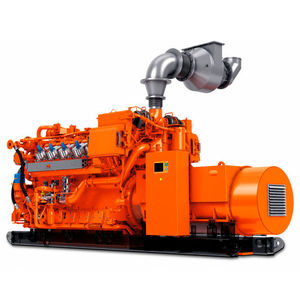
APG1000: APG Gas Enginator® Generating System Featuring ESM® Technology 1000 - 1100 kW
The first of the new APG Series, the APG1000 Enginator genset, is a 1MW unit that extends Waukesha's high-speed product offering into the 800 to 1100 kW range. Used alone or grouped with other units, this one megawatt genset is one of the key building blocks in developing gasdriven
power generation solutions that meet customer needs.
The APG1000 has been developed in cooperation with the U.S. Department of Energy (DOE) as part of the DOE's Advanced Reciprocating Engine Systems (ARES) program. The ARES program was created to accelerate the development of large natural gas engines that operate
with increased efficiency while meeting tight emissions requirements, maintaining current levels of reliability and durability, and reducing ownership costs.
The APG1000 is a 16-cylinder, turbocharged, intercooled, lean combustion power generation unit that features ultra-low NOx capability and patented ignition system and combustion chamber concepts. It is rated at 1000 kW at 50 Hz and 1100 kW at 60 Hz - 500 and 1800 rpm, respectively. It is one of the most efficient 1 MW units available at 1800 rpm, 42 % BTE (brake thermal efficiency) and is among the lowest in lean burn emissions (1 g/bhp-hr NOx). At 42 % BTE, the APG1000 is six percentage points better than the previous generation of the engine from which the APG1000 is derived.
CONTROL SYSTEM - Waukesha Engine System Manager (ESM) integrates spark timing control, speed governing, detonation protection, start-stop control, diagnostic tools, fault logging and engine safeties. Engine Control Unit (ECU) is central brain of the control system and main customer interface. Interface with ESM is through 25 foot (7.6m) harness to local panel, through MODBUS RTU slave connection RS-485 multidrop hardware, and through the Electronic Service Program (ESP). Customer’s connections are only required to the local panel, fuel valve, and for 24V DC power supply. Compatible with Woodward load sharing module. ESM meets Canadian Standard Association Class 1, Division 2, Group D, hazardous location requirements. |
|
|
|