|
|
The MTRJ Field offers an easy system to
upgrade from a standard to an environmental
MTRJ.
- Sealed against fluids and dust (IP67)
- Shock, Vibration proof,
- No cabling operation in field and no
tools required for installation
With the patented RJStop ® system you can use a standard MTRJ patchcord in a metallic plug which will protect it from shocks, dust and fluids. No hazardous field cabling.
This metallic plug is connected into a receptacle, using a Tri Start Thread coupling mechanism (MIL-DTL-38999 series III type) with anti-decoupling device for high vibrations.
Optical performance :
- Number of Channel : 1/2/4
- typical Insertion Loss : 0,5db in MM
- Durability 500 mating/unmating cycles
(changes for<0,2 db)
Applications: railway, radars, military headquarters, communication systems on battle fields, naval...
|
|
|
|
|
|
|
Multimode, step-index optical fibers offer the most efficient and flexible delivery of high power laser beams. The correct components should be selected for minimizing beam quality degradation and optimum robustness. Smaller fibers tend to produce less degradation to beam quality but the minimum usable fiber size is limited by the quality of the laser beam, focusing optic and the numerical aperture (N.A.) of the fiber. Selection of the appropriate fiber type is an important consideration because the characteristics of the output beam will enhance or degrade the utility of the fiber optic delivered beam for different applications. The other components of the beam delivery system also impact performance: High power handling requires high quality end face surface finish and specially designed connectors that can withstand heating which comes from the absorption of spurious reflections or refractions at the fiber end faces. The fiber optic delivery system allows the laser beam to be transmitted in a small, flexible cable and is ideal when the laser beam must be delivered along a complex path or processing requires complicated manipulation of the beam delivery optics.
|
|
A rugged yet flexible beam delivery system with patented features for industry-leading reliability and performance
* A standard feature on all new JK™ Series lasers, both pulsed and continuous-wave
* Complete field-retrofittable upgrade packages available for all prior generation JK700 Series lasers
* Plug-In Pre-Aligned (PIPA) coupling eliminates manual fiber alignment, reducing fiber change time requirements from hours to minutes
* Patented termination design helps eliminate back reflection problems when welding highly reflective materials
* Integral fiber monitoring system
* Optional BendLock for robotic applications
* Standard fiber-optic lengths are 5, 10, 15, 30 and 50m
|
|
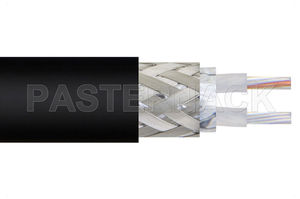
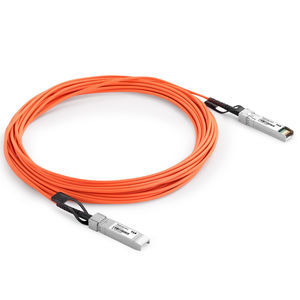
Pasternack's Fiber-optic cables consist of fine strands of optically pure glass and are designed carry digital information safely over long distances for RF & Microwave applications. Standard cable lengths are 1, 2, 3, 5 meters in length (62.5/125 Multi Mode and 9/125 Single Mode).
Custom-length cable assemblies are available upon request, call or email us today!
|
|
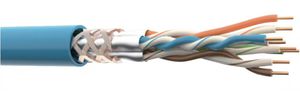
Here you will find the right cable type for every application and for every installation field, e.g. patch distributor, raised floor or Telecom MAN/WAN street cabinets and industrial machine connection as well.
|
|
FIBRE PROTECTION & CABLING SOLUTIONS Chapter B
Optical Fibre Bend Limiting Tubing
Zip Tool for Fibre Bundles
Tube & Pipe Clip
Slotted Multi Bracket
Tube Gripper Saddle
Strain Relief Gland
Cable Breakout Unit
Manifold
Duplexer
Cable and Patch Cord Anchor
Optical Fibre Ties: Wrap-It, Contour Head, Releasable Arrowhead Tie
Self Mount Ties, Tie On Arrowhead, Tie On Base, Screw Mount, Beaded Tie
Flat Tie Holder
|
|
Application :
C41 indoor (C41 : Communication Control Command Computer Intelligence)
C41 outdoor (C41 : Communication Control Command Computer Intelligence)
Navy indoor
In Flight entertainment
In Flight remote control
Trucking
Robotic machining
|
|
|
When looking for a high quality fiber with superior transmission and a numerical aperture (N.A.) of 0.22 for efficient light coupling, the Superguide™ SFS is the fiber of choice. The Superguide™ fiber is drawn from preforms manufactured by the Plasma Outside Deposition (POD) process. Rods of extremely pure synthetic fused silica are coated with fluorine doped silica layers to obtain preforms with step-like refractive index profiles. Plasma torches prepare the reaction compounds from SiCl4, O2, and a fluorine containing gas. Strong thermal gradients combined with the temperature plasma lead to chemical deposition conditions, which allow very high fluorine concentrations to be incorporated in the fused silica network. Refractive index differences of 0.27 corresponding to numerical apertures in excess of 0.28 have been realized with undoped core rods.
|
|
New Tighter Tolerances!Step Index
Characteristics
Numerical Aperture: 0.22 ± 0.02
Full Acceptance Cone: 25.4 degrees
UV-Vis-NIR Transmission, 180nm to 1,150nm
Superior Radiation Resistant
High Laser Damage Threshold
Sterilizable*
Bio-compatible Materials – USP Class VI*
High -OH Silica Core, Doped Silica Clad
Polyimide Buffer Standard; Silicone, Acrylate,
Fluoropolymer, Aluminum & dual buffers also available
Polyimide Concentricity ± 3µm
Sizes for Bundling
Tighter Tolerances Available
Temperature: Operating –65ºC to +300ºC
Intermittent, up to 400ºC
Proof Tested to 100kpsi
|
|
|
|
|
|
High Power Laser Delivery Assemblies
Multimode, step-index optical fibers offer the most efficient and flexible delivery of high power laser beams. The correct components should be selected for minimizing beam quality degradation and optimum robustness. Smaller fibers tend to produce less degradation to beam quality but the minimum usable fiber size is limited by the quality of the laser beam, focusing optic and the numerical aperture (N.A.) of the fiber. Selection of the appropriate fiber type is an important consideration because the characteristics of the output beam will enhance or degrade the utility of the fiber optic delivered beam for different applications. The other components of the beam delivery system also impact performance: High power handling requires high quality end face surface finish and specially designed connectors that can withstand heating which comes from the absorption of spurious reflections at the fiber end faces. The fiber optic delivery system allows the laser beam to be transmitted in a small, flexible cable and is ideal when the laser beam must be delivered along a complex path or processing requires complicated manipulation of the beam delivery optics.
|
|
|
Silica optical fibers, despite their high strength, require coatings to protect and maintain their strength during installation and operation when high temperatures, abrasion, bending, and other stresses can cause fiber fatigue. OFS offers both single-mode and multimode optical fibers with protective coating layers applied directly to the glass during the fiber draw process.
|
|
HOLLOW SILICA Waveguide (HSW™)
- IR Applications
Characteristics
Wavelength Range 2.9 µm past 10.6µm
High Laser Damage Threshold: > 1000W @ 10.6µm
Strong and Flexible
Non-Toxic: Sterilizable*
Low Insertion Loss
No End Reflection
Transmission Optimized for CO2 or Er:YAG wavelengths
|
|
Composite cables
Axon' design and manufacture composite cables specially designed to meet customer requirements irrespective of the application.
They are able to resist the most demanding electrical, mechanical and environmental requirements.
Advantages
Dependent on the application
- Flexibility
- Flexlife, resistance to torsion
- Resistance to fuel, heat and solvents
- EMI protection
Resistance to sterilisation (medical application)
Construction
- Flat or round construction integrating flat or round wires, coaxial cables, tubes, shielded cables, ...
- Hybrid electrical, electro-optical cables
Composite cables insulated with fluorinated materials, heavy metal free materials, halogen free materials, PTFE, celloflon®, vitax™, PEEK, silicone and other materials suited for your applications
Applications
- Electromechanics
- Engines
- Machines
- Robots
- Medical imaging
- Endoscopy
- Radars
- Missiles
- Electronic systems
- Satellite cabling
- Research, ...
|
|
|
|
|
|
Cabelte produced the first optical cable (multimode) in Portugal, in 1983. The cable was supplied to “Instituto para Desenvolvimento das Comunicações (IDC)” for the trial connection between “IDC” and “Inesc -Instituto de Engenharia de Sistemas e Computadores”.
The first cables produced for commercialization, called “light guide cables”, were made of 50/125 multimode fibers, tight structure, and had 4 to 6 fibers, regular customers were the former “CTT/TLP”, today “PT Comunicações”.
The big increase occurred in the production of optical fibre cables at Cabelte takes place at the beginning of the 90s, with the construction of a new plant and with the introduction of “loose” technology.
Since then, optical fiber has become more and more important and today is one of the most important telecommunication channels, due to the characteristics of the fiber itself, particularly its low attenuation associated with an almost infinite bandwidth (single mode fibers), and to the development occurred in the optical transmission systems.
Today, optical fiber cables are part of all communication “backbones” in metropolitan and regional networks. The presence of “triple pay” services, interactive games, high definition television, telemedicine, among others, requiring a high bandwidth in the access network, foresee the gradual replacement of copper by fiber optics up to the subscriber.
|
|
OFS offers a suite of optical fibers, cables, and custom connectorized probes for delivering high laser powers for medical and industrial uses. We offer reusable fibers for aesthetic laser treatments and disposable fibers for urology. Industry uses our fibers in their lasers for cutting, welding, and etching.
Our HCXtreme™ Optical Fiber product line for high power under tight bends offers fibers in a selection of core sizes and numerical apertures, addressing the need to transmit high laser powers at the same time the fiber is subject to extreme bending conditions. Additionally, because many of these fibers are intended for intra-body use, they are biocompatible, non-toxic, and sterilizable.
Other large core HCS® optical fibers are available for specific applications. OH content, numerical aperture, core size, cladding and buffering materials can all be adjusted to meet specific needs.
|
|
When looking for a high quality fiber with superior transmission and a numerical aperture (N.A.) of 0.22 for efficient light coupling, the Anhydroguide™ AFS is the fiber of choice. The Anhydroguide™ fiber is drawn from
preforms manufactured by the Plasma Outside Deposition (POD) process. Rods of extremely pure synthetic fused silica are coated with fluorine doped silica layers to obtain preforms with step-like refractive index profiles. Plasma
torches prepare the reaction compounds from SiCl4, O2, and a fluorine containing gas. Strong thermal gradients combined with the temperature plasma lead to chemical deposition conditions, which allow very high fluorine
concentrations to be incorporated in the fused silica network. Refractive index differences of 0.27 corresponding to numerical apertures in excess of 0.28 have been realized with undoped core rods.
|
|
|
Multimode fiber is characterized by its ability to allow numerous modes of light to be transmitted simultaneously. With a large core diameter multimode fiber is coupled easier then single-mode fiber resulting in its wide use in variety of industry, scientific and medical applications.
|
|
|
When looking for a low cost fiber with a high numerical aperture (N.A.) for more efficient light coupling, the Anhydroguide™ PCS is the fiber of choice. With an N.A. of 0.37 and a plastic cladding that allows a high core-to-clad ratio, satisfies those requirements and more. The pure fused silica (SiO2) used in the core of the Anhydroguide™ fiber is made by reacting silicon tetrachloride (SiCl4) with oxygen (O2) using a plasma arc rather than an oxy-hydrogen flame. This ensures that the residual hydroxyl concentration (OH) will be low in the core material resulting in superior infrared transmission as compared with flame prepared silica that is used in the companion product, Superguide™ which has superior ultraviolet (UV) transmission.
|
|
|
Designed for efficient single mode operation around 1060 nm when cladding pumped at 808 nm.
|
|
|
|
|
|
MARINE AND UNDERWATER APPLICATIONS
LAPP MULLER works with ships and underwater building repairs companies (welding, cutting, etc…), offshore oceanographic institutes, research centers, manufacturer of underwater acoustic instrumentation and engineering companies, ect… on the design and manufacture of composite electrical or optical cables.
-DIVING UMBILICALS
(power, signal, video, hydrolic )
Diving bells, narguiles
-SUB MARINE UMBILICALS
(electrical, optical, hydraulic and mechanical functions )
Submarine works, offshore working and research
-FLOATING CABLES
ROV Tethers, sonar supply
- ARMOURED CABLES
ROV Main Lift Cable, Tow Cable, Submarine antennas
-INSTRUMENTATION CABLES
Seismic and oceanographicals
-INBOARD CABLES
Power and control cables for naval defence and maritime industry
-HIGH TENACITY FIBER CABLES
Stay mast antennas, mooring line for baskets, for buoys
-TERMINATIONS
Design, Realization and Fitting of stainless, titanium or other special alloy terminations.
- CONNECTORS MOUNTING
These companies trust us :
DCN, IFREMER, THALES UNDERWATER SYSTEMS, ECA,, COMEX, SINGLE BUOY MOORINGS...
|
|
When looking for a low cost fiber with a high numerical aperture (N.A.) for more efficient light coupling,
the Anhydroguide™ PCS is the fiber of choice. With an N.A. of 0.37 and a plastic cladding that allows a high
core-to-clad ratio, satisfies those requirements and more. The pure fused silica (SiO2) used in the core of the
Anhydroguide™ fiber is made by reacting silicon tetrachloride (SiCl4) with oxygen (O2) using a plasma arc rather
than an oxy-hydrogen flame. This ensures that the residual hydroxyl concentration (OH) will be low in the core
material resulting in superior infrared transmission as compared with flame prepared silica that is used in the
companion product, Superguide™ which has superior ultraviolet (UV) transmission.
|
|
Polymer optical fiber (POF) has been on the market for many years. Both the fiber core and the cladding are made of polymer. Key advantages of polymer optical fibers are high flexibility (high alternate bending resistance with smaller bending radii) as well as more economical connecting and transmission technology than in the case of glass. Moreover, this type of fiber also has all the major benefits of a fiber optical cable connection: EMC security, clear galvanic separation, no crosstalk, low weight, etc.
POF can meanwhile be used to connect over distances up to 70 metres, which is normally sufficient for both industrial environments and smaller office as well as home networks. It is even possible to cover distances up to 150 metres by selecting suitable active components.
Step-index standard POF
Step-index POF with low/high NA
Step-index POF for high temperature
Step-index POF for fast ethernet
Graded index POF
POF cables with UL-Standards
|
|
Polymer cladded fiber (PCF) has been on the market for many years, standing out by being very robust and easy to assemble. Compared with thick-core glass fibers, they are not only more robust but also considerably cheaper.
PCF consists of a silica core with polymer cladding. What is especially important here is good adhesion of the cladding material to the glass core, which does not go without saying because of the different expansion coefficients especially at high temperatures. This is where the many products on the market differ most. It is also why there are a vast number of different abbreviations such as PCS, HCS, HPCF, etc.
Low attenuation makes it possible to cover distances up to 500 metres with systems designed for POF (about 660nm), and up to 4 kilometres with 850 nm systems.
Cables
Fiber specifications
Connectors
Assembly tools
Measuring equipment
Cable Assemblies
|
|
Sensors with fibre optics are used for optoelectronic sensing applications where mounting space is limited or where high operating temperatures do not permit the use of conventional sensors. Due to their small design and optical properties they do not only detect the presence of objects but also quality-related details, e.g. thread pitches of screws.
Transmitter and receiver of the fibre optic sensors are integrated into one housing. The fibre optic is connected to the switching amplifier using a special adapter, and so there is almost no loss. Fibre optics can be used as through-beam sensors or diffuse reflection sensors.
Fibre optics consist of flexible glass fibre bundles protected against external influence by a sheath.
|
|
Nufern designs and manufactures a broad range of specialty optical fiber. From photosensitive fibers to rad-hard fibers to high-power double clad fibers, you can trust Nufern to produce optical fiber to the world's highest standards for quality, reliability, and repeatability.
If you don't find what you need among our standard fiber offerings, we'll be happy to discuss creating a custom fiber.
|
|
A backbone by LEAF® fiber provides network capacity and flexibility enabling future growth and compatibility with emerging network technologies. With its moderate dispersion and large effective area, LEAF fiber continues to be the fiber of choice for today’s high-data-rate and tomorrow’s all-optical long-haul and metropolitan networks.
Quick Facts:
- LEAF fiber is the most widely deployed NZ-DSF fiber in the world
- An ITU-T G.655-compliant fiber optimized for long-haul and high-data-rate metro networks
- LEAF fiber is the industry leader in PMD
- Introduced in 1998, LEAF fiber was the world’s first NZ-DSF with large effective area
- Winner of 4 industry excellence awards
- Deployed on 6 of the world’s seven continents and in more than 2 dozen countries
- The world's first low-water-peak NZ-DSF
|
|
Short description :
With superior technology and profile control, Corning® InfiniCor® multimode fibers revolutionize performance in local area networks, storage area networks and central office interconnects. InfiniCor multimode fibers are optimized for high performance with laser-based protocols such as 10 Gigabit Ethernet.
|
|
|
Production of glass fibers for lightguide technology - Hund supplies glassfibers - for medical application, signalling technology, industrial technology and special purposes - in glass and quartz - fibers of infinite length, calibrated fiber bundles and finished lightguides, on request also with connecting optics. We offer tailored solutions for your illumination- and detecting problems. By means of flexible lightguides we bring the light precisely to a spot - without thermal stress for the illuminated object, for shadowless illumination of small objects in industrial production and quality assurance and also for any kind of object illumination. For any questions regarding our glassfiber program our team is at your disposal.
|
|
|
We are a world leader in optic fiber rods. Core bars from SCHOTT are used by almost all producers of optical fibers. The particularly outstanding features of our products are their superior transmission and low attenuation values.
|
|
|
|