


{{product.productLabel}} {{product.model}}
{{#if product.featureValues}}{{product.productPrice.formattedPrice}} {{#if product.productPrice.priceType === "PRICE_RANGE" }} - {{product.productPrice.formattedPriceMax}} {{/if}}
{{#each product.specData:i}}
{{name}}: {{value}}
{{#i!=(product.specData.length-1)}}
{{/end}}
{{/each}}
{{{product.idpText}}}
{{product.productLabel}} {{product.model}}
{{#if product.featureValues}}{{product.productPrice.formattedPrice}} {{#if product.productPrice.priceType === "PRICE_RANGE" }} - {{product.productPrice.formattedPriceMax}} {{/if}}
{{#each product.specData:i}}
{{name}}: {{value}}
{{#i!=(product.specData.length-1)}}
{{/end}}
{{/each}}
{{{product.idpText}}}
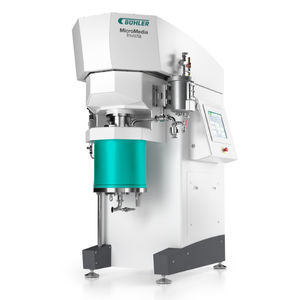

... Overview
The MicroMedia Invicta is a bead mill for wet grinding that pairs a redesigned processing unit with a new bead separation system. It improves energy efficiency, increases throughput and raises flow rates while fitting the same compact ...
Bühler Group
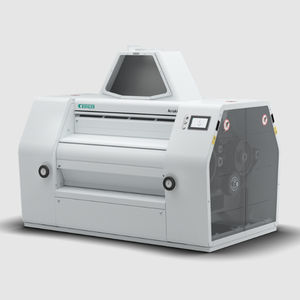
... Overview
Arrakis (MRRK) is a four- and eight-roller mill designed for efficient, high-throughput grinding of a single commodity. The machine is engineered for stable product flow, simplified installation and straightforward operation.
Key ...
Bühler Group
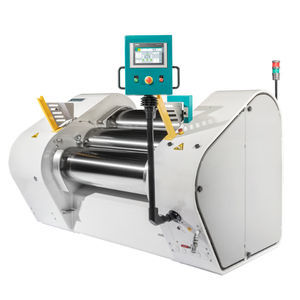
... Overview
Our versatile SD three-roll mills deliver consistent quality, high throughput and repeatable processing for nearly any viscosity mass. Suitable for inks, electronic pastes, cosmetics and pharmaceutical pastes, the SD series supports ...
Bühler Group
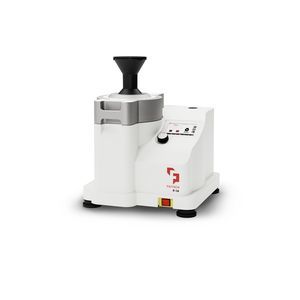

Rotational speed: 2,000 rpm - 24,000 rpm
Output: 15 kg/h
Motor power: 1,100 W - 2,700 W
... FRITSCH COMBINES IMPACT AND CUTTING ACTION IN A SINGLE DEVICE
With the P-14, FRITSCH has developed an all-in-one solution for impact, shearing, and cutting size reduction. It is currently the only rotor mill based on the impact ...
Fritsch GmbH - Milling and Sizing
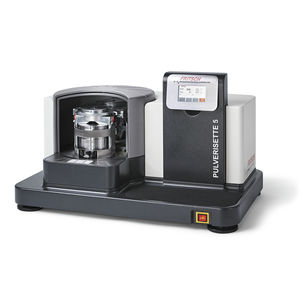
Rotational speed: 800, 1,600 rpm
... FRITSCH Planetary Ball Mills – high-performance all-rounder in routine laboratory work The Planetary Mill P-5 premium with 2 grinding stations is the ideal mill for fast wet and dry grinding of hard, medium-hard, soft, brittle and moist samples as well ...
Fritsch GmbH - Milling and Sizing
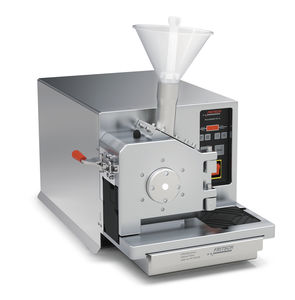
Rotational speed: 300 rpm - 3,000 rpm
Output: 60 kg/h
... Variable 300 – 3000 rpm for fine comminution Due to the variable rotational speed adjustment in increments of hundred between 300 and 3000 rpm you can fine tune the comminution process for each sample within a very wide range of applications. The high-speed ...
Fritsch GmbH - Milling and Sizing
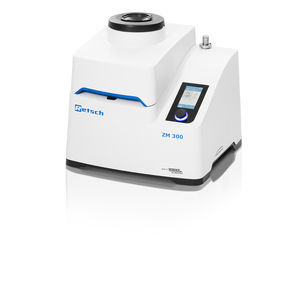

Final grain size: 40 µm
Rotational speed: 6,000 rpm - 23,000 rpm
Machine weight: 38 kg
... Rotor mills are used for high-speed size reduction of soft to medium-hard as well as temperature-sensitive or fibrous materials. The powerful Ultra Centrifugal Mill ZM 300 provides maximum grinding performance combined with ease of use. The variable ...
Retsch GmbH

Rotational speed: 2,000 rpm - 10,000 rpm
Motor power: 1,000 W
Machine length: 392 mm
... The knife mill GRINDOMIX GM 200 is the ideal instrument for grinding and homogenizing foods and feeds. With two sharp, robust blades and a powerful 1000 W motor, it allows to process sample volumes up to 0.7 liters quickly and effectively. The GM ...
Retsch GmbH
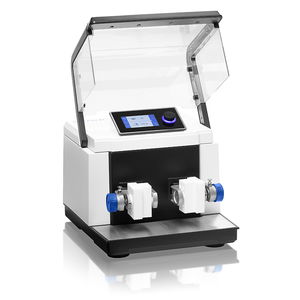
Final grain size: 1 mm - 8 mm
Rotational speed: 180 rpm - 1,800 rpm
Motor power: 165 W
... The Mixer Mill MM 400 is a true multipurpose mill designed for dry, wet and cryogenic grinding of small volumes up to 2 x 20 ml. It mixes and homogenizes powders and suspensions with a frequency of 30 Hz within seconds – unbeatably fast and easy to operate. The ...
Retsch GmbH


Rotational speed: 28,000 rpm
Motor power: 160 W
Machine height: 240 mm
... Batch mill for 2 different grinding procedures: Impact grinding of hard, brittle or non-elastic grinding materials with high-grade stainless steel beater. This beater can be used for a Mohs hardness up to 6 (incl. with delivery). Cutting grinding for ...
IKA
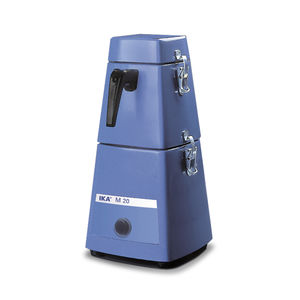
Rotational speed: 20,000 rpm
Machine width: 170 mm
Machine height: 350 mm
... Batch mill suitable for dry grinding of hard and brittle substances up to 250 ml with a fixed speed of 20.000 rpm. • Double-walled grinding chamber can be cooled with water through two hose adapters • Removable grinding chamber, easy to clean • Two ...
IKA

Rotational speed: 400 rpm - 8,000 rpm
Sound pressure: 50 dB
Machine length: 178 mm
... Crushing and dissolving of tablets for subsequent analysis: Many standardized test procedures in the pharmaceutical industry, such as the pharmacopoeia tests described in official compendia (United States Pharmacopeia (USP 905), European Pharmacopoeia ...
IKA
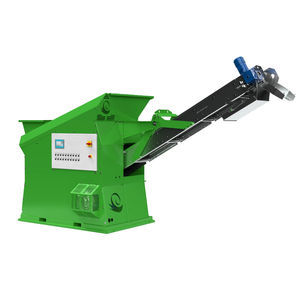

Output: 300 kg/h - 3,000 kg/h
Motor power: 12.5 kW
Machine length: 1,560 mm
The PMG series industrial pre-shredders by Guidetti represent robust and versatile solutions for material preparation in the initial stages of recycling. Designed to ensure high cutting efficiency and great operational flexibility, they are capable of ...
Guidetti Recycling Systems

Output: 300 kg/h - 3,000 kg/h
Motor power: 38.5 kW
Machine length: 2,110 mm
The PMG series industrial pre-shredders by Guidetti represent robust and versatile solutions for material preparation in the initial stages of recycling. Designed to ensure high cutting efficiency and great operational flexibility, they are capable of ...
Guidetti Recycling Systems

Output: 300 kg/h - 3,000 kg/h
Motor power: 78 kW
Machine length: 2,100, 3,560 mm
The PMG series industrial pre-shredders by Guidetti represent robust and versatile solutions for material preparation in the initial stages of recycling. Designed to ensure high cutting efficiency and great operational flexibility, they are capable of ...
Guidetti Recycling Systems


Rotational speed: max 30000.0 rpm
... Different products and applications also require different grinding techniques on a laboratory scale. Simple grinding tool changes make this small laboratory mill the right one for the job! The Condux® 60 is a high speed impact mill that can be used ...
NETZSCH Grinding & Dispersing

Output: 5 kg/h - 14,000 kg/h
Motor power: 3 kW - 400 kW
... Our company represents competence in grinding technology, and the ability to meet demanding customer requirements. We are the only company to offer basket, pin, circulation and passage mills. We have been building horizontal disc mills for more than ...
NETZSCH Grinding & Dispersing
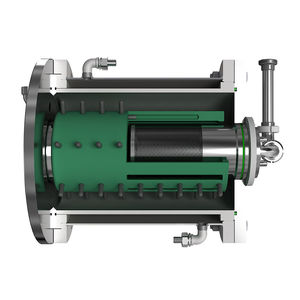
Suitable for a wide variety of every viscosity and almost any product, with this technology you will achieve the highest product qualities and finenesses into the nanometer range using a wide variety of grinding media from 0.3 mm to 3 mm in diameter. ...
NETZSCH Grinding & Dispersing
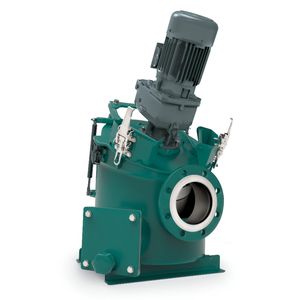

Machine weight: 120, 195 kg
Grinding systems protect your system. With the universally applicable M-Ovas® cutting plate macerator, you can prevent possible damage to your pump caused by impurities. The individually adjustable cutting plate prevents the entry of substantial solids ...

Machine weight: 170, 260, 320 kg
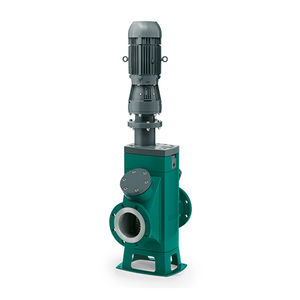
The N.Mac® channel twin shaft grinder crushes large and solid particles in liquid media and impresses with its innovative FSIP® concept (Full Service in Place). It is ideal for a wide range of applications, from wastewater treatment to food and fruit ...
Machine weight: 220, 780, 360 kg
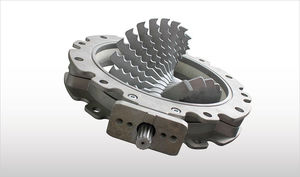
Protect your system from impurities: The N.Mac® inline twin shaft grinder crushes large and solid particles in liquid media and impresses with its FSIP® concept (Full Service in Place). It is ideal for various applications, from wastewater treatment and ...

Machine weight: 9 kg - 40 kg
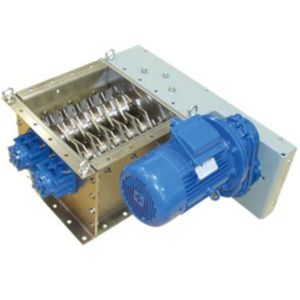
... The Lump Breaking Feeder Valve enables safe and smooth segregation of bulk materials that tend to pack and form lumps during production and/or storage. Its design favours gentle crushing even with hardened material under a medium-high material column. The ...
Motor power: 2, 3, 4, 6 kW
Machine weight: 250, 340 kg
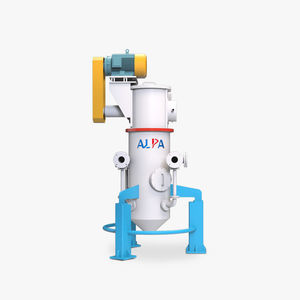
... The DLP Lump Breaker is an efficient, economic machine specially designed for breaking up friable lumps in bulk materials discharged from silos, bins or hoppers. The DLP Lump Breaker consists of a square cross section casing with upper and lower flange, ...

Final grain size: 3 µm - 45 µm
Output: 0 kg/h - 12,000 kg/h
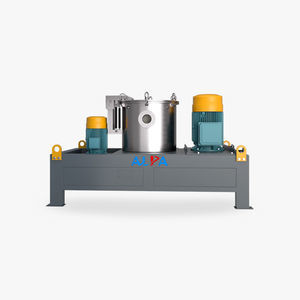
... Suitable for grinding materials with high hardness, high purity and high added value. Low-temperature pulverization without medium, especially suitable for heat-sensitive, low-melting materials. Control particle sizes precisely, available particle ...
Shandong ALPA Powder Technology Co., Ltd.
Final grain size: 10 µm - 1,000 µm
Output: 1 kg/h - 20,000 kg/h
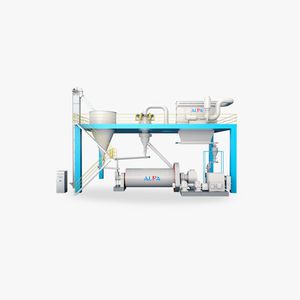
... • Integration of grinding and classifying, classifying wheel is adjusted to obtain ideal particle, and the classifying rotor can be installed horizontally or vertically. • Different types of grinding disc are used based on characteristics of materials ...
Shandong ALPA Powder Technology Co., Ltd.
Output: 0 t/h - 11 t/h
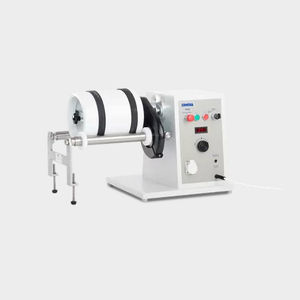
... The product particle size control is flexible, special design is adopted to reduce noise and emission. Automatic control, easy to operate. According to the scale of investment, it provides personalized customized scheme and provides value-added services. It ...
Shandong ALPA Powder Technology Co., Ltd.

Motor power: 740 W
Sound pressure: 70 dB
Machine length: 400 mm
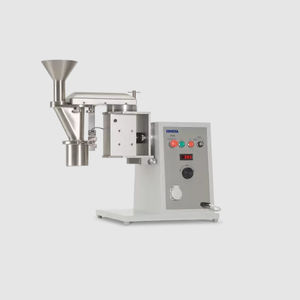
... The Ball Mill is used for grinding crystalline materials and for mixing dry, or under certain circumstances, moist materials. The drum is available with 5 l volume. The balls are made of stainless steel with a diameter from 30 to 50 mm. The drum is ...
The CM is designed for homogenization of dry products to a specified particle size, reduction of oversized particles to the desired size and milling of agglomerates back to the initial size. A set of shims to adjust the clearance between the rotor and ...


Output: 6 t/h - 350 t/h
Motor power: 75 kW - 3,300 kW
Machine length: 2,400 mm - 7,200 mm
WTM intelligent vertical mill is dedicated to the high-efficiency dissociation of minerals, providing users with energy-saving, consumption-reducing, quality-enhancing and efficiency-enhancing solutions, realizing maximum monomer dissociation of minerals, ...

Output: 30 t/h - 7,400 t/h
Motor power: 45 kW - 7,000 kW
In recent years, with the continuous consumption of high-grade ores, the characteristics of poor, fine and miscellaneous minerals have become prominent, and the sorting and processing of low-grade and refractory ores has become the main direction of research ...


Autogenous mills, or AG mills, can accomplish the same size reduction work as two or three stages of crushing and screening. Often used in grinding at modern mineral processing plants, AG mills reduce the material directly to the desired final size or ...
Metso Corporation
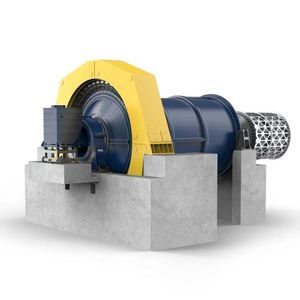

... Overview
- FLSmidth Ball mills deliver high-throughput ore grinding with strong energy efficiency to maximise mineral recovery and reduce total cost of ownership. Designed for continuous operation with high reliability, they incorporate
FLSmidth Dorr-Oliver Eimco
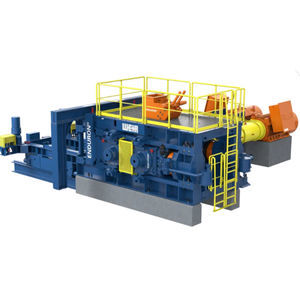

... high pressure grinding rolls (HPGR) set the benchmark for sustainable comminution in high tonnage hard rock mining. Overview Contain a unique bearing arrangement that prevents bearing failure and enables the rollers to be quickly exchanged ...


... Alpine Microburst AMB The new spiral jet mill Alpine Microburst (AMB) is a practical addition to our proven AS spiral jet mills and AFG fluidised bed opposed jet mills. This is because it can also be used to finely grind coarser and fibrous products ...
HOSOKAWA ALPINE


Motor power: 90 kW - 450 kW
Machine weight: 6 t - 31 t
... Gentle and fast disintegration of composite materials With the ADuro QZ, ANDRITZ has revolutionized traditional shredding technology. The machine does not use any cutting tools, but breaks up the input material gently and quickly by using the effects ...
ANDRITZ Recycling


Output: 3 t/h - 40 t/h
Motor power: 77.2 kW
Machine length: 1,200 mm - 3,000 mm
... MILLSTAR® stands for convincing performance in the brewhouse. In terms of capacity, it can compete with any other milling system and method. In addition, it requires comparably low capital expenditure and has an excellent cost-benefit ratio. Four decades ...


... 1. The first mixing zone uses sharp stator teeth to mill the fluid. 2. Next, fine serrations accelerate the fluid between the ultra-smooth, hardened surfaces of the spinning rotor and stator gap. 3. Finally, centrifugal forces impinge fluid on the stator ...
NOV Inc.


The scrap is gravity-fed directly from the processing machine, requiring no conveying or manual handling. Multi-position swivel outlet pipes make an easier connection to the flexible hose of the hopper loader. The regrind collection bins are made of stainless ...

Motor power: 1, 2 kW
Machine weight: 120, 100, 200, 300, 500 kg
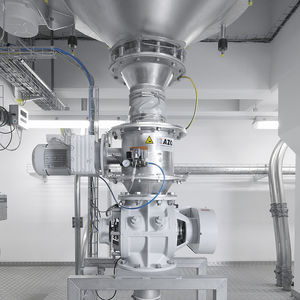
... Gentle crushing Low-wear and energy-saving The unit is used for crushing and milling of bulk materials with a tendency to form agglomerates, clods and lumps. Bulk materials containing agglomerates, clods or lumps, are fed into the AZO lump breaker ...
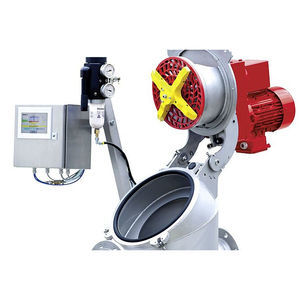

The medium flows steadily through the RotaCut. Foreign matter (stones, metal parts, etc.) is separated out based on its size or weight and can be easily disposed of later via a cleaning port. All floating and suspended substances within the medium (fibers, ...
Vogelsang


Rotational speed: 3,600 rpm
... Mixers And Blenders Shearing/mixing forces produce controlled, highly sheared, uniform dispersions and stable emulsions. FEATURES A wide range of product viscosity may be processed, limited only by the maximum 150 psig (10 bar) inlet pressure. ...
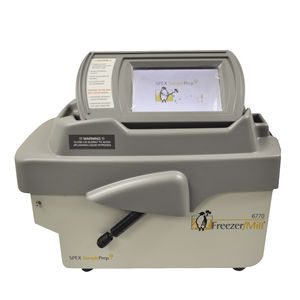

The Freezer Mill 6770 accommodates sample sizes ranging from 0.1 up to 4 grams. It is suitable for the applications like cryogenic grinding and pulverizing of tough and/or temperature sensitive samples immersed in liquid nitrogen. It is also suitable ...
HORIBA Scientific
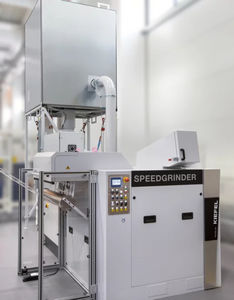

Rotational speed: 420 rpm
Output: 400, 600, 750 kg/h
Motor power: 22 kW
The SPEEDGRINDER is a so-called "skeleton grinder" which grinds the residual skeleton which is produced in the thermoforming process after the packaging has been cut out. The crushed smallest parts can then be fed back into the extrusion process and thus ...
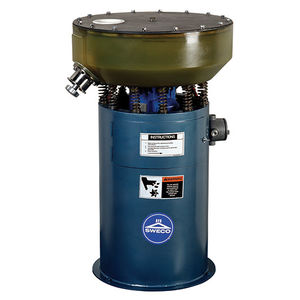

SWECO Vibro-Energy Grinding Mills are the most versatile line of mills available today for fast, low-cost particle size reduction to sub-micron range. Vibro-Energy grinding action achieves higher output per input horsepower; precise control of size and ...