


{{product.productLabel}} {{product.model}}
{{#if product.featureValues}}{{product.productPrice.formattedPrice}} {{#if product.productPrice.priceType === "PRICE_RANGE" }} - {{product.productPrice.formattedPriceMax}} {{/if}}
{{#each product.specData:i}}
{{name}}: {{value}}
{{#i!=(product.specData.length-1)}}
{{/end}}
{{/each}}
{{{product.idpText}}}
{{product.productLabel}} {{product.model}}
{{#if product.featureValues}}{{product.productPrice.formattedPrice}} {{#if product.productPrice.priceType === "PRICE_RANGE" }} - {{product.productPrice.formattedPriceMax}} {{/if}}
{{#each product.specData:i}}
{{name}}: {{value}}
{{#i!=(product.specData.length-1)}}
{{/end}}
{{/each}}
{{{product.idpText}}}


Measuring range: 2 mm - 10 mm
... machining center? The Azbil H3C adjustable proximity sensor delivers: • Dual ON/OFF output functionality enabling 4-position detection (Near/Far × 2 outputs) in a single sensor – eliminating the need ...
Azbil Europe NV
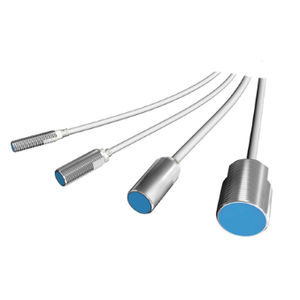
... Rigid structure, highly waterproof DC 2-wire switches with improved visibility of indicator lamps. Features DC 2-wire, for reduced wiring costs Stable sensing area is shown by the setting indicator Rigid housing allows higher mounting ...
Azbil Europe NV

... conventional models, additionally it can easily perform 3 to 5 times longer - or even more! Description The FL7S is a proximity switch boasting a stainless steel sensing face and housing, and is specially designed ...
Azbil Europe NV


Length: 35 mm - 65 mm
Measuring range: 10 mm
Process temperature: -25 °C - 70 °C
... robustness of sensors. These rugged and durable "Metal Face“ sensors are enclosed in stainless steel making them the best selection for these tough applications. Applications such as machine tools or metal processing ...
Pepperl+Fuchs SE

Measuring range: 2 mm - 40 mm
... Inductive analog output sensors are used to detect metal objects within specific operating ranges. This object distance is then translated into an analog output signal proportional to distance, making these sensors ideally ...
Pepperl+Fuchs SE

... programmable logic controller. Using our AS-interface proximity sensors the user can network up to 31 (specification 2.0) or 62 (specification 2.1) proximity switches per master. Proximity ...
Pepperl+Fuchs SE
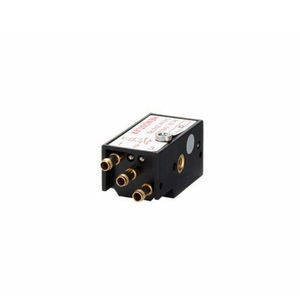

... supply not required Also available with ATEX approval The Hengstler Type 490 is a compact, contactless pneumatic proximity switch designed for reliable position detection in industrial environments. It is triggered ...
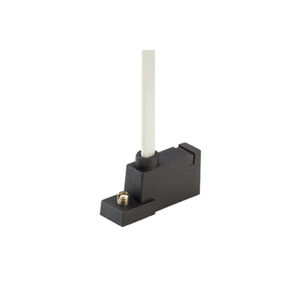

... •Reed or GMR sensors. •PNP or NPN logic output for magnetoresistive sensors. •No problems in case of vibrations. •Cable or M8 connector output. •100% traceability. •Standard T-slot inline mounting. •Optional K-SENS ...

... • Inductive sensors with anti-interference function. • Stainless steel body material and PBT sensitive surface. • Built-in LED indicator. • PNP or NPN logic outputs. ...
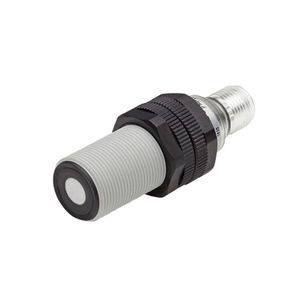
Measuring range: 40 mm - 300 mm
... • M18x1 mm ultrasonic sensors. • PNP/NPN digital output with NO or NC programmable logic. • 40-300 mm sensing range with programmable point via External Teach. • M12, 4 pin connector output. • Short and lightweight plastic body. • ...


Measuring range: 1.5 mm - 40 mm
... Inductive sensors - Constant sensing range on all metals •Resistant to oils and coolants •Correction factor 1: Constant sensing range on all metals •Very high switching frequency •Permanently legible laser type label •Long sensing ...
ifm electronic

Measuring range: 4 mm - 30 mm
... Inductive sensors - Suitable for industrial, mobile, cooling and lubricating applications •Wide operating temperature range •High protection rating for the requirements of harsh industrial environments •Reliable detection due to ...
ifm electronic

Measuring range: 0.38 mm - 26 mm
... With IO-Link •For a precise position monitoring on machines •Reliable transmission of the distance as linearised process value via IO-Link •Flexible use thanks to large operating temperature range •Very high repeatability •Normally closed / normally ...
ifm electronic
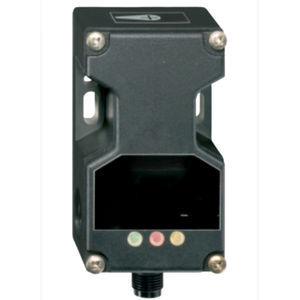

Measuring range: 8 mm - 18 mm
... Safety sensor Thermoplastic enclosure no mechanical wear 40 mm x 90 mm x 39 mm Integrated AS-Interface Concealed mounting possible Long life Insensitive to transverse misalignment Insensitive ...
SCHMERSAL
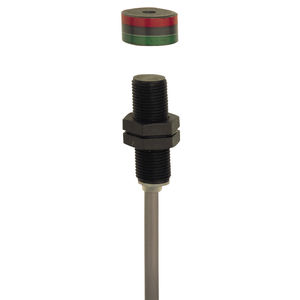
Measuring range: 20, 22, 32, 10 mm
... Thermoplastic enclosure Suitable for food processing industry only in combination with BP 15 SS Particularly large switching distance Ø M12 Long life no mechanical wear Insensitive to transverse misalignment Insensitive ...
SCHMERSAL
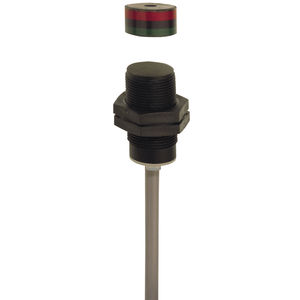
Measuring range: 10, 20, 22, 32 mm
... Thermoplastic enclosure Suitable for food processing industry only in combination with BP 15 SS Particularly large switching distance Ø M 18 x 1 Long life no mechanical wear Insensitive to transverse misalignment ...
SCHMERSAL


Measuring range: 0.6 mm - 1.5 mm
... These BERNSTEIN microsensors with fully Integrated electronics are available in sizes of 3 mm, 4 mm, 6,5 mm, M4 and M5. They provide switching frequencies up to 3000 Hz and can operate at temperatures from -25 °C to +70 °C. They are designed with a metal ...
BERNSTEIN AG

Measuring range: 1.5 mm - 4 mm
... BERNSTEIN has a comprehensive range of inductive sensors from which sensors and technical principles can be selected to meet all requirements. The metal rectangular housings provide a sturdy brass enclosure in dimensions ...
BERNSTEIN AG

Measuring range: 1.5 mm - 20 mm
... The rectangular housing plastic for inductive sensor by BERNSTEIN is a robust plastic case with a size of 27x10mm, and 60x36mm. It has a version for flush and non-flush mounting and a high switching frequency up to 1000 kHz. The class ...
BERNSTEIN AG
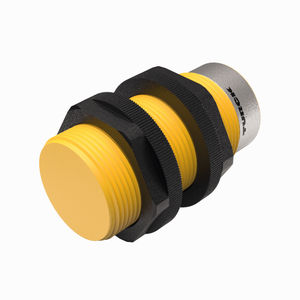

Length: 60 mm
Measuring range: 15 mm
Process temperature: -10 °C - 60 °C
... With Potentiometer M30 × 1.5 threaded barrel Plastic, PA12‐GF30 Fine adjustment via potentiometer DC 4-wire, 10…30 VDC Complementary contact, PNP output M12 × 1 connector Country of origin - ...
TURCK

Length: 60 mm
Measuring range: 4.5 mm
Process temperature: -10 °C - 60 °C
... With Potentiometer Threaded barrel, M12 × 1 Plastic, PA12‐GF30 Fine adjustment via potentiometer DC 3-wire, 10…30 VDC NO contact, PNP output Cable connection Country of origin - DE Weight - ...
TURCK
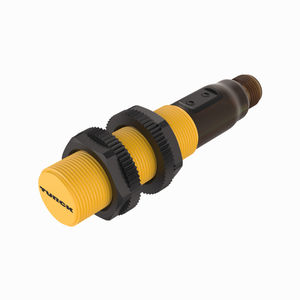
Length: 87 mm
Measuring range: 7.5 mm
Process temperature: -25 °C - 70 °C
... M18 × 1 threaded barrel Plastic, PA12‐GF30 Teach-in and configuration via buttons on the device, pin 5 and IO-Link Country of origin - DE Weight - 38 g Technical Data Design - Threaded barrel Construction size - ...
TURCK
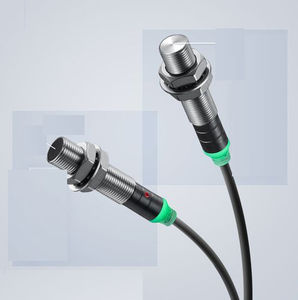

Measuring range: 1.5 mm - 20 mm
Process temperature: -25 °C - 70 °C
... detection without interference from surrounding metal. All-Metal Models Provide Superior Protection Conventional proximity sensors feature a plastic detection surface, making them more prone to damage due to impacts ...
Keyence
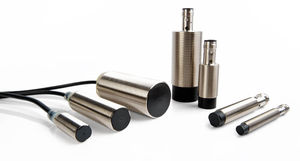

Measuring range: 2 mm - 30 mm
Process temperature: -20 °C - 70 °C
... Thanks to the simple construction and Omron’s innovative “hot melt” production process, the E2B sensors embody two characteristics: value-for-money and high reliability. All-round-visible indicator The laser printed part number ...
Omron Electronics GmbH
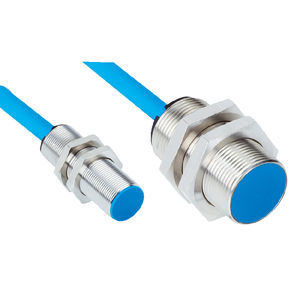

Measuring range: 1 mm - 15 mm
Process temperature: -20 °C - 70 °C
... NAMUR sensors for explosive zones Safe detection in ATEX areas. The IMN sensors are available for this due to their high quality and reliability. No whether in category 1G or 2G, the NAMUR sensors from ...


Length: 22 mm
Width: 3 mm
Measuring range: 0.8 cm
... Inductive miniature sensors IFRM 03/04/05 When space for sensors is limited – Compact sensor sizes allow installation even in limited spaces. Baumer has ranked among the market leaders in the miniaturization ...
Baumer Group


Length: 65 mm
Width: 8 mm
Measuring range: 2 mm
... Style Housing M8x1 Installation for flush mounting Switching output PNP normally open (NO) Switching frequency 600 Hz Housing material Die-cast zinc, nickel-plated PC Material sensing surface PBT Connection Connector, M8x1-Male, 3-pin Operating voltage ...
Balluff GmbH


Measuring range: 2 m - 3.5 m
... approach area detects a person or object, the sensor will activate the door and turn on the Look back(Blue zone) which detects through the threshold. As long as someone is in the detection area, the sensor will keep the ...
OPTEX Entrance

Measuring range: 110 mm
Process temperature: -10 °C - 50 °C
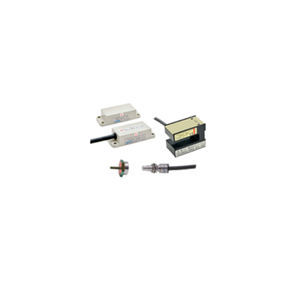
... switching inductive loads directly. No power supply is required as switching is performed by the magnetic field. Various proximity switches are available, offering choices in driving methods, sensing distances, contact ...

Length: 4.65 mm
Width: 1.86 mm
Process temperature: -40 °C - 85 °C
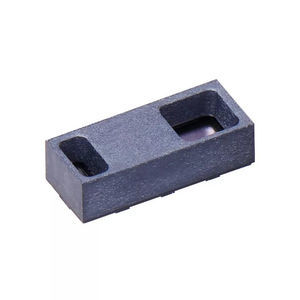
... programmable Proximity Start Delay (PSD) Crosstalk and ambient light cancellation Optimized sensitivity and noise level Wide configuration range 1.8V power supply with 1.8V I2C bus Configurable sleep mode Interrupt driven device Proximity ...
ams Osram


Measuring range: 8 mm - 50 mm
Process temperature: -52 °C - 100 °C
... machinery choose our proximity probe sensors to monitor machine conditions and protect important equipment assets. Why Bently Sensors? More than 60 years ago Don Bently launched his first industrial ...


Measuring range: 1, 2, 5, 10, 4 mm
Process temperature: 0 °C - 50 °C
... is necessary. No external devices are needed for synchronization. Environment-Resistant Sensor Head Designed for industrial use almost anywhere, the sensor head is designed to be resistant against harsh environments, ...

Measuring range: 2.5 mm
Process temperature: -40 °C - 85 °C
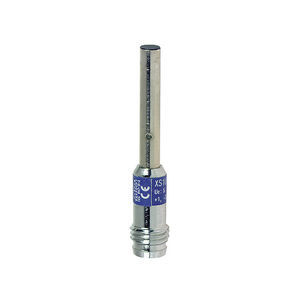
... Inductive sensor XS1 Ø6.5, L45mm, stainless, Sn2.5mm, 12..24VDC, M12 Main Range of product Telemecanique Inductive proximity sensors XS Series name General purpose Sensor type Inductive ...
Telemecanique Sensors


Process temperature: -10 °C - 80 °C
... The magnetic proximity switches define the position of the piston in cylinders or grippers. When the internal contact isactuated by a magnetic field, the sensors complete an electrical circuit and provide ...
CAMOZZI AUTOMATION

Measuring range: 30 mm
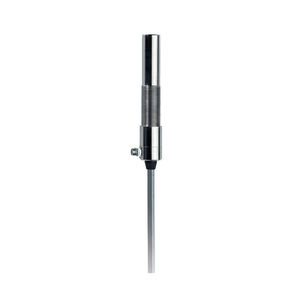
... The Ex magnetic sensors are actuated by an M range permanent magnet, entering their proximity without any physical contact. These devices are available with NO, NC, changeover, bistable or bistable changeover contacts. ...
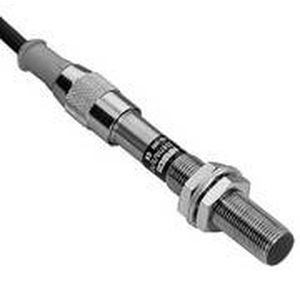

... The HASCO proximity switches Z1472/... and Z1476/... are used in injection and die-casting moulds and stamping tools for the precise, contact-free position monitoring of movement sequences. With their excellent heat ...
HASCO


... Sensors of the sensor PRO series ensure the effective protection of people in machine building and system engineering. The sensor PRO series includes contactless safety sensors, such ...
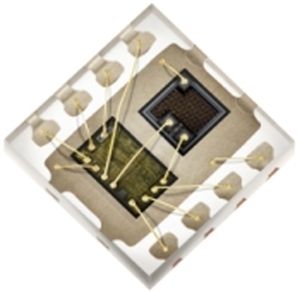

... optical sensor family enables sensing UV Index, ambient light, long range proximity, heart rate/pulse oximetry and motion with 2D or 3 D gestures. Si114x, Si1132, Si1120 and Si1102 sensors ...
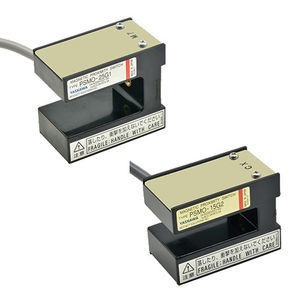

... Vane type, with a groove width of 14mm or 24mm. Switching by vane passing through the groove. ■Product model list PSMO-15G1 PSMO-15G2 PSMO-15G2S PSMO-15G1T PSMO-15G2T PSMO-25G1 PSMO-25G1T PSMO-25G2 PSMO-25G2T ...
BESTACT SOLUTIONS INC.
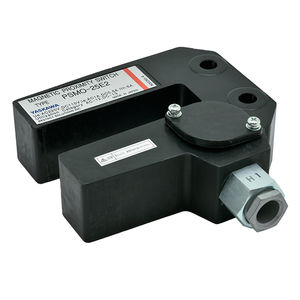
... Vane type, with a groove width of 25mm. Switching by vane passing through the groove. ■Product model list PSMO-25E1 PSMO-25E1/P PSMO-25E2 PSMO-25E2/P PSMO-25E1T PSMO-25E2T ...
BESTACT SOLUTIONS INC.
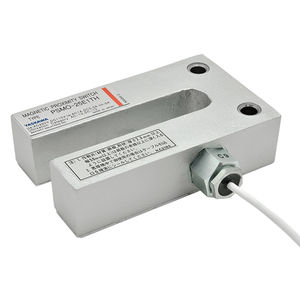
Process temperature: -25 °C - 130 °C
... Vane type suitable for high temperatures, with a groove width of 25mm. Switching by vane passing through the groove. ■Product model list PSMO-25E1TH PSMO-25E2TH ...
BESTACT SOLUTIONS INC.
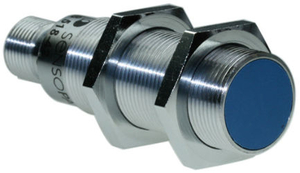
A proximity sensor detects the presence of an object or a person within its operating range.
ApplicationsThese devices are used in robotics, on assembly lines and conveyors. They are found in machine tools and in processing and transforming industries. Photoelectric sensors are particularly common for detecting human presence in elevators and buildings, and vehicles at parking lot access points.
TechnologiesProximity sensors may be capacitive, inductive or photoelectric; they do not require contact with the target. The first two types are short range. Inductive sensors react to a change in the magnetic field they generate, indicating the presence of a metal object. Capacitive types use an electrical field to detect any type of object.
Photoelectric sensors use a beam of light, usually infrared, between an emitter and a receiver. Activation occurs if the beam is broken by an intrusive person or object. Passive infrared detectors react to the presence of a person or object in the area under surveillance. Hall-effect sensors detect magnetic field variations and are sensitive to the presence of metal objects. Other models use ultrasound.
Choice will depend on the type of target to be detected and whether the output is two- or three-wire.
- No wear
- No moving parts
- Waterproof
the best suppliers