|
|
The X-ray counting system detects X-rays in the energy range 5 to 100 keV. It is designed for use in X-ray diffraction instruments, including synchrotron applications.
The X-ray counting system uses a photomultiplier with YAP(Ce) scintillator and high speed electronics. A window discriminator circuit is used to detect pulses from X-rays within a selected energy band. Maximum count rate is 10 MHz. The width and lower threshold of the energy window and the HV of the photomultiplier can be set by the user with a control unit. Main application is scientific instrumentation
- X-ray energy range 5keV to 100keV
- covers wide range of instrumentation applications
- up to 10MHz count rate with dead time correction
- wide dynamic range
- TTL output
- interfaces with counter or PC card
- counts X-rays within user-settable energy window
- minimises background counts
|
|
|
|
|
|
General descritpion :
The Scienta XES 350 is a state-of-the-art soft X-ray emission spectrometer. It is a grazing incidence spectrometer covering a wide energy range, 50 -1000 eV, at high resolution and sensitivity [J. Nordgren et al., Rev. Sci. Instr. 60, 1690 (1989)]. The Scienta XES 350 is easily adapted to different excitation sources, since the instrument is flange mounted and has an optical axis that is easily adjusted to the excitation source.
The Scienta XES 350 optical arrangement consists of a variable entrance slit, two moveable shutters for grating selection, three spherical gratings, and a 2-D detector that can be moved in a three-axis coordinate system. The Scienta XES 350 can be described as three spectrometers merged into one by having a common entrance slit and a detector that can be aligned to the focal curve (Rowland circle) of the selected grating. The instrument is equipped with a digital CCD-camera data read-out.
Specifications:
- Variable entrance slit: 0 - 90 micrometer
(controlled by a 1" linear manual feedthrough)
- Variable grating illumination width: 0 - 4.5 cm
(controlled by 2 linear 1" manual feedthroughs)
- Adjustable optical axis: ±2°
- Detector rotation: 15°
- Manual (or motor controlled, optionally) XY-tables (400 and 100 mm) with optical scales for positioning of the detector.
|
|
Hamamatsu offers a range of Si photodiodes suitable for the direct detection of soft X-rays, or when coupled to an appropriate scintillator crystal (Ceramic or CsI), for the detection of high energy X-rays as used in industrial inspection, security and medical systems.
|
|
Features
Detector System Includes
Silicon detector
Be window
Preamplifier
HV bias supply
Peltier cooler
Temperature controller
Performance
Active area: 8 mm2
Thickness: 0.5 mm
Resolution <190 eV (FWHM)
Energy range: 1 to 30 keV
|
|
|
|
|
|
HP(Ge) Planar Detectors GPD (Liquid Nitrogen cooled)
APPLICATION
Gamma and X–ray HPGe detector is intended for the conversion of Gamma and X-ray quantum energy to proportional level. This is accomplished using amplitude electric signals and their amplification for further registration with a nuclear physics apparatus. It is also intended for use as the gamma and X-ray detection component of radiological monitoring for environmental objects in nuclear energetics, industrial production, agriculture, medicine, etc.
FEATURES
- Possibility of choosing a preamplifier type with a resistive or opto-electronic feedback high energy rate up to 15000 MeV/sec;
- Ability to increase the energy rate to 20000 MeV/sec radiation detection in any spatial orientation depending on cryostat modification manufacturing in a portable cryostat;
- Possibility of transportation and storage without cooling.
COMPLETE SET
- HP(Ge) coaxial detector (p-type);
- Preamplifier with cooling input stage;
- Cryostat;
- Spectrometric Device;
- Analysis Software;
- Dewar vessel.
For additional information, please contact us: sales@bruker-baltic.lv
|
|
SiLi X-ray Spectrometers (SXRD)
APPLICATION
Detection of X-ray radiation in energy range from 1 keV to 60 keV.
FEATURES
- Possibility of choosing a preamplifier type with resistive or opto-electronic feedback;
- High energy resolution;
- High count rate - 500 MeV/sec and ability to increase it up to 1000 MeV/sec;
- Thin Be windows, possibility to install ultra-thin polyimide windows;
- Detection of radiation in any spatial orientation depending on cryostat modification;
- Manufacture in portable cryostat, cryostats for XRF analyzers and electron microscopes is possible.
COMPLETE SET
- X-Ray detection unit based on Si(Li) semiconductor detector (SXRD) designed for X-Ray detection;
- Preamplifier with cooling input stage;
- Cryostat;
- Dewar vessel.
COOLING
SiLi X-ray Spectrometers are available with liquid nitrogen cooling or with Peltier cooling when liquid nitrogen is inconvenient or impossible to use.
For additional information, please contact us: sales@bruker-baltic.lv
|
|
|
|
|
|
For x-ray spectroscopy with a nuclear accelerator, radioactive source, or x-ray tube
Premium performance spectroscopy from 1 keV to 30 keV
Superior resolution performance at low and high count rates
Multi-detector arrays available for use at fusion facilities
Thin Be window
High peak-to-background ratio
PopTop flexibility
Figure 25. Detection Efficiency vs. Be Window Thickness
on Low-Energy Curve and vs. Crystal Thickness on
High-Energy Curve
Figure 26. Array, Comprising Seven Tightly-Packed
6-mm-diam Si(Li) Detectors, Used at Synchrotron Light Source
Figure 27. Examples of Multiple Detector Arrays for Soft X-Ray
Spectroscopy. Note the three Be windows in each endcap.
Three Si(Li) detectors share a common cryostat in each of the
systems shown.
Figure 28. 6-mm Diameter SLP Detector Element
ORTEC SLP Series Lithium-Drifted Silicon X-Ray Detectors provide the spectroscopist with a highly sensitive, premium performance research tool for detecting x rays from a nuclear accelerator, radioactive source, or x-ray tube. The energy range of detection (Fig. 25) is from 30 keV down to 1 keV, depending on the thickness of the beryllium window.
The x-ray detector consists of a lithium-drifted silicon crystal and a cryogenically-cooled-FET, a high-gain, low-noise hybridized preamplifier in a PopTop capsule with a thin Be entrance window. The ORTEC Si(Li) detector crystal is manufactured under an exclusive process. Special techniques for lithium drifting result in a negligible detector element dead layer whose characteristics will not change even if the detector is stored at room temperature.
|
|
|
|
|
|
Si(Li) detectors, which cover the energy range from a few hundred eV to 50 keV or so, are used in a wide variety of applications including x-ray fluorescence, x-ray microanalysis, PIXE, EXAFS, x-ray diffraction, and M%uFFFDssbauer.
The finest in semiconductor technology and cryogenics, combined with advanced signal processing electronics give CANBERRA Si(Li) detectors solid performance and reliability. Unlike early Si(Li) detectors and unlike those manufactured by some companies today, CANBERRA Si(Li) detectors are stable at room temperature so they can be shipped and stored without LN2.
CANBERRA Si(Li) detectors are available in two versions. The standard detector uses conventional geometry and a gold surface barrier entrance window. The Super Si(Li) uses a proprietary geometry and entrance window. This, along with a special shaping amplifier, improves resolution by at least 10 eV (FWHM) and increases the peak/background by about ten-fold to greater than 10,000:1.
CANBERRA offers a full complement of signal processing and data acquisition electronics. The detector includes a low-noise preamplifier of the pulsed-optical feedback type. This pre-amplifier employs a specially fabricated FET which is cooled along with the detector in a cryostat.
|
|
|
|
|
|
X-Ray Detectors - Digital
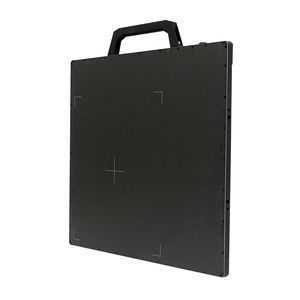
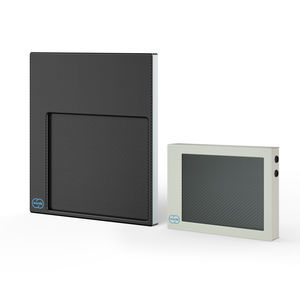
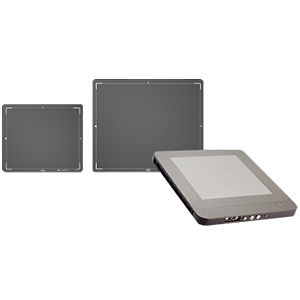
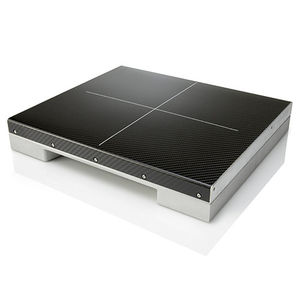
PerkinElmer’s state-of-the-art amorphous silicon (aSi) digital X-ray detectors are an important enabling technology for today’s diagnostic medical imaging, radiation therapy and veterinary radiography as well as industrial NDT applications. Our aSi digital X-ray detectors, which replace traditional film cartridges, provide many important benefits for medical and industrial imaging OEMs - superior image resolution, high frame rates, and easy information storage and retrieval.
PerkinElmer’s digital X-Ray detectors are supporting the following diagnostic and therapeutic applications:
- radiography
- angiography
- cardiovascular imaging
- neurovascular imaging
- mobile imaging applications
- radiation oncology
- cone-beam CT
- veterinary medicine
Industrial non-destructive testing (NDT) applications of PerkinElmer’s digital x-ray detectors include:
- Automatic Defect Recognition
- Film Replacement
- Electronic inspection
- Pipeline Inspection
Our advanced X-Ray detectors are available in 16 inch (41 cm) square and 8 inch (20 cm) square flat panels with full 16-bit contrast resolution.
|
|
|
|
|
|
This gas-detector has been used for more than a decade with HECUS SAXS and SWAXS systems and is renowned for simple, fast and reliable position-sensitive X-ray detection.
The PSD-50m is the economical solution for X-ray detection without sacrificing quality and performance, giving a typical spatial resolution of 54pm, a wide linear range (up to 50 kHz) and a large active input length of 47 mm.
Together with the ASA hardware and the new SwaxsView readout and control software it offers easy operation, high stability and reliability as well as real-time data acquisition and readout capabilities.
Technical specifications:
Linear position-sensitive gas detector (argon:methane or xenon:methane, 90:10) operating at a pressure of 7.5 bar.
Pt wire anode and backgammon Cu cathode for amplitude comparation position detection
Integral count rate 50 kHz, max.; dead-time 12.5 us
Spatial resolution better than 70 urn, typically 54 urn.
Amplitude-spectrum analysis hardware and real-time readout and control software
|
|
Flat panel detectors have many advantages over image intensifiers (geometric distortion, blooming, and limited dynamic range). Jacobsen incorporates digital flat panel detectors into its radioscopic inspection systems. The 16-bit flat panel offers superior resolution with 65,536 possible gray levels. This allows details to be gathered from thick as well as thin sections of an inspected parts without blooming effects.
In combination with powerful software like MAXIenhance, flat panels generate excellent images for x-ray inspection and are widely used in industrial radioscopy.
We offer flat panels with digital resolutions between 12 and 16 bit, pixel size (pitch) from 50µm to 400 µm and energy ranges between 40keV and 15 MeV. There are static (up to 7.5 fps) and real-time (25 or 30 fps) flat panel models available. Please ask for more information.
|
|
LINX is designed for X-ray linescan applications. It is a linear X-ray detector, using XDAS data aquisition boards. The length and detector type can be matched to the application.
The LINX unit is constructed of aluminium alloy with lead screening to protect the electronics from radiation damage. The detectors are exposed to X-rays via a graphite window and collimator. X-ray detection is by scintillator and photodiode.
A 50-way SCSI cable and interface adaptor connects LINX to a central processor, via a USB2 connection for data I/O or frame grabber cards.
Software is provided to demonstrate system performance. A software development kit is available for the development of user applications.
|
|
|
|
|
|
MAXIvision Segment - Digital CMOS Line Scan Imaging System
Forget conventional radiography! Forget film, chemicals, developing, and waiting for results! MAXIvision Segment digital linescan x-ray camera has been developed especially for the operation in digital x-ray inspection. This camera has much better resolution than Linear Diode Array’s (LDA’s) and operation at energy up to 450 kV is no problem. The camera’s robust construction for operations from 20 kV up to 450 kV guarantees a long life time and resistance against mechanical strain. The slit collimators of the cameras make them highly insensitive to scattered rays. The hardware pixel binning (=> electronic grouping of neighboring pixels to one pixel) enables a variable resolution from 83 µm to 1.3 mm. As the pixel binning is freely adjustable, it is possible to realize applications which require a very high resolution as well as applications with very high scanning speeds (up to 80m/min) with one and the same camera system.
The high dynamic range (12 bit A/D conversion) supplies x-ray images with up to 4096 grey levels. The x-ray images can be evaluated, processed, archived, transmitted or used for documentations. It is possible to integrate the camera system into third-party software by the use of the supplied software library (DLL). Thereby, custom specific solutions up to the fully automatic acquisition and evaluation of the x-ray images become possible.
|
|
|
|
|
|
Detection Technology provides off the shelf detector products for various security X-ray screening systems and industrial X-Ray NDT systems. Products are ranging from bare diodes to the complete detector subsystems, including readout electronics and interfacing software to host computer.
Detection Technology's single energy X-Card products can be used in diverse types of test equipment such as industrial test equipment on production lines and in devices for detecting foreign objects from food as well as in many other industrial NDT applications. Single energy X-Card products are also used in simple mail, parcel and baggage inspection systems as well as people screening applications.
Detection Technology's dual-energy linear array x-ray detector cards have two layers of silicon photodiode arrays, targeted for different X-ray energy ranges enabling material discrimination.
Typical applications of Detection Technology's dual energy detector cards are security screening systems, where these boards provide excellent raw X-ray image data to be further processed and analyzed. Dual energy X-Cards can be used for wide range of X-ray energies and flux due to its exceptionally large sensitivity range. Same detector boards can be used to build the core of a small carry-on baggage system or a mid-size cargo or light vehicle inspection system.
|
|
|
|
|
|
RadEye™ Large-Area Image Sensors
The RadEye1 large-area image sensor is a three-side buttable, fully integrated CMOS photodiode array designed for both visible and radiation imaging. The large 24.6 mm by 49.2 mm active area consists of a 512 by 1024 matrix of silicon photodiodes on 48 µm centers. Used directly to detect visible light, or with a scintillator to detect x-rays and other energetic radiation, the RadEye1 is the perfect solution for applications ranging from medical diagnostics to industrial inspection (NDT) and scientific imaging.
The RadEye image sensors are fully integrated with control logic and readout circuitry that allow the sensors to run off a single 5 V power supply and a master clock. An optional frame start input can be used to control the frame rate externally between 0.01 and 4.5 frames per second. An asynchronous array reset, a high-speed binning mode, and a non-destructive readout mode further add to the flexibility of these devices. Video data is read out sequentially through a high-speed differential analog output at up to 2.5 MHz.
|
|
| ... products without technical information |
| |
|
|
|
|
The Loma X4 range of X-ray inspection systems for the food and packaging industries. It is the most advanced on the market today. All models are highly sensitive to detection of metallic and non-metallic contaminants such as glass, stone, calcified bone, high-density plastics and rubber. Loma X4 X-ray inspection systems are robust, reliable, hygienic and simple to use.
Product Features
Technology
- Windows XP operating system
- Industrial PC
- 40Gb HDD
- 16bit scaleable high speed/high gain array, over 3 times more sensitive than existing detectors
- 2000 scans per second, even on the widest systems
Construction
- Bead blast stainless steel as standard
- Compact, length 2.1 m or 93"
- Hinged covers allows easy access for cleaning
- Totally enclosed cabinet, IP66 NEMA4X version
- Easy access to serviceable components
- Designed to exceed global radiation safety regulations
Transport
- Flat belt - belt return under array
- 370 W (0.5HP) motor
Reject mechanisms
Reject mechanisms are available to suit the application. The standard options are:
- Air blast - up to 1 kg (2.2lb)
- Dual Air blast - up to 2kg (4.4lb)
- Pusher - up to 10 kg (22lb)
- Signal only - for remote rejects
Options
- Infeed guides
- Full length guides
- Reject confirmation
- Bin full sensing
- Wheels
- Multi lane simultaneous inspection
- Radiation survey meter
- Modem support
Network communications
|
|
|
|
|
|
Detection Technology provides off the shelf detector products for various industrial X-ray NDT (non-destructive testing), security and medical applications. Products are ranging from detector card to complete detector subsystems, including readout electronics and interfacing software to the host computer.
Detection Technology's flagship product, X-Scan LCS subsystem is a powerful imaging subsystem for cargo, container, vehicle and train inspection purposes. X-Scan LCS subsystem can also be applied to customized industrial high energy NDT (Non-destructive testing) systems.
X-Scan L-shape is an X-ray detector subsystem for baggage and parcel screening applications. L-shaped module contains DT's dual energy detector cards in a light, tight enclosure. Enclosure includes also X-ray beam collimator and necessary x-ray shielding with beam stopper.
X-Scan f3 series as the imaging subsystem of an X-ray inspection system provides the easy-to-use solutions for all applications, which require fast speed, high sensitivity and high resolution with an inspected object transported on a belt conveyor or similar apparatus.
X-Scan iHE is an optimized series of products for high energy industrial NDT applications. The X-Scan iHE can provide the solution for very wide range of X-ray source with optimized X-ray absorption efficiency in the high energy range from 160KV to 5 MeV.
X-Scan iCT product is the optimized solution for industrial, high energy computed tomography applications utilizing linear accelerators as the radiation source.
X-Scan U-Shaped detectors have specifically been developed for the digital tire inspection of engineering tires, radial tires, car tires and giant tires.
|
|
X-Ray Fluorescence Gauges are used to measure coatings containing quantities of metal or heavy elements, on plastic or paper substrates. The sensor energy level is selected for the application, such that the photons striking the material cause it to fluoresce. The returned fluorescence energy provides the information necessary to precisely calculate the coatweight. This selective technique has significant advantages in simplicity of operation, accuracy, and reduced equipment costs.
The Model 105 and Model 107 X-Ray Fluorescence Gauges provide an accurate way to measure thin, high atomic number coatings on non-metallic films. By tuning the sensor to the required fluorescence energy, it is possible to detect thin coatings of Zinc, Iron Oxide, Silver, or a variety of other high atomic number coatings (see list for each gauge below). Typically the sensors can measure coatings in the range of 0 gsm to 25 gsm.
|
|
| ... products without technical information |
| |
X-Ray Fluorescence Gauges are used to measure coatings containing quantities of metal or heavy elements, on plastic or paper substrates. The sensor energy level is selected for the application, such that the photons striking the material cause it to fluoresce. The returned fluorescence energy provides the information necessary to precisely calculate the coatweight. This selective technique has significant advantages in simplicity of operation, accuracy, and reduced equipment costs.
The Model 105 and Model 107 X-Ray Fluorescence Gauges provide an accurate way to measure thin, high atomic number coatings on non-metallic films. By tuning the sensor to the required fluorescence energy, it is possible to detect thin coatings of Zinc, Iron Oxide, Silver, or a variety of other high atomic number coatings (see list for each gauge below). Typically the sensors can measure coatings in the range of 0 gsm to 25 gsm.
|
|
|
|
|
|
Detection Technology's X-Scan f-series products have, since 1999, offered the solutions for food, pharmaceutical and industrial NDT inspection needs. The current X-Scan f3 series is already the third generation of evolution in the industrial X-ray inspection arena.
X-Scan f3 series as the imaging subsystem of an X-ray inspection system provides the easy-to-use solutions for all applications, which require fast speed, high sensitivity and high resolution with an inspected object transported on a belt conveyor or similar apparatus.
Detection Technology's X-Scan iHE is an optimized series of products for high energy industrial NDT applications. The X-Scan iHE can provide the solution for very wide range of X-ray source with optimized X-ray absorption efficiency in the high energy range from 160KV to 5 MeV.
Detection Technology's X-Scan iCT product is the optimized solution for industrial, high energy computed tomography applications utilizing linear accelerators as the radiation source.
Detection Technology's X-Scan U-Shaped detectors have specifically been developed for the digital tire inspection of engineering tires, radial tires, car tires and giant tires.
|
|
X-Ray Sensors offer a number of advantages over beta and gamma sensors, including greater precision, better streak detection, long-term stability and non-nuclear technology.
Since the X-ray sensor's energy output can be changed via digital power regulation, it can be optimized to run very efficiently over a wide range of product weights and thicknesses.
|
|
| ... products without technical information |
| |
|
|