


{{product.productLabel}} {{product.model}}
{{#if product.featureValues}}{{product.productPrice.formattedPrice}} {{#if product.productPrice.priceType === "PRICE_RANGE" }} - {{product.productPrice.formattedPriceMax}} {{/if}}
{{#each product.specData:i}}
{{name}}: {{value}}
{{#i!=(product.specData.length-1)}}
{{/end}}
{{/each}}
{{{product.idpText}}}
{{product.productLabel}} {{product.model}}
{{#if product.featureValues}}{{product.productPrice.formattedPrice}} {{#if product.productPrice.priceType === "PRICE_RANGE" }} - {{product.productPrice.formattedPriceMax}} {{/if}}
{{#each product.specData:i}}
{{name}}: {{value}}
{{#i!=(product.specData.length-1)}}
{{/end}}
{{/each}}
{{{product.idpText}}}
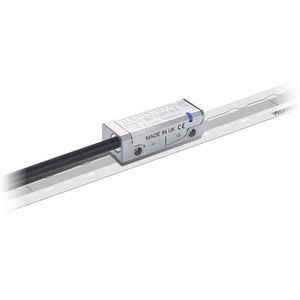

Length: 10 m
Resolution: 2.5 nm - 5,000 nm
... incremental encoder with ultra-high accuracy. The VIONiC encoder system offers a wide variety of speed and resolution configurations, and an expansive range of linear or rotary scale options. This makes ...
RENISHAW
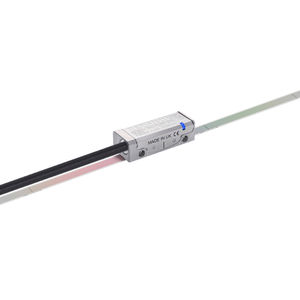
Length: 20 m
Resolution: 2.5 nm - 5,000 nm
... incremental encoder with ultra-high accuracy. The VIONiC encoder system offers a wide variety of speed and resolution configurations, and an expansive range of linear or rotary scale options. This makes ...
RENISHAW
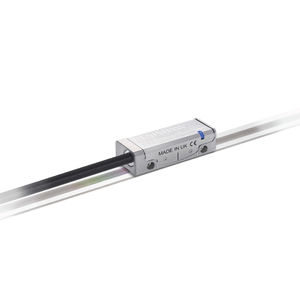
Length: 20 mm - 1,500 mm
Resolution: 2.5 nm - 5,000 nm
... is TONiC? TONiC is Renishaw's super-compact, non-contact encoder system that offers speeds up to 10 m/s and, when combined with the Ti interface, resolutions down to 1 nm for both linear and rotary applications. TONiC ...
RENISHAW


Resolution: 0.06 µm
The integrated measuring system AMS 3B SCHNEEBERGERs AMSA 3B MONORAIL is an AMS analog or digital type measuring system used for distance measurement on all protected machine tool axes which have high demands or need system precision. Based on SCHNEEBERGERs ...
SCHNEEBERGER AG Linear Technology
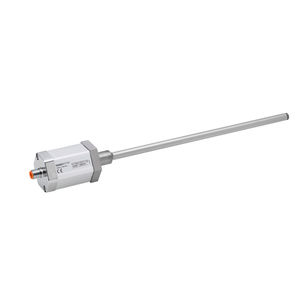

Process temperature: -40 °C - 85 °C
... Absolute rod style position transducer for integration in cylinders. NOVOSTRICTIVE - non-contacting, magnetostrictive measurement principle; non-contact position detection with ring position marker. • Touchless magnetostrictive measurement technology • ...
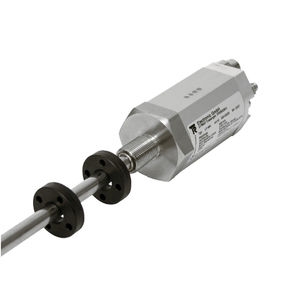

Length: 2,900, 300, 250 mm
Pressure proof tube housing made from stainless steel for integration into hydraulic cylinders. For simple exchange of the measurement system in installed cylinders, choose the separate tube housing. Depending on your preferred performance class, you ...
TR-Electronic GmbH
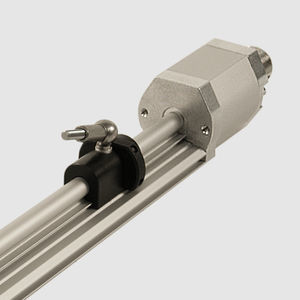
Length: 30 mm - 2,900 mm
... multi magnet detection. That means that position of several Magnets on a single encoder can be detected in one measurement cycle. With cascadable linear absolute encoders in profile housing, measurement ...
TR-Electronic GmbH

Length: 30 mm - 1,900 mm
... multi magnet detection. That means that position of several Magnets on a single encoder can be detected in one measurement cycle. With cascadable linear absolute encoders in profile housing, measurement ...
TR-Electronic GmbH
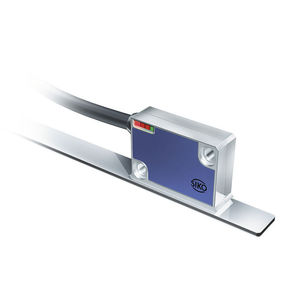

Resolution: 0.2 µm
... Incremental, digital interface, resolution 0.2 μm Repeat accuracy ±1 μm LED status display Works with magnetic tape MB100/1, magnetic ring MR100, magnetic band ring MBR100 Reading distance ≤0.4 mm Robust metal housing optionally with reference ...
SIKO GmbH
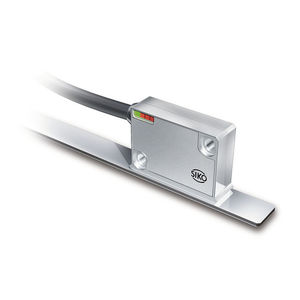
Resolution: 1 µm
... Repeat accuracy max. ±1 μm LED status display Works with MB100/1 magnetic tape Works with MBR100 magnetic tape ring Reading distance ≤0.4 mm Signal period 1000 μm Output circuit sin/cos 1 VSS Robust metal housing ...
SIKO GmbH

... Incremental, miniature design, analog interface 1 VSS Repeat accuracy max. ±1 μm Output circuit sin/cos 1 VSS Signal period 1000 μm (analog) Real-time signal processing Works with MB100/1 magnetic tape ...
SIKO GmbH
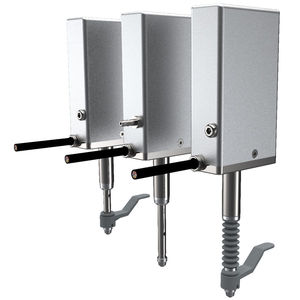

Resolution: 0.05 µm
... LE/S – Linear Encoder Spring Actuation •12 and 25 mm measuring range •Accuracy better than 0.4 µm •Resolution better than 0.05 µm •Repeatability better than 0.15 µm •Spring actuation •IP65 sealing The Digital ...
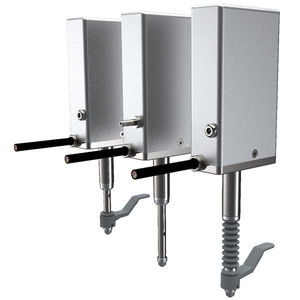
Resolution: 0.05 µm
... LE/P – Linear Encoder Pneumatic Actuation •12 and 25 mm measuring range •Accuracy better than 0.4 µm •Resolución mejor que 0.05μm •Repeatability better than 0.15 µm •pneumatic actuation •IP65 sealing The Digital ...


Resolution: 1 µm
... UniSlide® and BiSlide® Assemblies. Rotary encoders are used both on Velmex Rotary Tables and on XSlide™ Assemblies. Inductive Linear Encoders – For manual and motorized BiSlide® linear ...

Resolution: 1 µm
... Velmex offers linear inductive and magnetic encoders along with rotary encoders for use in measuring position on Velmex stages. Mounted directly on the slider (carriage), the encoders ...
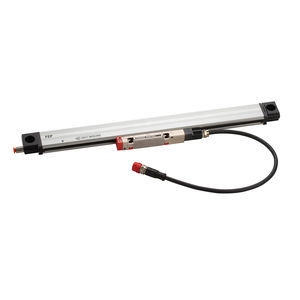

Length: 70 mm - 2,040 mm
Linear encoder speed: 180 m/min
Process temperature: -20 °C - 70 °C
... On request positioned on the right (RT) or on the left (LT), for a linear expansion consistent with the type of application. Metrological certificate provided with each scale. Linear thermal expansion coefficient λ ...
GIVI MISURE
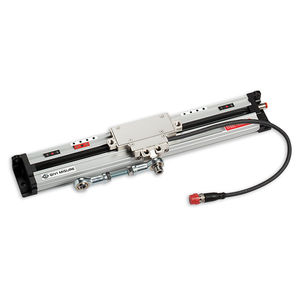
Length: 70 mm - 30,000 mm
Resolution: 0.1 µm - 10 µm
Process temperature: -20 °C - 80 °C
... special profile. Various possibilities of application, with double-effect joint or steel wire. Interchangeable with GVS 2xx line and with the previous model PBS-HR. High accuracy and stability of signals even in case of high speed, ...
GIVI MISURE
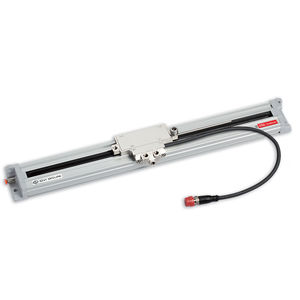
Length: 170 mm - 6,000 mm
Resolution: 0.1 µm - 5 µm
Process temperature: -20 °C - 80 °C
... for a constant accuracy at any temperature. Particularly suitable for applications on synchronized press brakes. Option: Line Driver digital signal. Transducer guided by a self-aligned and self-cleaning sliding carriage with spring ...
GIVI MISURE


Linear encoder speed: 5.8, 11.6 m/s
Process temperature: -5 °C - 65 °C
... types, this type of linear actuator has incorporated an ENCODER to control and manage the rod stroke. Useful for controlled and self-managed movements. On request, the actuators can be equipped with unidirectional or ...
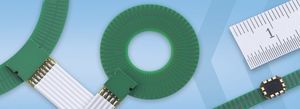

Linear encoder speed: 0 m/s - 64 m/s
Output frequency: 0 kHz - 2,000 kHz
Process temperature: -10 °C - 85 °C
... connector The ID4506L incremental encoder kit consists of an encoder and a linear scale. The encoder is an integrated circuit in a PCB housing. It provides incremental A and B output ...
POSIC
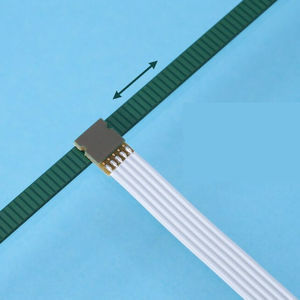
Resolution: 20 nm
Linear encoder speed: 0 m/s - 30 m/s
Output frequency: 0 MHz - 1 MHz
... connector The ID1102L incremental encoder kit consists of an encoder and a linear scale. The encoder is an integrated circuit in a PCB housing. It provides incremental A and B output ...
POSIC
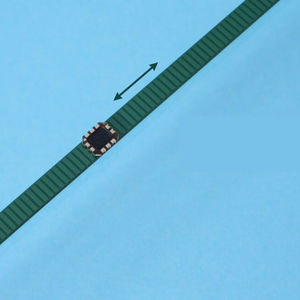
Resolution: 20 nm
Linear encoder speed: 0 m/s - 30 m/s
Output frequency: 0 MHz - 1 MHz
... connector The ID4501L incremental encoder kit consists of an encoder and a linear scale. The encoder is an integrated circuit in a PCB housing. It provides incremental A and B output ...
POSIC


Resolution: 5, 10, 0.5, 1, 0.1 µm
... Absolute Linear Position Sensors (Absolute Linear Encoders) are designed for measuring and checking displacements, dimensions, run-outs, surface profiles, deformations. •wide temperature range •IP57 ...

Resolution: 10, 5, 1, 0.5, 0.1 µm
... Absolute Linear Position Sensors (Absolute Linear Encoders) are designed for measuring and checking displacements, dimensions, run-outs, surface profiles, deformations. •built display option; •batteries ...
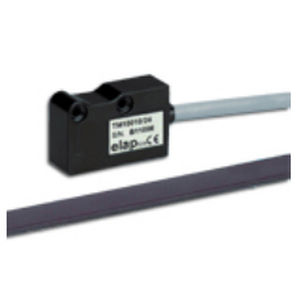

Length: 0.3 mm - 1.2 mm
Resolution: 0.01, 0.1 mm
... The TMP + MP200 is a magnetic incremental linear encoder, manufactured by ELAP. It transducers operates contact-less, replacing the polarized fields of the magnetic bands and converting the measure into digital signals. ...
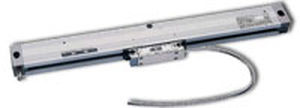
Length: 250 mm - 6,500 mm
Resolution: 0.01, 0, 0.01, 0.1 mm
The optical KD system is manufactured by Elap Industrial Automation, is a comprehensive unit, designed for the utilization in severe industrial environments. It is useful on operating an automatic machines like bending presses, cutting and beading machines. ...
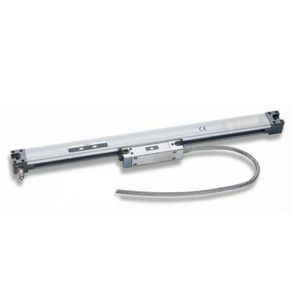
Length: 250 mm - 700 mm
Resolution: 0.01, 0.01, 0.1 mm
... The KP series is manufactured by Elap, and is an optical linear scale that is accurate and reliable due to its compact dimensions. It can be utilized even on small-sized machine tools, and has a housing that is made up of extruded aluminium, ...


Resolution: 0.2 mm - 1,000 mm
Process temperature: 10 °C - 70 °C
... Application ‧Length Measuring For Industry Machine Features ‧Wheel Measuring Sensor ‧Mounting Easy ‧Meter、Yard Wheel Available ...
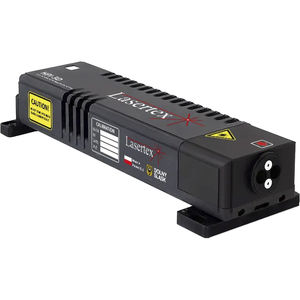

... A version of the HPI-3D linear laser encoder designed for integration. The laser encoder for CNC machine can replace build-in encoder or implemented as a part of a measurement stand. ...
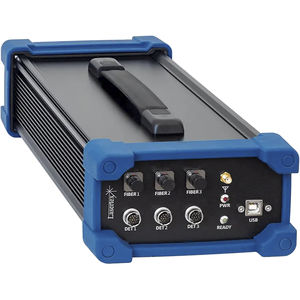
... Laser Encoder LS-10F is an ultra accurate laser measuring device with fiber optic beam guidance designed for submicron measurements of displacements in the range of 0 to 10 meters. The device allows the simultaneous measurement of 1 to ...


Length: 3,200 mm
Resolution: 0.5 µm
... waves exist at 20 times the line count on HR2B scale or 1, 2, 3, 4, 5, 8, 10, 12, 16, or 25 times the line count on HR2C. The Model 9717 is a high-resolution incremental encoder that offers direct ...
GURLEY Precision Instruments
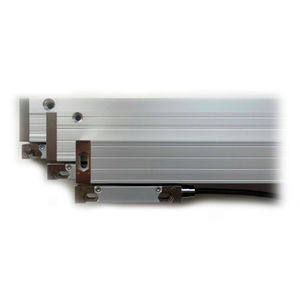
Length: 3.2, 1.2 m
Resolution: 0.1 µm - 10 µm
... The Models LR18, LR25, and LR35 are optical incremental linear encoders designed for long life in medium to high-performance applications. The compact LR18 offers measuring lengths up to 1.2 m (48"); and the more robust ...
GURLEY Precision Instruments
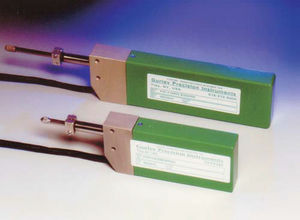
Length: 40 mm
Resolution: 0.5 µm
... are optical incremental linear encoders or measuring gauges. The encoders are capable of measuring travel lengths of at most 40 mm and can be placed in a Quality Control Laboratory or on a factory floor. ...
GURLEY Precision Instruments
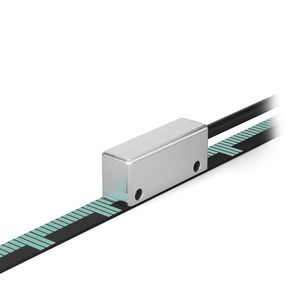

... high-speed incremental encoder from Lika Electronic offers the greatest versatility and can be installed in linear, rotary-radial, and rotary-axial applications. It is perfect for motion control needs in linear ...
Lika Smart encoders & actuators
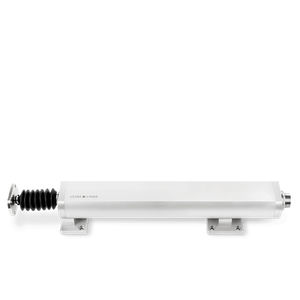

Resolution: 0.1 µm - 0.25 µm
Process temperature: -10 °C - 80 °C
... Absolute linear encoders with inductive scanning The absolute linear encoder models RLA 4200 from Leine Linde are principally plug-and-play units! With their robust design, solid encapsulation ...
Leine & Linde
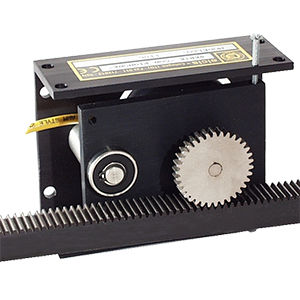

Housing diameter: 110 mm
Shaft diameter: 13 mm - 16 mm
Output frequency: 100 kHz
... Dimensions x80 Weight about 800 g Pulses/rev 1÷2540 ...
ELCIS ENCODER
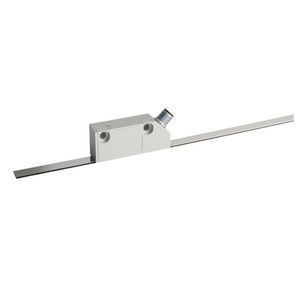

Length: 8 m
Resolution: 1 µm
Process temperature: -25 °C - 85 °C
... High-resolution magentic measuring system for absolute position measurement in dynamic applications. Ideally suited in linear drives. - High-resolution - up to 1 µm - Operation speed up to 10 m/s - For measuring lengths ...
ELGO Electronic
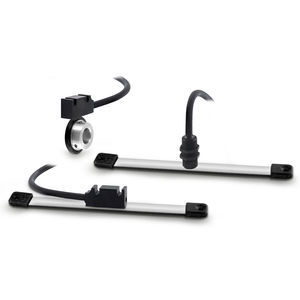

... transducers MT, MTV, MTP, the magnetic strip P50/10, the magnetic rings DM30 or DM50 are incremental systems without contact for linear or angular measures. The capacity to measure distances longer than a meter, easy assembling, absence ...
FIAMA


Process temperature: -25 °C - 85 °C
... The ABG- encoder is an optical absolute encoder system. It’s a reflective kit encoder that can be fixed quickly and easily on différent kinds of linear code strips and on différent mounting ...
PWB encoders GmbH
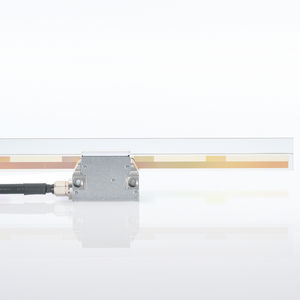

Length: 40 mm - 420 mm
Resolution: 0.01 µm - 0.1 µm
Linear encoder speed: 0 mm/s - 400 mm/s
... High-speed and high-resolution, while maintaining stable, ultraprecision measuring. Ideal for precision stages, semiconductor inspection/manufacturing systems, and ultraprecision processing machines. High-resolution scale with signal pitch of approx. ...
Magnescale Europe GmbH


Length: 70 mm - 1,240 mm
Resolution: 3 µm - 10 µm
... Photoelectric linear encoder L18 is an incremental linear displacement measuring device that can have up to 1.240 measuring length, grating period of ±20 µm or ±40 µm and accuracy that can reach up to ...
Precizika Metrology
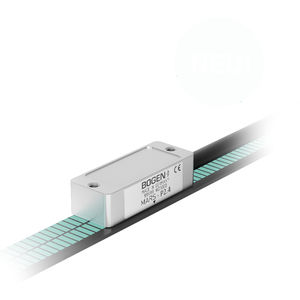

Length: 19.3 m
Rotational speed: 6,000 rpm - 24,000 rpm
Linear encoder speed: 10 m/s
... to 40 bit Special versions available Applications: robotics and handling systems, linear and torque motors Measurement Method - absolute Linear/Rotary - linear Housing - housed Product Status ...
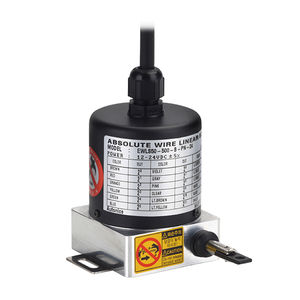

Resolution: 0.1 mm
... wire type linear scale absolute encoders feature a maximum measurement range of 512 mm with resolution of 0.1 mm. The encoders also feature high accuracy of ±1/100 mm and response speed under 500 mm/sec. ...

A linear encoder converts a linear position or displacement into an electrical output signal. The encoder head reads an encoded linear scale, which can be either absolute or incremental.
ApplicationsLinear encoders can be found in many automation applications. In metrology, they are used in digital calipers and on coordinate measuring machines (CMMs). Fully enclosed linear encoders can be mounted on milling machines to give position feedback. In the electronics manufacturing industry, linear encoders provide position feedback for PCB assembly machines.
TechnologiesLinear encoders can either be absolute or incremental. They can be equipped with optical, magnetic or inductive measuring technology.
How to chooseBe sure to specify the measuring range of your application when selecting a linear encoder.
the best suppliers