|
|
|
|
|
|
The World's Smallest Video Cameras.
Medigus offers the world's smallest micro cameras. The current offering includes a new revolutionary disposable CMOS camera, which has an outer diameter of only 1.2mm x 5mm long and is by far the smallest camera in the world. In addition the company offers reusable CCD cameras in two sizes: 3.0mm x 3.0mm and 1.8mm x 1.8mm.
The outer diameter size of the recently announced revolutionary disposable camera is only 1.2mm x 5mm long and it by far the smallest video camera in the world. The camera, which is based on an advanced CMOS image sensor, offers high performance at a low cost and combines superb sensitivity, resolution and dynamic sensitivity. The camera is completely disposable eliminating the need for the very costly sterilization process commonly associated with endoscopic procedures. As such, the camera is designed to be incorporated into disposable endoscopes or used in various diagnostic and surgical medical procedures.
The camera is also suitable for industrial applications and can be integrated into borescope, devices for Remote Visual Inspection (RVI), Non-destructive Testing (NDT), Machine Vision systems etc.
In addition, Medigus' CCD cameras (3.0mm x 3.0mm and 1.8mm x 1.8mm) offer excellent image quanlity and are suitable for both medical and industrial applications.
|
|
|
|
|
|
The World's Smallest Video Cameras.
Medigus offers the world's smallest micro cameras. The current offering includes a new revolutionary disposable CMOS camera, which has an outer diameter of only 1.2mm x 5mm long and is by far the smallest camera in the world. In addition the company offers reusable CCD cameras in two sizes: 3.0mm x 3.0mm and 1.8mm x 1.8mm.
The outer diameter size of the recently announced revolutionary disposable camera is only 1.2mm x 5mm long and it by far the smallest video camera in the world. The camera, which is based on an advanced CMOS image sensor, offers high performance at a low cost and combines superb sensitivity, resolution and dynamic sensitivity. The camera is completely disposable eliminating the need for the very costly sterilization process commonly associated with endoscopic procedures. As such, the camera is designed to be incorporated into disposable endoscopes or used in various diagnostic and surgical medical procedures.
The camera is also suitable for industrial applications and can be integrated into borescope, devices for Remote Visual Inspection (RVI), Non-destructive Testing (NDT), Machine Vision systems etc.
In addition, Medigus' CCD cameras (3.0mm x 3.0mm and 1.8mm x 1.8mm) offer excellent image quanlity and are suitable for both medical and industrial applications.
|
|
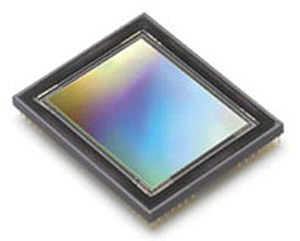
The 1/10" sensor is an interline CCD solid state image sensor suitable for PAL ultra-small color cameras. Ye, Cy, Mg and G complementary color mosaic filters are used.
At the same time, high sensibility and low dark current are achieved through the adoption of Super HAD CCD technology. This chip features a field period readout system and an electronic shutter with variable charge-storage time.
Recommended range of exit pupil distance: -4mm to -10mm.
|
|
High Powered RGB Digital Fiberoptic Sensor
• SUPER HIGH POWER RGB sensor Industry's best color differentiation
• High resolution amplifier for triple 16-bit calculation
• Dual digital display & Direct access
• New UV sensor head for fluorescent Detection
• New Luster Detection sensor head
• Three detection modes for every target [Super I / C' / C+I]
Digital, 7 light color combinations RGB fiberoptic sensor with 16-bit accuracy. Including a new UV sensor head, luster detection head, 2-color digital display and unique color element detection. Detects targets conventional sensors cannot.
|
|
MTCSiCT in TO39 packaging, clear plastics
JENCOLOUR product family / True Colour sensors
The MTCS true colour sensor, based on the standard spectral value function CIE 1931 (DIN5033), makes it possible to measure colours in the three-range method, in accordance with DIN 5033.
- Detection/ measurement of colours more accurately and much faster than human eye
- low dark current
- Signal input frequencies >100 kHz
- RoHS compliant
- Values display as XYZ
- Calibration in system L*a*b
Typical Applications:
- Conceptual formulation from the colour and white metrics
- Low-cost colour measurement
- Colorimeter (measurement and calibration e.g. display screen)
- Illuminate regulation (video projector and RPTV)
- LED test
- Control of coloured light sources
|
|
|
Integrated Color LTV Sensors : The integrated color LTV sensors combine a photodiode, color filter, and transimpedance amplifier on a single die. The output is then fed to an ADC for digital processing. TAOS’ solution requires fewer components, saves board space and reduces assembly cost over a discrete photodiode approach. TAOS’ solution also simplifies design and board layout because sensitive analog circuitry is integrated on-chip, which also improves the noise immunity. The Color LTV devices are ideal for applications such as colorimetry, printing process control, display color correction, and selectively ambient light detection or rejection.
|
|
|
|
|
|
The TCS3404 is a digital color light sensor designed to accurately derive the color chromaticity and illuminance (intensity) of ambient light and provide a digital output with 16-bits of resolution.. The device includes an 8x2 arry of filtered photodiodes, analog-to-digital conveters, and control functions on a single monolithic CMOS integrated circuit. Of the 16 photodiodes, 4 have red filters, 4 have green filters, 4 have blue filters, and 4 have no filter. With the advanced patent pending in-package trim capability, device-to-device and sytem-to-system tolerance can be minimized allowing very precise repeatability to be attained.
* Internal Filter Eliminates Signal Fluctuation Due to AC Lighting Flicker--No External Capacitor Required
* In-Package Trim Provides an Easy and Accurate Means to Achieve System-to-System Repeatability
* 16-Bit Digital Output with 100 KHz SMBus
* Programmable Analog Gain and Integration Time Supporting 1,000,000-to-1 Dynamic Range
* SYNC Input Synchronizes Integration Cycle to Modulated Light Sources
* Operating Temperature Range of -40 C to 85 C
* Operating Voltage of 2.7 V to 3.6 V
|
|
Flat panel detectors have many advantages over image intensifiers (geometric distortion, blooming, and limited dynamic range). Jacobsen incorporates digital flat panel detectors into its radioscopic inspection systems. The 16-bit flat panel offers superior resolution with 65,536 possible gray levels. This allows details to be gathered from thick as well as thin sections of an inspected parts without blooming effects.
In combination with powerful software like MAXIenhance, flat panels generate excellent images for x-ray inspection and are widely used in industrial radioscopy.
We offer flat panels with digital resolutions between 12 and 16 bit, pixel size (pitch) from 50µm to 400 µm and energy ranges between 40keV and 15 MeV. There are static (up to 7.5 fps) and real-time (25 or 30 fps) flat panel models available. Please ask for more information.
|
|
The image intensifier television system MAXIvision II is used as converter of X-rays into a standard video image.
The conversion of the optical image at the output screen of the image intensifier into a video image is accomplished by a CCD camera. CCD camera can be mounted straight or as 90° angle on the exit window of image intensifier tube. The radioscopic image is then displayed on a (b/w) television monitor.
The high technical standard of the monitor series guarantees a reliable continuous operation even in case of toughest application circumstances.
|
|
|
Image intensifiers (I.I.) are capable of detecting and amplifying low light level images and were primarily developed for night time viewing and surveillance under moonlight or starlight. They are used in industrial product inspection and scientific research, such as fluorescence microscopy. They are often combined with a CCD camera to produce an intensified CCD (ICCD). For very low light levels I.I.s with two or three microchannel plates can be used to create an image by detecting single photons. A high speed gate can be used with some image intensifiers to capture a fast event such as motion analysis of high-speed moving objects and fluorescence lifetime imaging.
|
|
|
monochrome progressive-scan frame-transfer image sensor, the FT50M offers 1k x 1k pixels at 50 frames per second through a single output. The combination of high speed and a high linear dynamic range (67dB @ 40 MHz) makes this device the perfect solution for high-end real-time medical x-ray, scientific and industrial applications. A second output can be used for mirrored and split readout.
|
|
|
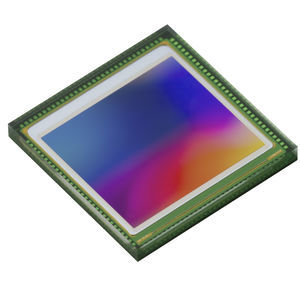
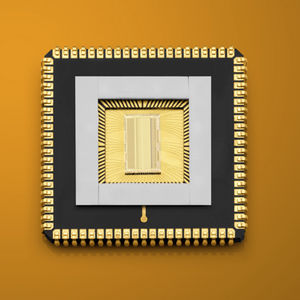
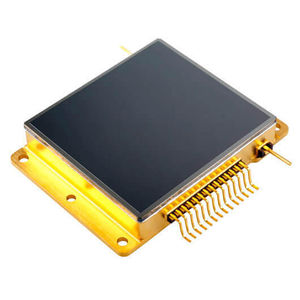
Hamamatsu designs and manufactures various types of image sensors that cover a wide range of intensity levels and spectral response ranges. Devices operate from near infrared (NIR) at 2.6 µm, through visible and ultraviolet (UV) down to soft X-rays and hard X-rays at several hundred keV. Our image sensors are made from either silicon or InGaAs. The Si image sensors are available as a CCD array, CMOS linear array and NMOS linear array. Large 2D CMOS arrays are also available for area X-ray imaging. InGaAs and CCD arrays can be cooled with a built-in thermoelectric cooler. Detector heads and signal processing boards are available for most sensors. These devices are used in non-destructive testing, process monitoring, semiconductor tools, Raman spectroscopy, microscopy, optical communications, spectrophotometry, encoders and X-ray imaging.
|
|
|
Hamamatsu designs and manufactures various types of image sensors that cover a wide range of intensity levels and spectral response ranges. Devices operate from near infrared (NIR) at 2.6 µm, through visible and ultraviolet (UV) down to soft X-rays and hard X-rays at several hundred keV. Our image sensors are made from either silicon or InGaAs. The Si image sensors are available as a CCD array, CMOS linear array and NMOS linear array. Large 2D CMOS arrays are also available for area X-ray imaging. InGaAs and CCD arrays can be cooled with a built-in thermoelectric cooler. Detector heads and signal processing boards are available for most sensors. These devices are used in non-destructive testing, process monitoring, semiconductor tools, Raman spectroscopy, microscopy, optical communications, spectrophotometry, encoders and X-ray imaging.
|
|
Affordable submicron X-Y Beam Profiling
For CW and Pulsed lasers with repetition rates > 100 kHz
Ideal for small beams needing more resolution than Beamage™
|
|
Plug and Play
Direct USB2.0 connection
For CW or Pulsed Lasers
Suitable for both CW and pulsed lasers, with single pulse capture up to 20 kHz
User-Friendly Software
# Background capture and substraction
# XY profiles and centroids
# Gaussian and top hat fits
# Beam wander tool
|
|
|
|
|
|
Detection Technology provides off the shelf detector products for various security X-ray screening systems and industrial X-Ray NDT systems. Products are ranging from bare diodes to the complete detector subsystems, including readout electronics and interfacing software to host computer.
Detection Technology's single energy X-Card products can be used in diverse types of test equipment such as industrial test equipment on production lines and in devices for detecting foreign objects from food as well as in many other industrial NDT applications. Single energy X-Card products are also used in simple mail, parcel and baggage inspection systems as well as people screening applications.
Detection Technology's dual-energy linear array x-ray detector cards have two layers of silicon photodiode arrays, targeted for different X-ray energy ranges enabling material discrimination.
Typical applications of Detection Technology's dual energy detector cards are security screening systems, where these boards provide excellent raw X-ray image data to be further processed and analyzed. Dual energy X-Cards can be used for wide range of X-ray energies and flux due to its exceptionally large sensitivity range. Same detector boards can be used to build the core of a small carry-on baggage system or a mid-size cargo or light vehicle inspection system.
|
|
|
|
|
|
This gas-detector has been used for more than a decade with HECUS SAXS and SWAXS systems and is renowned for simple, fast and reliable position-sensitive X-ray detection.
The PSD-50m is the economical solution for X-ray detection without sacrificing quality and performance, giving a typical spatial resolution of 54pm, a wide linear range (up to 50 kHz) and a large active input length of 47 mm.
Together with the ASA hardware and the new SwaxsView readout and control software it offers easy operation, high stability and reliability as well as real-time data acquisition and readout capabilities.
Technical specifications:
Linear position-sensitive gas detector (argon:methane or xenon:methane, 90:10) operating at a pressure of 7.5 bar.
Pt wire anode and backgammon Cu cathode for amplitude comparation position detection
Integral count rate 50 kHz, max.; dead-time 12.5 us
Spatial resolution better than 70 urn, typically 54 urn.
Amplitude-spectrum analysis hardware and real-time readout and control software
|
|
LINX is designed for X-ray linescan applications. It is a linear X-ray detector, using XDAS data aquisition boards. The length and detector type can be matched to the application.
The LINX unit is constructed of aluminium alloy with lead screening to protect the electronics from radiation damage. The detectors are exposed to X-rays via a graphite window and collimator. X-ray detection is by scintillator and photodiode.
A 50-way SCSI cable and interface adaptor connects LINX to a central processor, via a USB2 connection for data I/O or frame grabber cards.
Software is provided to demonstrate system performance. A software development kit is available for the development of user applications.
|
|
|
|
|
|
MAXIvision Segment - Digital CMOS Line Scan Imaging System
Forget conventional radiography! Forget film, chemicals, developing, and waiting for results! MAXIvision Segment digital linescan x-ray camera has been developed especially for the operation in digital x-ray inspection. This camera has much better resolution than Linear Diode Array’s (LDA’s) and operation at energy up to 450 kV is no problem. The camera’s robust construction for operations from 20 kV up to 450 kV guarantees a long life time and resistance against mechanical strain. The slit collimators of the cameras make them highly insensitive to scattered rays. The hardware pixel binning (=> electronic grouping of neighboring pixels to one pixel) enables a variable resolution from 83 µm to 1.3 mm. As the pixel binning is freely adjustable, it is possible to realize applications which require a very high resolution as well as applications with very high scanning speeds (up to 80m/min) with one and the same camera system.
The high dynamic range (12 bit A/D conversion) supplies x-ray images with up to 4096 grey levels. The x-ray images can be evaluated, processed, archived, transmitted or used for documentations. It is possible to integrate the camera system into third-party software by the use of the supplied software library (DLL). Thereby, custom specific solutions up to the fully automatic acquisition and evaluation of the x-ray images become possible.
|
|
|
|
|
|
X-Ray Detectors - Digital
PerkinElmer’s state-of-the-art amorphous silicon (aSi) digital X-ray detectors are an important enabling technology for today’s diagnostic medical imaging, radiation therapy and veterinary radiography as well as industrial NDT applications. Our aSi digital X-ray detectors, which replace traditional film cartridges, provide many important benefits for medical and industrial imaging OEMs - superior image resolution, high frame rates, and easy information storage and retrieval.
PerkinElmer’s digital X-Ray detectors are supporting the following diagnostic and therapeutic applications:
- radiography
- angiography
- cardiovascular imaging
- neurovascular imaging
- mobile imaging applications
- radiation oncology
- cone-beam CT
- veterinary medicine
Industrial non-destructive testing (NDT) applications of PerkinElmer’s digital x-ray detectors include:
- Automatic Defect Recognition
- Film Replacement
- Electronic inspection
- Pipeline Inspection
Our advanced X-Ray detectors are available in 16 inch (41 cm) square and 8 inch (20 cm) square flat panels with full 16-bit contrast resolution.
|
|
CHINO's Price / Performance Technology Breakthrough for IR Thermal Imaging Used for On-line Condition Monitoring and Alarming
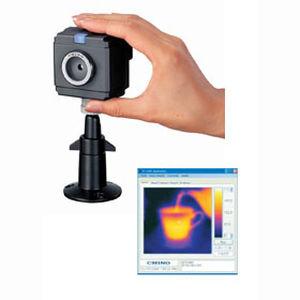
The TP-L Series is a compact Infrared Thermal Imaging Sensor, utilizing a low cost, high sensitivity, thermopile array detector. This CHINO developed detector allows the camera to measure real time temperature and provide zone alarms. Ethernet connectivity allows the camera to communicate with a PC running CHINO Imaging Software or customer’s LAN network.
Up to 4 sensors can be connected to a PC via LAN running the CHINO Viewer Software, which allows you to monitor thermal images, measure temperature and provide an alarm.
The unit can be used as a stand-alone (not connected to PC software) area temperature alarm sensor, which provides 2 Mos-Fet contacts and stores Alarm Image in Camera/Sensor.
|
|
|
TAOS Inc's family of linear sensor arrays consists of a linear array of integrating photosensing pixels which measure incident light over a user-defined exposure time and generate a voltage or digital output which represents the light exposure at each pixel. The Linear Arrays are available in a variety of lengths and pixel resolutions (DPI). The analog output may be directly interfaced to an ADC for digital processing or comparing for black/white thresholding.
|
|
The TSL1412S consists of 2 sections of 768 CMOS photodiodes, each with associated charge amplifier circuitry, aligned to form a contiguous 1536 x 1 pixel array. The TSL1412S incorporates a pixel data-hold function that provides simultaneous integration start and stop times for all pixels. The pixels measure 63.5 um by 55.5 um with 63.5 um center-to-center spacing and 8 um spacing between pixels. Operation is simplified by internal logic that requires only a serial-input (SI) pulse and a clock. The device is intended for use in a wide variety of applications including mark and code reading, OCR, and contact imaging, edge detection and positioning, and optical encoding.
* 1536x1 Sensor-Elements Organization
* 400 Dots-Per-Inch (DPI) Sensor Pitch
* High Linearity and Uniformity
* Wide Dynamic Range 4000:1 (72 dB)
* Low Image Lag 0.5% Typ
* Operation to 8MHz
* RoHS Compliant
|
|
Features:
- Patented TaperSlit flow cell - Ensures highest sensitivity while maintaining optimal spectral performance.
- Low noise performance - Updated electronics and uniquely designed optics ensures the best signal-to-noise performance (<10uAU) in the industry.
- Superior linearity - Allows for simultaneous quantification of high and low level components within a single chromatographic separation.
- Data Rates up to 80Hz - Flexible acquisition speeds for both normal and fast LC separations.
- PDA data processing - Powerful Empower 2 software conducts a vast array of complex calculations and charts for exceptional visual interpretation.
|
|
|
Cognex ID Products are focussed on solving the most difficult to read Direct Part Marked (DPM) 2D codes. Whether the code is marked on an engine component, a jet engine, a medical instrument, a healthcare product or an electronic pcb, the ID Products range are targeted at reading the code, first time, every time. Cognex ID Products take pride in being the industry and technology leader in the challenging world of ID Direct Part Marking.
|
|
|
|
|
|
In-Sight Micro Vision Systems
Make it small. Make it smart. Make it easy. And now make it colorful! Cognex has achieved all of this and more with the next-generation In-Sight® Micro vision system.
Smallest...
In-Sight Micro packs an entire vision system into an amazingly small package measuring just 30mm x 30mm x 60mm-the size of a remote head camera. Its small size, together with a unique non-linear calibration tool that enables mounting at angles of up to 45-degrees makes In-Sight Micro ideal for mounting in tight spaces on robots and hard-to-reach machinery anywhere on the production line.
Smartest...
In-Sight Micro includes the proven Cognex vision tool library to handle the broadest range of vision applications for the widest array of industries. And with the new EasyBuilder® configuration software, even the most powerful vision tools are accessible to users with little vision experience.
Easiest...
No PC required! The unique VisionView® operator interface panel makes it easier than ever to monitor production processes. VisionView automatically detects any Cognex vision system on the network and simultaneously displays information from up to nine vision systems in a tiled view.
|
|
|
|
|
|
|
Vision Components' VisiCube camera, which measures only 65 x 45 x 45 mm and weighs 170 g, provides a highly compact image processing solution for industrial environments. The Smart Cameras come complete with measuring lights and an integrated lens. They feature a 400 MHz (3,200 MIPS) processor from Texas Instruments and a 1/4" CCD sensor, which offers a 640 x 480 pixel resolution and a frame rate of 32 fps. The cameras are equipped with 32 MB DRAM and 4 MB Flash EPROM for program and data storage. They are integrated into existing automation environments via an RS422 and an Ethernet interface – the latter also enables live video display on a PC. Standard equipment also includes two digital inputs and four outputs. A robust aluminum and plastic housing provides IP65/67 protection, making VisiCube units suitable for rugged environments. Further accessories, such as external lights, tilted mirrors and protective cases, allow for easy adaptation to specific requirements. Thanks to the Linux-like real time operating system VCRT, which was developed by Vision Components, the intelligent cameras can be freely programmed. With a wider performance range than conventional vision sensors, they carry out sensor-like tasks and execute all image processing routines without an additional PC. They thereby enable automation in applications where conventional, PC-based image processing systems are too costly or too complicated to implement.
|
|
PowerPC - CPU with MMU & FPU TV interface on request
32 MB NOR-FLASH (Linux system files 4MB, user area 28 MB. Approx. 40 MB for user available, by using compressed filesystem.) image acquisition with DMA
4 MB NAND-FLASH (Bootloader, Kernel, safeboot system, system configuration parameters)power supply 12..24 V DC, min. 6..13 W
dig. I/O to PLC and peripheralspermissible ambient temperature: 0..45C
C-mount lens, on request: S-mount, CS-mount size without lens (w x h x l): 50 x 88 x 75 mm
CCD with trigger input and add. illumination connector weight without lens : approx. 400 g
|
|
|
|
|
|
Banner iVu Image Sensor
The iVu is an image based pass/fail sensor. The integrated touch screen, unique in the market, puts high-performance inspection capabilities at the user's fingertips. The touch screen provides a user friendly and intuitive graphic interface that can be used by anyone without requiring a PC for setup. The iVu Series software emulator allows the user to perfect the application offline and load parameters using a USB drive. The intuitive menu-driven tools and four-step setup on the iVu SeriesTG Image Sensor make it an easy solution in applications that are difficult (if not impossible) for standard photoelectric sensors. The iVu Image sensor has superior design and following features:
-Totally self-contained image sensor, no PC required
-On-board language-selectable, intuitive GUI ( including English, French, German, Italian, Spanish, ...)
-68,5 mm touch-screen LCD display (320 x 240 pixels)
-Choice between 3 inspection tools: pattern match and area detection with or without motion compensation
-Robust IP67 housing with integrated lighting (red, blue, green or infrared)
-M12 connector with 10 to 30 VDC for power supply and PNP or NPN output
-External trigger input, remote TEACH input and external strobe output available
-USB port for upload and download of inspections and log files
-Software emulator for PC available to evaluate inspections offline based on bitmap image
-Onboard help function
-Auto exposure function
-Adjustable focus lenses
-Password protection
-Supports all Banner lighting
|
|
Color Pattern matching, Measurment, OCR Vision sensor MVS series
MVS-PM is camera for pattern matching detection.
MVS-EM is camera for measurment purpose.
MVS-OCR is camera for OCR, Optical Character Recognition purpose.
These cameras are controlled by single controller MVS-DN (NPN output) or MVS-DP (PNP output) independently so you don't have to buy controller for each camera.
Each camera has 43000 pixels and multiple inspection windows can be set in a Field of View. For example, MVS-PM can have upto 16 inspection windows that can inspect in 6 different inspection tools, Color shape, Color area, Contour, Differential, Full color and Stain independently at a time. It's like having multiple cameras at single position.
|
|
|
|