



- Company
- Products
- Catalogs
- News & Trends
- Exhibitions
Power transformer SFZ-220electrical power supplyimmersedindustrial

Add to favorites
Compare this product
Characteristics
- Type
- power, electrical power supply
- Configuration
- immersed
- Applications
- industrial, for industrial applications, for electrical networks, substation, for photovoltaic applications, for mining equipment, high-power
- Electrical characteristics
- three-phase, high-voltage
- Mounting
- floor-standing, trolley-mounted
- Norms
- IEC, UL, ANSI, TUV
- Other characteristics
- primary, with copper windings, low-loss, high-current, K-factor, multi-winding
- Output power kVA
Min.: 31,500 kVA
(42,828.066388 hp)Max.: 300,000 kVA
(407,886.346548 hp)- Primary voltage
220 kV
- Secondary voltage
13.2 kV
Description
• IEC 60076, ANSI/IEEE Std C57.12, NEMA
• ISO 9001, KEMA, CESI, CE, TUV, UL, ASTA
• Mineral Oil / Vegetable Oil (FR3), Free PCB
• Low loss, Low partial discharge, Low temperature rise
• Seismic design, ETGI-1.020, IEEE Std 693, NCh2369
• Structural design, ASTM A325, ANSI/AISC 360, AWS D1.1
• High altitude correction per IEC 60076 & IEEE C57.12, ~ 5000m
220 kV power transformer is a high-voltage transformer used in transmission substations to step voltage up or down for efficient long-distance power transmission and distribution. It is a critical component of modern electrical grids.
Typical Specifications
·Highest System Voltage: 245 kV
·Rated Voltage: 220/132 kV, 220/110 kV, 220/66 kV, 220/33 kV, etc.
·Rated Power: 100–500 MVA (commonly 125, 160, 250, 315 MVA)
·Frequency: 50 Hz or 60 Hz
·Number of Phases: Three-phase
·Cooling Method: ONAN/ONAF, OFAF, OFWF
·Insulation: Mineral oil or natural/synthetic ester
·Vector Group: YNd1, YNd11, YNyn0+d11, etc.
·Tap Changer: On-Load Tap Changer (OLTC)
·Impedance: Typically 10–18%
Main Components
·Magnetic core
·High-voltage (220 kV) winding
·Low-voltage winding
·Transformer oil
·Main tank
·Conservator tank
·Radiators
·Cooling fans and oil pumps
·Silica gel breather
·High-voltage bushings
·Low-voltage bushings
·On-load tap changer (OLTC)
·Buchholz relay
·Pressure relief device (PRD)
·Oil and winding temperature indicators
·Oil level gauge
Common Voltage Ratios
·220/132 kV
·220/110 kV
·220/66 kV
·220/33 kV
·220/11 kV (industrial applications)
Typical Applications
·Extra-high-voltage transmission substations
·Grid interconnection stations
·Large industrial plants
·Renewable energy integration (wind and solar farms)
·Regional transmission networks
Typical Efficiency
·Full-load efficiency: 99.5–99.8%
·Expected service life: 30–50 years with proper maintenance
Protection Systems
·Differential protection (87T)
·Restricted earth fault (REF)
·Overcurrent protection (50/51)
·Earth fault protection (50N/51N)
·Buchholz protection
·Pressure relief protection
·Oil and winding temperature protection
·Overfluxing protection (24)
Routine Tests (per standards)
Typical factory acceptance tests include:
·Winding resistance measurement
·Turns ratio (TTR) test
·Insulation resistance (IR)
·Applied voltage test
·Induced overvoltage test
·Lightning impulse test
·Partial discharge measurement
·No-load loss and current
·Load loss and impedance voltage
·Oil dielectric strength and dissolved gas analysis (DGA)
Applicable Standards
IEC 60076 – Power Transformers
IEEE C57 series – Power Transformer Standards
IEC 60296 – Transformer insulating oils
IEC 60137 – Bushings for alternating voltages above 1 kV
A 220 kV transformer is one of the most common transmission-class transformers used by electric utilities worldwide, typically connecting 220 kV transmission systems to lower-voltage sub-transmission or distribution networks while handling power ratings from approximately 100 MVA to over 500 MVA.
• ISO 9001, KEMA, CESI, CE, TUV, UL, ASTA
• Mineral Oil / Vegetable Oil (FR3), Free PCB
• Low loss, Low partial discharge, Low temperature rise
• Seismic design, ETGI-1.020, IEEE Std 693, NCh2369
• Structural design, ASTM A325, ANSI/AISC 360, AWS D1.1
• High altitude correction per IEC 60076 & IEEE C57.12, ~ 5000m
220 kV power transformer is a high-voltage transformer used in transmission substations to step voltage up or down for efficient long-distance power transmission and distribution. It is a critical component of modern electrical grids.
Typical Specifications
·Highest System Voltage: 245 kV
·Rated Voltage: 220/132 kV, 220/110 kV, 220/66 kV, 220/33 kV, etc.
·Rated Power: 100–500 MVA (commonly 125, 160, 250, 315 MVA)
·Frequency: 50 Hz or 60 Hz
·Number of Phases: Three-phase
·Cooling Method: ONAN/ONAF, OFAF, OFWF
·Insulation: Mineral oil or natural/synthetic ester
·Vector Group: YNd1, YNd11, YNyn0+d11, etc.
·Tap Changer: On-Load Tap Changer (OLTC)
·Impedance: Typically 10–18%
Main Components
·Magnetic core
·High-voltage (220 kV) winding
·Low-voltage winding
·Transformer oil
·Main tank
·Conservator tank
·Radiators
·Cooling fans and oil pumps
·Silica gel breather
·High-voltage bushings
·Low-voltage bushings
·On-load tap changer (OLTC)
·Buchholz relay
·Pressure relief device (PRD)
·Oil and winding temperature indicators
·Oil level gauge
Common Voltage Ratios
·220/132 kV
·220/110 kV
·220/66 kV
·220/33 kV
·220/11 kV (industrial applications)
Typical Applications
·Extra-high-voltage transmission substations
·Grid interconnection stations
·Large industrial plants
·Renewable energy integration (wind and solar farms)
·Regional transmission networks
Typical Efficiency
·Full-load efficiency: 99.5–99.8%
·Expected service life: 30–50 years with proper maintenance
Protection Systems
·Differential protection (87T)
·Restricted earth fault (REF)
·Overcurrent protection (50/51)
·Earth fault protection (50N/51N)
·Buchholz protection
·Pressure relief protection
·Oil and winding temperature protection
·Overfluxing protection (24)
Routine Tests (per standards)
Typical factory acceptance tests include:
·Winding resistance measurement
·Turns ratio (TTR) test
·Insulation resistance (IR)
·Applied voltage test
·Induced overvoltage test
·Lightning impulse test
·Partial discharge measurement
·No-load loss and current
·Load loss and impedance voltage
·Oil dielectric strength and dissolved gas analysis (DGA)
Applicable Standards
IEC 60076 – Power Transformers
IEEE C57 series – Power Transformer Standards
IEC 60296 – Transformer insulating oils
IEC 60137 – Bushings for alternating voltages above 1 kV
A 220 kV transformer is one of the most common transmission-class transformers used by electric utilities worldwide, typically connecting 220 kV transmission systems to lower-voltage sub-transmission or distribution networks while handling power ratings from approximately 100 MVA to over 500 MVA.
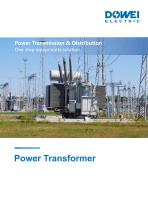
Other Dowei Electric products
Transformer | Power Transformer


Related Searches
- Transformer
- Dry transformer
- Capacitor
- IEC transformer
- Current transformer
- Encapsulated transformer
- Power transformer
- Single-phase transformer
- Electronic filter
- Industrial transformer
- Three-phase transformer
- Floor-standing transformer
- Instrument transformer
- AC electronic filter
- Protection transformer
- Cast resin transformer
- Transformer for industrial applications
- Indoor service transformer
- Distribution transformer
- Power capacitor
*Prices are pre-tax. They exclude delivery charges and customs duties and do not include additional charges for installation or activation options. Prices are indicative only and may vary by country, with changes to the cost of raw materials and exchange rates.
About DirectIndustry
DirectIndustry is a marketplace that offers B2B players a complete experience, from product sourcing to purchase. DirectIndustry is an entity of VirtualExpo Group.
Are you a buyer?
Are you a supplier?