



- Company
- Products
- Catalogs
- News & Trends
- Exhibitions
AC voltage regulator VRsingle-phasefor energy savingCE

Add to favorites
Compare this product
Characteristics
- Options
- single-phase, AC
- Applications
- for energy saving
- Certifications
- CE, ISO, TUV
- Other characteristics
- automatic, adjustable, high-voltage, medium-voltage
- Power
Max.: 800 kVA
(1,087.7 hp)Min.: 38 kVA
(51.67 hp)
Description
• IEC 60076-21, ANSI/IEEE Std C57.15, NEMA
• ISO 9001, KEMA, CESI, CE, TUV, UL, ASTA
• Mineral Oil / Vegetable Oil (FR3), Free PCB
• Seismic design, ETGI-1.020, IEEE Std 693, NCh2369
• Structural design, ASTM A325, ANSI/AISC 360, AWS D1.1
• High altitude correction per IEC 60076 & IEEE C57, ~ 5000m
• Robust, maintenance free solution for Pole-mounted / Substation
• Regulating line voltages from 10% raise (boost) to 10% lower (buck) in 32 steps of approximately 5/8% each
• Voltage ratings available from 2400 volts (60 kV BIL) to 34,500 volts (200 kV BIL) for 60 Hz and 50 Hz systems
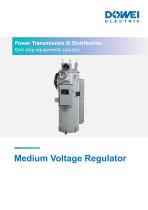
Medium Voltage Regulator (MV Regulator)
A Medium Voltage Regulator (MV Regulator) is an electrical device used to automatically maintain and stabilize the voltage level of medium-voltage distribution systems by increasing or decreasing the line voltage. It improves power quality, compensates for voltage drops along feeders, and ensures electrical equipment receives a stable supply voltage.
It is commonly installed in MV distribution networks (typically 2.4 kV–35 kV), especially on long rural feeders, industrial power systems, and utility distribution lines.
1. Main Functions
·Voltage Regulation
·Boosts voltage during low-voltage conditions.
·Reduces voltage during high-voltage conditions.
·Maintains voltage within acceptable limits.
Typical regulation range:
·±5%
·±10%
·±16 steps (common utility design)
2. Main Components
1) Regulating Transformer
·Autotransformer type is commonly used.
·Provides adjustable voltage through tap positions.
2) Tap Changer
Two common types:
On-Load Tap Changer (OLTC)
·Changes taps while energized.
·Used for continuous voltage correction.
De-energized Tap Changer
·Requires shutdown before adjustment.
·Used for fixed seasonal settings.
3) Control Unit
Monitors:
·Line voltage
·Load current
·Power factor
·Time delay settings
Controls:
·Tap position
·Voltage correction
·Remote communication
4) Bypass and Protection Components
Includes:
·Surge arresters
·Circuit breakers
·Disconnect switches
·Current transformers (CTs)
·Control relays
3. Typical Ratings
·Voltage Class: 2.4 kV, 4.16 kV, 7.2 kV, 12.47 kV, 13.8 kV, 24.9 kV, 34.5 kV
·Phase: Single-phase or three-phase
·Capacity: 1 MVA – 30+ MVA
·Regulation Range: ±5% to ±10%
·Frequency: 50 Hz / 60 Hz
·Cooling: Oil immersed (most common)
4. Types of MV Regulators
A.) Pole-Mounted Voltage Regulator
Used in:
·Utility overhead distribution
·Rural feeders
·Long MV lines
Features:
·Compact
·Outdoor installation
·Usually single-phase units in banks of three
B.) Substation Voltage Regulator
Installed at:
·Distribution substations
·Industrial substations
Features:
·Higher capacity
·Three-phase operation
·Advanced control systems
C.) Step Voltage Regulator (SVR)
A common MV regulator design:
·Uses autotransformer technology.
·Provides automatic feeder voltage correction.
D.) Solid-State MV Regulator
Uses power electronics:
·Faster response
·No mechanical tap changer
·Lower maintenance
Applications:
·Smart grids
·Renewable energy networks
5. Applications
·Utility Distribution: Feeder voltage control
·Renewable Energy: Solar/wind voltage management
·Mining: Long MV feeders
·Oil & Gas: Motor voltage stabilization
·Manufacturing Plants: Sensitive equipment protection
·Data Centers: Power quality improvement
·Rail Systems: Traction power regulation
6. Benefits
Improved Power Quality
·Reduces voltage fluctuations.
·Prevents undervoltage trips.
·Increased Equipment Life
Protects:
·Motors
·Transformers
·Drives
·Control systems
Better Energy Efficiency
·Stable voltage improves motor and equipment performance.
Grid Reliability
·Helps utilities maintain customer voltage requirements.
In a medium-voltage power network, an MV Regulator acts as an automatic voltage stabilizer, keeping feeder voltage within limits by continuously adjusting transformer taps to compensate for load changes and line voltage drops.
• ISO 9001, KEMA, CESI, CE, TUV, UL, ASTA
• Mineral Oil / Vegetable Oil (FR3), Free PCB
• Seismic design, ETGI-1.020, IEEE Std 693, NCh2369
• Structural design, ASTM A325, ANSI/AISC 360, AWS D1.1
• High altitude correction per IEC 60076 & IEEE C57, ~ 5000m
• Robust, maintenance free solution for Pole-mounted / Substation
• Regulating line voltages from 10% raise (boost) to 10% lower (buck) in 32 steps of approximately 5/8% each
• Voltage ratings available from 2400 volts (60 kV BIL) to 34,500 volts (200 kV BIL) for 60 Hz and 50 Hz systems
Medium Voltage Regulator (MV Regulator)
A Medium Voltage Regulator (MV Regulator) is an electrical device used to automatically maintain and stabilize the voltage level of medium-voltage distribution systems by increasing or decreasing the line voltage. It improves power quality, compensates for voltage drops along feeders, and ensures electrical equipment receives a stable supply voltage.
It is commonly installed in MV distribution networks (typically 2.4 kV–35 kV), especially on long rural feeders, industrial power systems, and utility distribution lines.
1. Main Functions
·Voltage Regulation
·Boosts voltage during low-voltage conditions.
·Reduces voltage during high-voltage conditions.
·Maintains voltage within acceptable limits.
Typical regulation range:
·±5%
·±10%
·±16 steps (common utility design)
2. Main Components
1) Regulating Transformer
·Autotransformer type is commonly used.
·Provides adjustable voltage through tap positions.
2) Tap Changer
Two common types:
On-Load Tap Changer (OLTC)
·Changes taps while energized.
·Used for continuous voltage correction.
De-energized Tap Changer
·Requires shutdown before adjustment.
·Used for fixed seasonal settings.
3) Control Unit
Monitors:
·Line voltage
·Load current
·Power factor
·Time delay settings
Controls:
·Tap position
·Voltage correction
·Remote communication
4) Bypass and Protection Components
Includes:
·Surge arresters
·Circuit breakers
·Disconnect switches
·Current transformers (CTs)
·Control relays
3. Typical Ratings
·Voltage Class: 2.4 kV, 4.16 kV, 7.2 kV, 12.47 kV, 13.8 kV, 24.9 kV, 34.5 kV
·Phase: Single-phase or three-phase
·Capacity: 1 MVA – 30+ MVA
·Regulation Range: ±5% to ±10%
·Frequency: 50 Hz / 60 Hz
·Cooling: Oil immersed (most common)
4. Types of MV Regulators
A.) Pole-Mounted Voltage Regulator
Used in:
·Utility overhead distribution
·Rural feeders
·Long MV lines
Features:
·Compact
·Outdoor installation
·Usually single-phase units in banks of three
B.) Substation Voltage Regulator
Installed at:
·Distribution substations
·Industrial substations
Features:
·Higher capacity
·Three-phase operation
·Advanced control systems
C.) Step Voltage Regulator (SVR)
A common MV regulator design:
·Uses autotransformer technology.
·Provides automatic feeder voltage correction.
D.) Solid-State MV Regulator
Uses power electronics:
·Faster response
·No mechanical tap changer
·Lower maintenance
Applications:
·Smart grids
·Renewable energy networks
5. Applications
·Utility Distribution: Feeder voltage control
·Renewable Energy: Solar/wind voltage management
·Mining: Long MV feeders
·Oil & Gas: Motor voltage stabilization
·Manufacturing Plants: Sensitive equipment protection
·Data Centers: Power quality improvement
·Rail Systems: Traction power regulation
6. Benefits
Improved Power Quality
·Reduces voltage fluctuations.
·Prevents undervoltage trips.
·Increased Equipment Life
Protects:
·Motors
·Transformers
·Drives
·Control systems
Better Energy Efficiency
·Stable voltage improves motor and equipment performance.
Grid Reliability
·Helps utilities maintain customer voltage requirements.
In a medium-voltage power network, an MV Regulator acts as an automatic voltage stabilizer, keeping feeder voltage within limits by continuously adjusting transformer taps to compensate for load changes and line voltage drops.
Other Dowei Electric products
Voltage Regulator


Related Searches
- Transformer
- Dry transformer
- Capacitor
- IEC transformer
- Current transformer
- Encapsulated transformer
- Power transformer
- Single-phase transformer
- Electronic filter
- Industrial transformer
- Three-phase transformer
- Floor-standing transformer
- Instrument transformer
- AC electronic filter
- Protection transformer
- Cast resin transformer
- Transformer for industrial applications
- Indoor service transformer
- Distribution transformer
- Power capacitor
*Prices are pre-tax. They exclude delivery charges and customs duties and do not include additional charges for installation or activation options. Prices are indicative only and may vary by country, with changes to the cost of raw materials and exchange rates.
About DirectIndustry
DirectIndustry is a marketplace that offers B2B players a complete experience, from product sourcing to purchase. DirectIndustry is an entity of VirtualExpo Group.
Are you a buyer?
Are you a supplier?