

- Hydraulics - Pneumatics
- Valve
- Direct-operated solenoid valve
- Weilong Intelligent Technology (Dongguan) Co., Ltd.


- Company
- Products
- Catalogs
- News & Trends
- Exhibitions
Direct-operated solenoid valve WL171135for hot watercompactwith flange


Add to favorites
Compare this product
Characteristics
- Control
- direct-operated
- Medium
- for hot water
- Body
- compact, nylon, with flange, IP65, IP68
- Other characteristics
- electromagnetic, low power consumption, IP65, exhaust
- DN
5.1 mm
(0.201 in)- Voltage
12 V, 24 V
- Temperature
Max.: 100 °C
(212 °F)Min.: -10 °C
(14 °F)- Pressure
Max.: 2.5 bar
(36.3 psi)Min.: 0 bar
(0 psi)
Description
Product Overview
The SCR solenoid valve regulates the flow of diesel exhaust fluid (DEF) in selective catalytic reduction (SCR) systems, enabling controlled NOx reduction by dosing DEF into the exhaust stream where it converts NOx into nitrogen and water. This valve is intended for applications requiring accurate DEF dosing, emission compliance and long service intervals.
Features
Technical Datasheet
How It Works
The valve uses an electromagnetic coil: current generates a magnetic field that moves a plunger to open or close the port. The engine control unit (ECU) commands the valve based on load, temperature and NOx feedback to dose precise quantities of DEF, which decomposes to ammonia and reacts with NOx in the catalyst to form nitrogen and water.
Applications
Automotive and industrial SCR systems including passenger cars, trucks, buses, construction and mining equipment, agricultural machinery, marine engines, generators and stationary power units where NOx control is required.
Advantages
Disadvantages
Troubleshooting & Maintenance
Preventive Maintenance Tips
Technical Specifications
The SCR solenoid valve regulates the flow of diesel exhaust fluid (DEF) in selective catalytic reduction (SCR) systems, enabling controlled NOx reduction by dosing DEF into the exhaust stream where it converts NOx into nitrogen and water. This valve is intended for applications requiring accurate DEF dosing, emission compliance and long service intervals.
Features
- Electromagnetic actuation for rapid open/close response.
- Corrosion-resistant Nylon construction and sealing suitable for DEF exposure.
- Compact flange installation with low power consumption (10–12 W).
- High-cycle durability and IP-68 waterproof rating for harsh environments.
- Ports with 5.1 mm diameter for integration with common DEF lines.
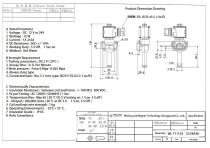
Technical Datasheet
- Brand: Weilong Technology
- Model Number: WL171135
- Rated Voltage (V): DC 12V or 24V
- Rated Power (W): 10-12 W
- Media: Hot Water
- Holding Force (N): 150 —– 300 GF
- Ports: Dia. 5.1 mm
- Reset Time(s): 1 S
- Service Life: 100 Thousand Times
- Certification: CE, RoHS, ISO9001
- Material: Nylon
- Lead Wire Length (mm): 200
- Install Style: Flange
- Tolerance of Dimension: +/- 0.1 MM
- Water-proof: IP-68
- Insulation Class: B
- Hi-Pot Test: AC 600V 50/60Hz 2s
- Non-excitation Holding Force: 0
- Working Temperature: -10°C - 100°C
- Duty Cycle: 1-100%
- Working MPa: from 0 to 0.25 Mpa
- Payment Term: TT, or LC At Sight
- Sample Order: Yes
- Warranty: 2 Year
- MOQ: 1000 PCS
- Supply Ability: 5000 pcs per Week
- Delivery Time: 30 Days
- Port of Loading: shenzhen
How It Works
The valve uses an electromagnetic coil: current generates a magnetic field that moves a plunger to open or close the port. The engine control unit (ECU) commands the valve based on load, temperature and NOx feedback to dose precise quantities of DEF, which decomposes to ammonia and reacts with NOx in the catalyst to form nitrogen and water.
Applications
Automotive and industrial SCR systems including passenger cars, trucks, buses, construction and mining equipment, agricultural machinery, marine engines, generators and stationary power units where NOx control is required.
Advantages
- Accurate and rapid DEF dosing for emission control.
- Supports compliance with stringent emission standards (e.g., Euro VI, EPA).
- Fast electromagnetic response for precise injection timing.
- Designed for continuous operation with high-cycle life.
- Low power consumption suitable for vehicle electrical systems.
- Compact flange design for easy integration.
Disadvantages
- Sensitivity to DEF quality—contamination can cause clogging or damage.
- Requires regular inspection and cleaning to prevent deposits and crystallization.
- System complexity increases with sensors, ECU and catalyst integration.
- Higher upfront cost compared with simpler emission control components.
- Risk of crystallization in improper shutdown or low-temperature conditions.
Troubleshooting & Maintenance
- Valve does not activate: check power, wiring, coil resistance and ECU signal; replace valve if mechanically stuck.
- Incorrect DEF dosing: inspect for crystals or contamination, flush system, verify ECU commands and replace worn parts.
- DEF leaks: inspect and replace O-rings/seals, tighten fittings or replace cracked housing.
- Slow response: verify supply voltage, clean internal parts, replace weak coil.
- Audible buzzing: check for unstable voltage, secure mounting and replace worn components.
Preventive Maintenance Tips
- Use ISO-certified high-quality DEF.
- Avoid long periods of DEF stagnation in the system.
- Perform periodic flushing of DEF lines and components.
- Protect valve from extreme temperatures when possible.
- Schedule regular inspections and cleaning.
Technical Specifications
- Brand: Weilong Technology
- Model: WL171135
- Rated Voltage: DC 12V or 24V
- Rated Power: 10-12 W
- Material: Nylon
- Ingress Protection: IP-68
- Operating Temperature: -10°C to 100°C
- Service Life: 100,000 cycles (approx.)
- Ports: Dia. 5.1 mm
- Working Pressure: 0 - 0.25 MPa
- Lead Wire Length: 200 mm
- Warranty: 2 years
- MOQ: 1000 PCS
- Supply Capacity: 5000 pcs/week
VIDEO
Catalogs
Other Weilong Intelligent Technology (Dongguan) Co., Ltd. products
Automotive Solenoid


Related Searches
- Valve
- Hand valve
- Control valve
- Stainless steel valve
- Water valve
- Threaded valve
- Electrically operated valve
- Regulating valve
- Valve with flange
- Stop valve
- Electric valve
- Gas solenoid valve
- 2/2-way solenoid valve
- Normally closed solenoid valve
- Directional control valve
- Direct-acting solenoid valve
- Metal solenoid valve
- Valve for industrial applications
- Steel valve
- Oil valve
*Prices are pre-tax. They exclude delivery charges and customs duties and do not include additional charges for installation or activation options. Prices are indicative only and may vary by country, with changes to the cost of raw materials and exchange rates.
About DirectIndustry
DirectIndustry is a marketplace that offers B2B players a complete experience, from product sourcing to purchase. DirectIndustry is an entity of VirtualExpo Group.
Are you a buyer?
Are you a supplier?