

- Power Transmission - Mechanical components
- Actuator and Positioning System
- Electric actuator
- Weilong Intelligent Technology (Dongguan) Co., Ltd.


- Company
- Products
- Catalogs
- News & Trends
- Exhibitions
Electric actuator WL1240linearrotarymetal alloy


Add to favorites
Compare this product
Characteristics
- Type
- electric
- Movement
- linear, rotary
- Material
- metal alloy
- Motor
- permanent magnet
- Voltage
- 24-volt, 12-volt
- Norms
- ISO
- Other characteristics
- high-efficiency
- Stroke
10 mm
(0.394 in)- Force
0.4 kgf
- Motor power
Min.: 10 W
(0.01 hp)Max.: 20 W
(0.03 hp)- Operating Temperature
Min.: -10 °C
(14 °F)Max.: 100 °C
(212 °F)
Description
Product overview
A latching solenoid actuator designed to remain latched in either the extended or retracted position without continuous electrical power. A permanent magnet provides the holding force so the actuator maintains its position with no energy consumption until a brief pulsed electrical impulse (opposite polarities for lock/unlock) changes the state. Common form factors include tubular, box-frame and rotary; force ranges from a few newtons up to >100 N. Suitable for battery-operated or IoT systems where energy efficiency and power-loss resilience are required.
Key features
How it works
The actuator combines a permanent magnet and an electromagnetic coil. A short DC pulse (typically 20–100 ms) generates a field that either reinforces or opposes the permanent magnet's field; opposite polarity pulses switch between latched positions. Power is consumed only during brief switching pulses; otherwise the device draws no current while held.
Industrial applications
Used where power conservation and fail-safe holding are critical: smart door/cabinet/safe locks, EV charger plug locks, remote irrigation or solar-powered valve control, household appliance water control, portable medical gas flow controllers, automotive parking/locking devices, vending machines, lockers, counting machines, and solar positioning systems.
Advantages
Disadvantages
Factors affecting operation
Troubleshooting (common symptoms & checks)
Technical specifications
A latching solenoid actuator designed to remain latched in either the extended or retracted position without continuous electrical power. A permanent magnet provides the holding force so the actuator maintains its position with no energy consumption until a brief pulsed electrical impulse (opposite polarities for lock/unlock) changes the state. Common form factors include tubular, box-frame and rotary; force ranges from a few newtons up to >100 N. Suitable for battery-operated or IoT systems where energy efficiency and power-loss resilience are required.
Key features
- Zero holding power: permanent magnet holds position without power.
- Pulsed power operation: only short electrical pulses needed to change states.
- Bi-stability: two stable positions (extended and retracted) without continuous energy.
- Low heat output and energy-efficient compared with continuous solenoids.
- Medium holding force relative to size; suitable for smart locks, valve regulators and portable devices.
How it works
The actuator combines a permanent magnet and an electromagnetic coil. A short DC pulse (typically 20–100 ms) generates a field that either reinforces or opposes the permanent magnet's field; opposite polarity pulses switch between latched positions. Power is consumed only during brief switching pulses; otherwise the device draws no current while held.
Industrial applications
Used where power conservation and fail-safe holding are critical: smart door/cabinet/safe locks, EV charger plug locks, remote irrigation or solar-powered valve control, household appliance water control, portable medical gas flow controllers, automotive parking/locking devices, vending machines, lockers, counting machines, and solar positioning systems.
Advantages
- No standby power consumption when latched.
- Cool operation with minimal heat dissipation while holding.
- Fail-safe holding in case of power outage.
- Battery-friendly, suitable for portable and IoT devices.
- Simple drive circuits possible (capacitor discharge, H-bridge for bipolar drive).
- Compact designs with relatively strong holding force for size.
Disadvantages
- Bipolar drive required (reverse polarity pulse to release) unless using dual-winding designs.
- Lower dynamic (switching) force compared to continuously driven solenoids.
- Susceptible to demagnetization at high temperatures or strong external magnetic fields.
- Slower switching (typical 20–100 ms) and limited stroke (commonly up to ~15 mm).
Factors affecting operation
- Coil design & electrical parameters: voltage, current, resistance, wire size, number of turns (trade-off between magnetic strength and response speed).
- Pulse energy: correct voltage, pulse width, polarity and timing are critical (too short = no operation; too long = overheating).
- Magnet strength: stronger magnets increase holding force but may be harder to release.
- Mechanical load & friction: external load, return spring and internal friction affect stroke completion and holding reliability.
- Temperature & environment: high temperature raises coil resistance and can demagnetize magnets; moisture/dust increases friction and corrosion.
- Power supply stability: voltage fluctuations can cause unreliable switching, especially for battery-powered or long-wiring applications.
- Required response times: heavy plungers or poorly optimized coils slow response.
- Magnetic materials & manufacturing precision: core/plunger materials and air-gap tolerances strongly affect generated force.
- Control circuit design: correct drive type (H-bridge, pulse waveform), polarity inversion, timing and protection components are essential.
Troubleshooting (common symptoms & checks)
- Fails to latch/unlatch: check pulse amplitude/current, increase pulse width (e.g., ~100 ms), verify reverse-polarity capability, inspect magnets for thermal degradation.
- Weak holding (load pulls plunger): measure holding force, reduce temperature, check alignment and end-stop contact, consider higher holding-force model.
- Intermittent operation: inspect wire connections, H-bridge/contact oxidation, capacitor discharge circuit components and driver transistor thermal issues.
- Interference near other magnets: move device away from external magnetic sources or add magnetic shielding; increase pulse current if needed.
- No movement/no sound: check coil continuity and resistance (expected in typical range per design), inspect plunger for rust/corrosion, test with alternate power source.
Technical specifications
- Brand: Weilong Technology
- Model: WL1240
- Rated Voltage: DC 12 V or 24 V
- Rated Power: 10–20 W
- Work Model: Push-Pull Type
- Holding Force: 4000 gf
- Stroke: 10 mm (customizable)
- Reset Time: 0.2 s
- Service Life: 500,000 cycles
- Certifications: CE, RoHS, ISO9001
- Material: superior magnet iron
- Lead Wire Length: 200 mm
- Installation: screw
- Dimensional Tolerance: ±0.1 mm
- Water-proof: None
- Insulation Class: B
- Hi-Pot Test: AC 600 V 50/60 Hz 2 s
- Non-excitation Holding Force: 0
- Working Temperature: -10 °C to 100 °C
- Duty Cycle: 1–100 %
- Thread Depth: /
- Payment Term: TT or LC at sight
- Sample Order: Yes
- Warranty: 1 Year
- MOQ: 1000 pcs
- Supply Ability: 5000 pcs per week
- Delivery Time: 30 Days
- Port of Loading: Shenzhen
VIDEO
Catalogs
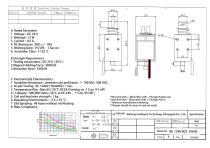
Other Weilong Intelligent Technology (Dongguan) Co., Ltd. products
Linear Solenoid


Related Searches
- Actuator
- Linear actuator
- Electric actuator
- Compact actuator
- Industrial actuator
- DC actuator
- Electromagnet
- Rotary actuator
- 24 V actuator
- 12 V actuator
- Linear electromagnet
- DC electromagnet
- Actuator for medical applications
- ISO actuator
- Voltage solenoid
- Compact electromagnet
- Holding electromagnet
- 24-volt electromagnet
- Single-acting actuator
- Electromagnetic electromagnet
*Prices are pre-tax. They exclude delivery charges and customs duties and do not include additional charges for installation or activation options. Prices are indicative only and may vary by country, with changes to the cost of raw materials and exchange rates.
About DirectIndustry
DirectIndustry is a marketplace that offers B2B players a complete experience, from product sourcing to purchase. DirectIndustry is an entity of VirtualExpo Group.
Are you a buyer?
Are you a supplier?