


{{product.productLabel}} {{product.model}}
{{#if product.featureValues}}{{product.productPrice.formattedPrice}} {{#if product.productPrice.priceType === "PRICE_RANGE" }} - {{product.productPrice.formattedPriceMax}} {{/if}}
{{#each product.specData:i}}
{{name}}: {{value}}
{{#i!=(product.specData.length-1)}}
{{/end}}
{{/each}}
{{{product.idpText}}}
{{product.productLabel}} {{product.model}}
{{#if product.featureValues}}{{product.productPrice.formattedPrice}} {{#if product.productPrice.priceType === "PRICE_RANGE" }} - {{product.productPrice.formattedPriceMax}} {{/if}}
{{#each product.specData:i}}
{{name}}: {{value}}
{{#i!=(product.specData.length-1)}}
{{/end}}
{{/each}}
{{{product.idpText}}}


Acceleration range: -20 m/s² - 20 m/s²
Frequency: 0 Hz - 100 Hz
Acceleration sensors reliably monitor acceleration of parts in plants or machinery. Due to the two-piece mounting concept, F99 series acceleration sensors from Pepperl+Fuchs are extremely robust and also ...


Frequency: 0 Hz - 16,000 Hz
Systems for vibration monitoring and diagnostics – accelerometers Accelerometers of the VSA series are used for accurate vibration measurement. They measure the rms value of the acceleration on non-rotating ...


Acceleration range: 490, 735 m/s²
Frequency: 10 Hz - 15,000 Hz
... environmental conditions. Mounts the accelerometer onto the surface of the monitored component for optimal frequency response. Three interconnect cables available with a threaded female connector at the accelerometer ...
Condition Monitoring and Protection

Acceleration range: 784, 98 m/s²
Frequency: 0.2 Hz - 14,000 Hz
... Please review the AM Series Accelerometers Datasheet for detailed specifications. Installed in 43217 (standard) or 37442 (high-temperature) housings to protect against adverse environmental conditions. Mounts the accelerometer ...
Condition Monitoring and Protection

Acceleration range: 785 m/s²
Frequency: 15 Hz - 10,000 Hz
The 330450 High Temperature Acceleration System (HTAS) segregates the sensing element from signal conditioning electronics with the two permanently connected via hardline cable. Sensing head can be installed on surfaces up to 400°C ...
Condition Monitoring and Protection


The ADXL314 is a ±200 g range, 13-bit resolution, 3-axis digital accelerometer. The digital output data is formatted as 16-bit, twos complement data and is accessible through a serial peripheral interface (SPI), 3-wire ...
Frequency: 200 Hz - 3,200 Hz
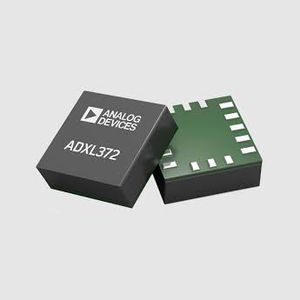
The ADXL372 is an ultralow power, 3-axis, ±200 g MEMS accelerometer that consumes 22 μA at a 3200 Hz output data rate (ODR). The ADXL372 does not power cycle its front end to achieve its low power operation and therefore ...


Parker's ACC series is a family of inertial sensors for mobile and other applications. The sensors are analog output and have an inertial range of up to ±1.5G. Two versions are offered to that can be used to indicate acceleration or ...


Acceleration range: 0 m/s² - 400 m/s²
Frequency: 10 Hz - 10,000 Hz
... function / Peak value measurement / Handheld device for mobile vibration measurement / Automatic ISO 10816-3 evaluation The accelerometer is ideal for maintenance workers to quickly check vibrating parts, machines and ...


Acceleration range: 2 m/s² - 40 m/s²
Frequency: 2.4 kHz - 5.5 kHz
... vibration and temperature) Product Description The AKF390 triaxial accelerometer is a voltage output type accelerometer independently developed and produced by RION Technology, which can be used in ...
SHENZHEN RION TECHNOLOGY CO.,LTD

Frequency: 2.4 kHz - 5.5 kHz
MEMS DIGITAL ACCELEROMETER Three-axis (X、Y、Z) Output: RS232 / RS485 / TTL Power voltage: 9~36V Anti-impact: 2000G Work temp:-40°C to +85°C Excellent deviation stability Excellent performance (impact, vibration ...
SHENZHEN RION TECHNOLOGY CO.,LTD

Acceleration range: 2 m/s² - 40 m/s²
Frequency: 2.4 kHz - 5.5 kHz
... vibration and temperature) Product Description The AKF398 triaxial accelerometer is a voltage output type accelerometer independently developed and produced by RION Technology, which can be used in ...
SHENZHEN RION TECHNOLOGY CO.,LTD
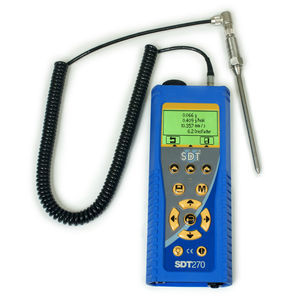

The SDT270 Acceleration Interface is ideally designed with a good quality functionality and performance intended to be used for specific purposes. The system is capable of measuring, alarming and performing vibration data analysis in ...


Frequency: 0 Hz - 1,100 Hz
... models are high-sensitivity sensors designed for seismic purposes and for low-intensity, low-frequency motion studies. Accelerometers provide a high level, low impedance output. In most applications, no signal conditioning ...
SOLGEO SRL

Frequency: 0 Hz - 1,100 Hz
... low-intensity, low-frequency motion studies. AMS-PLUS offer low noise and higher dynamic range respect to standard AMS. Accelerometers provide a high level, low impedance output. In most applications, no signal conditioning ...
SOLGEO SRL

Frequency: 0 Hz - 1,500 Hz
AMD MEMS strong motion seismic accelerometer suitable for any environmental condition and designed for vibration measurement of bridges and viaducts. Solgeo has developed this triaxial mems accelerometer ...
SOLGEO SRL


The Polytec VibroOne® laser Doppler vibrometer is the one-box solution for non-contact vibration measurement. With VibroOne® you analyze acoustics, dynamics and vibration issues in both R&D and industrial quality control with laser precision. ...


Acceleration range: 490 m/s²
Frequency: 0.5 Hz - 10,000 Hz
• Sensitivity: (±10%)100 mV/g (10.2 mV/(m/s²)) • Measurement Range: ±50 g pk (±490 m/s² pk) • Broadband Resolution: 0.00015 g rms (0.0015 m/s² rms) • Frequency Range: (±5%)0.5 to 10000 Hz • Sensing Element: Ceramic • Weight: 0.20 oz (5.8 gm)
PCB Piezotronics GmbH
Acceleration range: 490 m/s²
Frequency: 0.5 Hz - 10,000 Hz
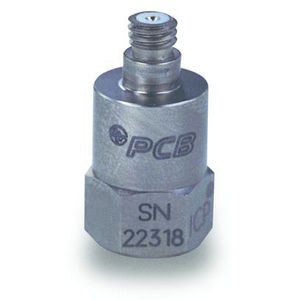
High sensitivity, ceramic shear ICP® accel., 100 mV/g, 0.5 Hz to 10k Hz, 10-32 top conn., TEDS 1.0 • Sensitivity: (±10%)100 mV/g (10.2 mV/(m/s²)) • Measurement Range: ±50 g pk (±490 m/s² pk) • Broadband Resolution: 0.00015 g rms ...
PCB Piezotronics GmbH

Acceleration range: 490 m/s²
Frequency: 0.5 Hz - 10,000 Hz
High sensitivity, miniature (1.8 gm), ceramic shear ICP® accel., 100 mV/g, with TEDS and 5-44 coaxial conn., TEDS Ver 1.0 • Sensitivity: (±10%)100 mV/g (10.2 mV/(m/s²)) • Measurement Range: ±50 g pk (±490 m/s² pk) • Broadband Resolution: ...
PCB Piezotronics GmbH

Acceleration range: 8 m/s² - 58,840 m/s²
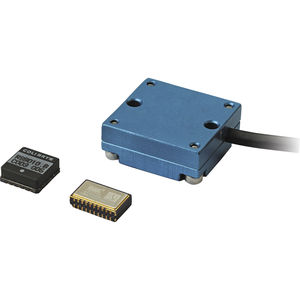
Accelerometers ± 1 g to ± 6000 g high-precision and highly stable IMUs DC or AC output, analogue or digital amplified or non-amplified 1 to 3 axles


Acceleration range: 490 m/s²
Frequency: 0.5 kHz - 10 kHz
The TA095 is a single-axis IEPE accelerometer that is suitable for use in a wide range of applications. The TA095 can be used with any suitable device that provides a constant-current IEPE power source, such as the ...


Accelerometer 4.0 for Vibration Protection and Industrial Monitoring' Step into the future of industry with CUBE, the revolutionary triaxial sensor that combines vibration protection, condition monitoring and IoT technology ...
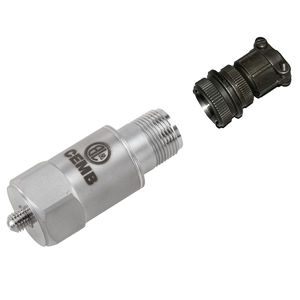
Piezoelectric acceleration sensor Vantaggi: The TA-18/S, TA-8, TA-28 transducers seismically measure absolute machine vibrations by directly fastening the vibrating part on the supports. They provide an output ...
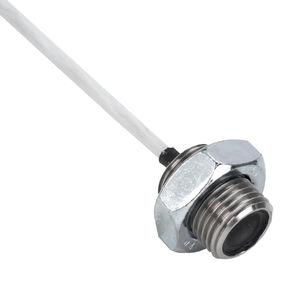
Frequency: 0.1 Hz - 10,000 Hz
Piezoelectric acceleration sensor Acceleration sensor for absolute vibration monitoring. Small dimensions acceleration sensor particularly suitable for application on electro-spindles ...
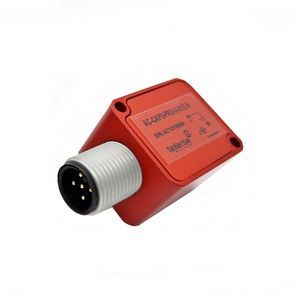

AC-CAP-PRO by Texense is our new cost effective accelerometer. It's compact and industrial, capacitive type and available in 1,2 or 3 axes. - Range from +/- 2G to +/- 200G - Analog outputs 0,5V to 4,5V - M12 connector - ...
TEXYS

Combining our accelerometers into a new 3-axis inertial box, used by the worlds leading WRC, F1 and WEC teams. Possible configurations are as follows: - 3 x gas accelerometers. - 2 x capacitive accelerometers, ...
TEXYS

Acceleration range: -196 m/s² - 196 m/s²
Frequency: 100 Hz
Compact and lightweight class-leading 3 axis accelerometer. Temperature compensation to 80°C allows our customers an easy installation even in severe conditions. Our capacitive accelerometer type has ...
TEXYS


Acceleration range: 5 m/s² - 39 m/s²
Frequency: 0 Hz - 200 Hz
... with a lowest possible noise level. The symmetrical positioning system incorporated with the force balance accelerometer principle, the accelerometer faithfully keeps its scaling and calibration even ...
GeoSIG Ltd

Acceleration range: 20 m/s²
Frequency: 0.1 Hz - 100 Hz
The AC-23 package is a triaxial accelerometer sensor designed for Strong Motion and industrial applications where a high sensitivity is required. The AC-2x series are state-of-the-art servo-accelerometers ...
GeoSIG Ltd
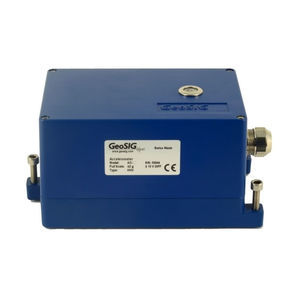
Frequency: 0 Hz - 10 Hz
... combined with the state of the art proprietary circuit design yields this cost effective and reliable accelerometer. MEMS cells include linear accelerometer sensing elements which measure the capacitance ...
GeoSIG Ltd
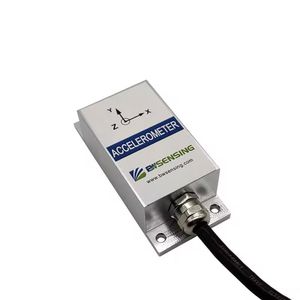

Acceleration range: 15 m/s²
Frequency: 100 Hz
MEMS accelerometer AS400 Product Introduction: AS400 is a high-sensitivity low-drift digital output tri-axis acceleration sensor developed by BEWIS Sensor. It is suitable for different industrial ...
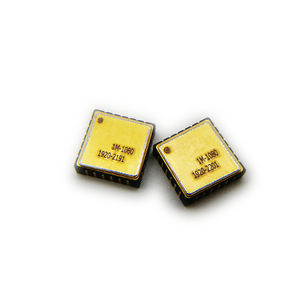
Acceleration range: 100 m/s²
Frequency: 100 Hz
AS100/AS200 Series Single axis Accelerometers Chips Product Introduction: AS100/AS200 MEMS Single axis Accelerometers Chips are developed and manufactured by BEWIS, which has completely independent intellectual ...


Acceleration range: 20 m/s² - 59 m/s²
Frequency: 0 Hz - 1,000 Hz
The RECOVIB® industrial mems accelerometers bridge the gap between the performance of laboratory accelerometers (which are often expensive, fragile and offer low protection) and the robustness of industrial ...
Micromega

Acceleration range: 245 m/s² - 4,903 m/s²
Frequency: 0 Hz - 10,000 Hz
The RECOVIB® industrial mems accelerometers bridge the gap between the performance of laboratory accelerometers (which are often expensive, fragile and offer low protection) and the robustness of industrial ...
Micromega

Acceleration range: 20 m/s² - 78 m/s²
Frequency: 0 Hz - 1,000 Hz
The RECOVIB® industrial mems accelerometers bridge the gap between the performance of laboratory accelerometers (which are often expensive, fragile and offer low protection) and the robustness of industrial ...
Micromega


1D ACCELEROMETER SENSOR FOR SEISMIC MONITORING 1 V/G Description Single component accelerometer sensor for structural and environmental seismic monitoring, accuracy of 1 V/g, housed in an aluminum ...

3D ACCELEROMETER SENSOR FOR SEISMIC MONITORING 1 V/G Description 3 components accelerometer sensor for structural and environmental seismic monitoring, accuracy of 1 V/g, housed in an aluminum IP-67 ...

Acceleration range: 490 m/s²
Frequency: 0.5 Hz - 10,000 Hz
MONO-AXIAL ACCELEROMETER FOR RESONANCE FREQUENCY TEST Used for determining the Longitudinal, Transverse (Flexural) and Torsional resonant frequency of concrete and natural stone samples. The reasonant frequency allows ...
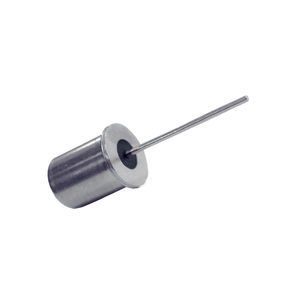

Contact Form/Style: Normally Open Switching Voltage: 24Vdc Max. Switching Current: 0.25A Max. Switching Capacity: 3VA Max. Activation Level: 3.0-9.0G Contact Resistance: 20 Ohms Max. Size: Over All Length: 0.730in (18.5mm) Diameter: ...
The Comus Group
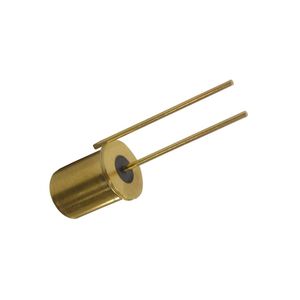
Acceleration range: 98 m/s² - 146 m/s²
The ASLS -15 acceleration switch is the normally open contact type. Its contact displays a maximum resistance of 10ohms and is activated at levels of 10.0 to 14.9G. It provides a maximum switching capacity of 5VA. Its maximum voltage ...
The Comus Group
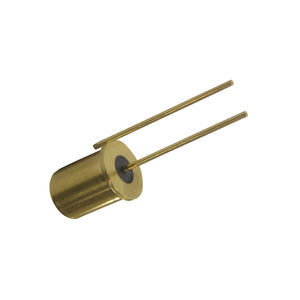
Contact Form/Style: Normally Open Switching Voltage: 24Vdc Max. Switching Current: 0.25A Max. Switching Capacity: 5VA Max. Activation Level: 10.0-14.9G Contact Resistance: 10 Ohms Max. Size: Over All Length: 0.709in (18.0mm) Diameter: ...
The Comus Group


Frequency: 0.5 Hz - 7,000 Hz
• Acceleration range: ±100 g • M4.5, 4-pin connector • Selectable TEDS Template Accelerometer with a 100 g range, M4.5 connector, and selectable TEDS Template. Measuring ranges Maximum measuring range [g] 100 ...
Kistler
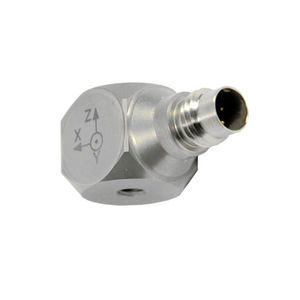
Frequency: 0.5 Hz - 7,000 Hz
• Acceleration range: ±100 g • M4.5, 4-pin connector Accelerometer with a 100 g range and an M4.5 connector. Measuring ranges Maximum measuring range [g] 100 g Electrical properties Electrical isolation Case ...
Kistler

Frequency: 0 Hz - 900 Hz
• Acceleration range: ±2 g • 9-pin connector, titanium housing Accelerometer with a 2 g range, 4 V full-scale output with temperature measurements, a titanium housing, and a 9-pin side connector. Threshold (acceleration) 1.0E-4 ...
Kistler


... Excellent electrical insulation (>65kVrms) Dual output : acceleration and displacement (standard) Fiber Optic Acceleration Sensors (FAS) are a technological innovation developed by MC-monitoring. With more than ...

Hermetically sealed housing designed for harsh environment Dual case isolation for better resistance against electro-magnetic noises Acceleration or velocity output (depending on sensor type) Piezoelectric sensors are a well-established ...
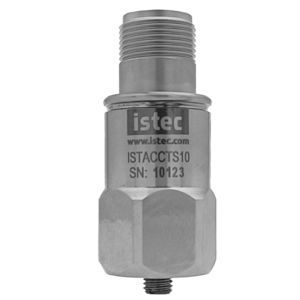

Frequency: 0.5 Hz - 14,000 Hz
Our range of high quality accelerometers are manufactured to the highest standards and have a premium and compact housing. The high accuracy of our accelerometers makes them ideal for industrial applications, ...
Istec
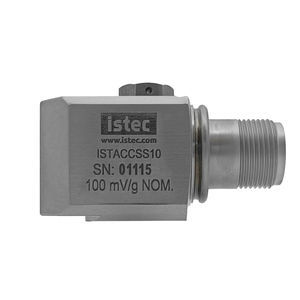
Frequency: 0.5 Hz - 10,000 Hz
Our range of high quality accelerometers are manufactured to the highest standards and have a premium and compact housing. The high accuracy of our accelerometers makes them ideal for industrial applications, ...
Istec
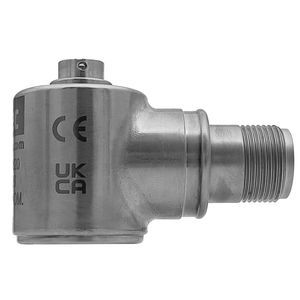
Frequency: 1 Hz - 12,000 Hz
Our range of high quality accelerometers are manufactured to the highest standards and have a premium and compact housing. The high accuracy of our accelerometers makes them ideal for industrial applications, ...
Istec


Frequency: 0.1 Hz - 2,500 Hz
The MR660-1 is a controller for the fiber optic accelerometer system MR660 for 1-axis measurements. The MR660 fiber optic accelerometer system was designed to measure accelerations (vibrations) in ...
MICRONOR


Frequency: 200 Hz
The ASB Series is an angular accelerometer developed by Jewell Instruments. It is mainly used for mechanical, business and sensing applications. This unit is built with protection rating of IP 65. It features a 200 Hz ...
Jewell Instruments

Frequency: 200 Hz
The Jewell ASM Series Angular Accelerometer is designed with a 1.05" cube housing size structure that is capable to produce a ± 15 standard input voltage and a 200 Hz bandwidth. It can also produce an input that ranges ...
Jewell Instruments

Frequency: 100, 150, 170, 200 Hz
Jewell ASXC is a product series that contains fluid rotor angular accelerometers defined by the use of fluid-filled ring chambers, in order to measure angular acceleration with great precision. The product is often used ...
Jewell Instruments
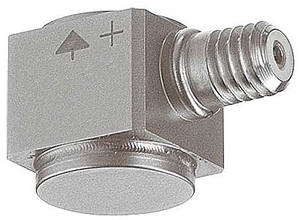
Accelerometers are devices which are used to measure the linear acceleration of an object. They also can be used to measure and detect vibration and inclination.
ApplicationsAccelerometers are used in industry to measure the vibration on vehicles, machines, and buildings.
Other applications include:
- measuring seismic activity
- inclination for aircraft instrumentation
- hospital bed angle gauges
- inclination indicators on sail boats
- safety airbag release in automobiles
There are several different types of accelerometers found in industry today. They vary by sensor type, which can be:
- capacitive
- piezoelectric
- piezoresistive
- Hall effect
- magnetoresistive
When selecting an accelerometer, be sure to specify whether you would like analog or digital outputs. This will depend on the type of hardware used to communicate with the accelerometer.
Other specifications include the number of movement axes and the required accelerometer sensitivity.
Please specify:
Help us improve:
remaining