


{{product.productLabel}} {{product.model}}
{{#if product.featureValues}}{{product.productPrice.formattedPrice}} {{#if product.productPrice.priceType === "PRICE_RANGE" }} - {{product.productPrice.formattedPriceMax}} {{/if}}
{{#each product.specData:i}}
{{name}}: {{value}}
{{#i!=(product.specData.length-1)}}
{{/end}}
{{/each}}
{{{product.idpText}}}
{{product.productLabel}} {{product.model}}
{{#if product.featureValues}}{{product.productPrice.formattedPrice}} {{#if product.productPrice.priceType === "PRICE_RANGE" }} - {{product.productPrice.formattedPriceMax}} {{/if}}
{{#each product.specData:i}}
{{name}}: {{value}}
{{#i!=(product.specData.length-1)}}
{{/end}}
{{/each}}
{{{product.idpText}}}
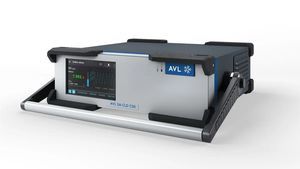

... Overview
The AVL CLD C50™ is a lightweight, compact chemiluminescence detector for continuous nitrogen oxides (NOX) monitoring in process industry and laboratories. Suitable as a stand-alone indoor analyzer or as a 19" rack-mounted stack analyzer ...
AVL List
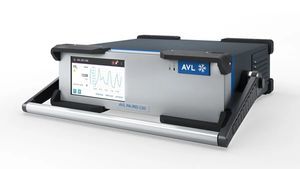
... Overview
The AVL IRD C50™ is an NDIR/NDUV multi-gas analyzer for continuous and periodic measurement of up to seven gas components from combustion, industrial processes and power generators. Compact and lightweight, it uses highly stable miniaturized ...
AVL List
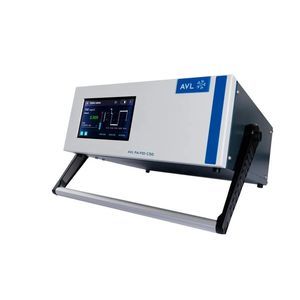
... Product Overview
The AVL PA-FID C50™ is a portable Flame Ionization Detector (FID) analyzer for monitoring total organic carbon (TOC) emissions in process plants, emission testing and laboratories. It combines lightweight construction ...
AVL List
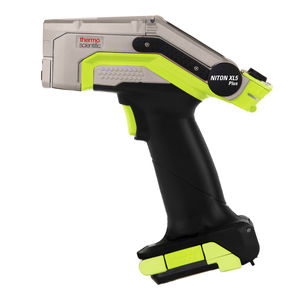

... Get unprecedented performance in handheld XRF analysis, even for lightweight elements. The Niton XL5 Plus is the lightest, smallest, most powerful handheld XRF analyzer available. Features - 5W X-ray tube - Proprietary large area drift detector ...
Thermo Fisher Scientific

Easily implement laboratory-based FT-NIR performance in a ready-for-plant package using the Thermo Scientific™ Antaris™ II FT-NIR Analyzer. With industry-leading method transfer performance, the Antaris II FT-NIR Analyzer provides robust and reliable ...
Thermo Fisher Scientific

Perform fast, accurate and reliable elemental analysis of solid metal samples from trace to percent level with the Thermo Scientific™ ARL™ easySpark™ Metal Analyzer. This new benchtop optical emission spectrometry (OES) instrument is specially designed ...
Thermo Fisher Scientific
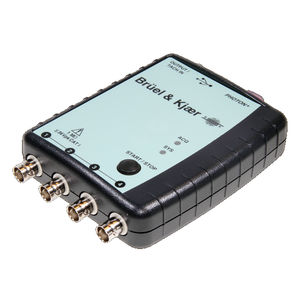

... DYNAMIC SIGNAL ANALYZER A portable, all-in-one analyzer for fast sound and vibration analysis in the field, laboratory or production line. PHOTON+ is a versatile analyzer for sound and vibration measurements, recording, and signal post-processing. ...
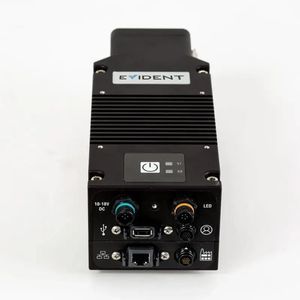

Vanta iX In-Line XRF Analyzer for Automated Material Analysis Keep Your Process Up to Speed The Evident Vanta iX in-line X-ray fluorescence (XRF) analyzer gives you confidence in your products by automating material analysis and alloy identification on ...
EVIDENT – Inspection Technologies
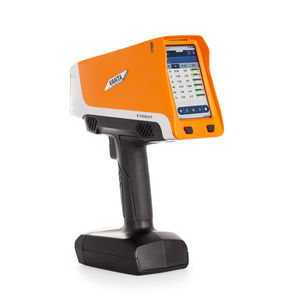
... The Vanta analyzer is our most advanced handheld X-ray fluorescence (XRF) device for customers who demand laboratory-quality results in the field. It provides rapid, accurate elemental analysis and alloy identification for high-throughput XRF testing. Vanta ...
EVIDENT – Inspection Technologies
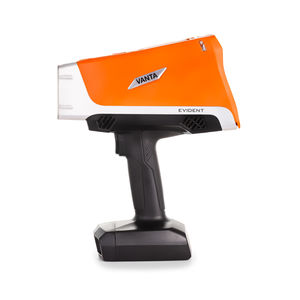
... The Vanta Element XRF analyzer series provides elemental analysis for fast alloy grade and other material identification and sorting at an affordable price. The series is available in two cost-effective models: • Vanta Element analyzer for affordable ...
EVIDENT – Inspection Technologies


... The OMEGA 5 is the all-in-one FT-IR solution for gas analysis. Your advantages: • Automated, high-precision, and real-time monitoring of gas concentrations • Calibration-free quantification • Compensation of interferents • Temperature up to 191 ...
Bruker Optics GmbH & Co. KG

The MATRIX II-MG Series includes four high-performance FT-IR gas analyzers within a compact and robust housing. These analyzers are designed for automated, precise, and real-time monitoring of gas concentrations across various applications. No matter ...
Bruker Optics GmbH & Co. KG

... A single device to measure greenhouse gases and air pollutants. MIRO’s MGA10-GP analyzers utilize mid-infrared laser absorption spectroscopy with Quantum Cascade Lasers to directly measure the concentrations of various gases. Your advantages: • 10 ...
Bruker Optics GmbH & Co. KG


... A straightforward instrument with all the basic functions you need for fast and efficient moisture measurements. - Simple 3-Step Operation: Tare the empty sample pan, Place the sample, Close the lid and start - Simple high quality construction and ...
METTLER TOLEDO

... Thermogravimetric Analyzer with small furnace (SF) The TGA 2 (SF) offers seamless workflows which require only very few user actions in order to start a routine analysis. Our TGA instruments use the world’s best micro and ultra-micro balances which ...
METTLER TOLEDO

... Thermogravimetric Analyzer with large furnace (LF) The TGA 2 (LF) offers seamless workflows which require only very few user actions in order to start a routine analysis. Our TGA instruments use the world’s best micro and ultra-micro balances which ...
METTLER TOLEDO


... Providing complete confidence in water treatment The Aztec 600 aluminium analyzer provides reliable and accurate measurement of residual aluminium to improve drinking water quality and optimise chemical usage. The Aztec 600 Aluminium is an on-line ...
ABB Measurement & Analytics

... Providing continuous ammonia analysis for optimization of nutrient removal The Aztec 600 ISE ammonia analyzer provides reliable and accurate measurement of ammonia concentrations for a wide variety of applications including source water monitoring ...
ABB Measurement & Analytics

... Accurate low level ammonia analysis The Aztec 600 colorimetric ammonia analyzer provides reliable and highly accurate measurement of low level ammonia concentrations for a wide variety of applications from drinking water influent to wastewater effluent. It's ...
ABB Measurement & Analytics


... The ALL NEW TMA 450 RH is a stand-alone instrument that allows for controlled relative humidity experiments over both wide temperature and RH ranges. Measure CHE, CTE*, track Tg changes, and perform dynamic experiments, all under a controlled RH environment. The ...
TA Instruments

TA Instruments invites you to experience the world’s most productive Dynamic Vapor Sorption (DVS) Analyzer, the Discovery SA. Discover the advanced engineering and attention to detail that provides enhancements in every aspect of DVS technology and a ...
TA Instruments

TA Instruments invites you to experience the finest in Thermomechanical Analyzers, the Discovery TMA 450. Discover the advanced engineering and attention to detail that provides enhancements in every aspect of performance and a new level of user experience. ...
TA Instruments


The PATHFAST™ system combines the accuracy of a full-scale lab analyzer with the flexibility of a mobile solution. Its compact design and low weight makes PATHFAST™ the ideal analysis system in laboratories, hospitals and medical offices available wherever ...
PHC Europe B.V. / PHCbi

PATHFAST™ determines the quantity of hs Trop I, NTproBNP, D-Dimer, hsCRP, Myoglobin and CK-MB mass from one single whole blood sample. The quantitative data of the parallel analyses provide results within minutes, which facilitate the therapeutical decision. ...
PHC Europe B.V. / PHCbi

PATHFAST™ determines the quantity of hs Trop I, NTproBNP, D-Dimer, hsCRP, Myoglobin and CK-MB mass from one single whole blood sample. The quantitative data of the parallel analyses provide results within minutes, which facilitate the therapeutical decision. ...
PHC Europe B.V. / PHCbi
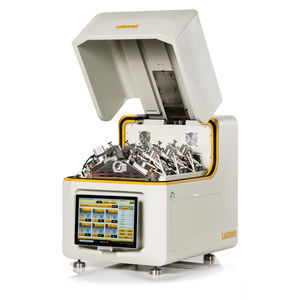

... High-throughput OTR & WVTR tester with 6 test cells for simultaneous measurement, greatly increasing efficiency compared to conventional 1–2 cell systems. Equipped with patented Coulometric oxygen and infrared moisture sensors, ensuring accurate results ...
Labthink Instruments Co., Ltd.
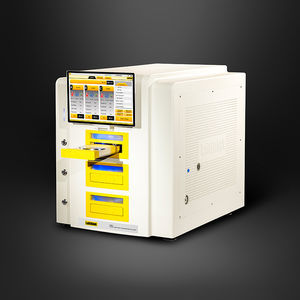
C403H Oxygen /Water Vapor Transmission Rate Test System is based on the testing principle of Coulometric oxygen sensor and infrared water vapor sensor. It is designed and manufactured according to ASTM D3985、ASTM F1249,ISO 15106-2 and other relevant standards ...
Labthink Instruments Co., Ltd.
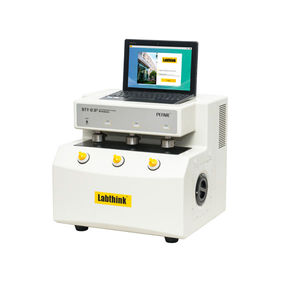
... BTY-B3P Gas Permeability Tester is based on the differential pressure method, and is professionally applicable to the determination of gas permeability of battery diaphragms, breathable films and other relative polymer products. Applications battery ...
Labthink Instruments Co., Ltd.


... • Accessory kits to complete earth electrode testing and soil resistivity surveys • Can be used with any of the DET2/2, DET2/3, DET3 or DET4 Megger earth testers as well as Megger MFT models • Easy wind and unwind reels • Easy to ...
MEGGER

... • Highest dynamic range and accuracy in the industry • Smallest and most rugged FRA instrument in the industry • Fulfills all international standards for SFRA measurements • Advanced analysis and decision support built into the software ...
MEGGER

... Photovoltaic irradiance meter, solar clamp meter and specialist PV test leads kit The PVK350 photovoltaic kit offers essential tools for solar professionals. Included is the Megger DCM1500s solar clamp meter, PVM210 irradiance meter, and specialised ...
MEGGER


... INFRARED GAS ANALYSER - ZKJ: ACCURATE MULTIGAS MONITORING FOR DEMANDING ENVIRONMENTS Fuji Electric's infrared gas analyser - ZKJ is designed to provide continuous and reliable gas measurement in the most demanding industrial applications. Based on ...
FUJI ELECTRIC France
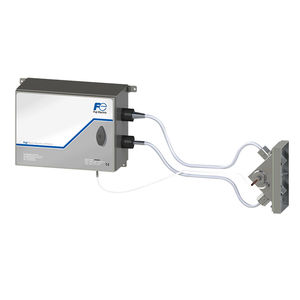
... DUST MONITOR WITH LIGHT SCATTERING TECHNOLOGY - ZFDM-4: PERFORMANCE AND RELIABILITY FOR INDUSTRIAL EMISSIONS The dust monitor with light scattering technology - ZFDM-4 is designed for demanding industrial environments. Compact and easy to install, ...
FUJI ELECTRIC France

... NDIR CO₂ ANALYSER – ZFP9: ACCURACY AND RELIABILITY FOR CONTROLLED ENVIRONMENTS The NDIR CO₂ analyser – ZFP9 is a compact non-dispersive infrared analyser designed to accurately measure CO₂ concentration in various industrial and horticultural settings. FEATURES ...
FUJI ELECTRIC France
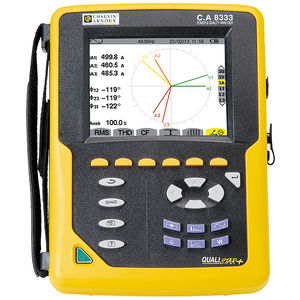

... All the parameters simultaneously Designed for test and maintenance departments working in industrial or administrative buildings, the Qualistar+ C.A 8333 can be used to obtain a snapshot of the main features characterizing the quality of the electrical ...
CHAUVIN ARNOUX
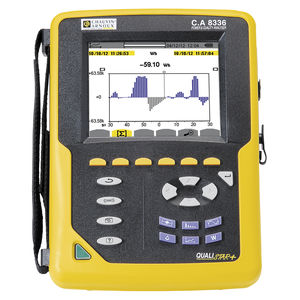
Designed for test and maintenance teams working in industrial or administrative buildings, the Qualistar+ C.A 8336 can be used to obtain a snapshot of the main features characterizing the quality of the electrical network.. This analyser's functions make ...
CHAUVIN ARNOUX

... Highlights C.A 8436, the rugged, waterproof IP67 Qualistar+: • - Indoor and outdoor use, even when it is raining • - 5 voltage inputs, 4 current inputs • - Continuous recording of all the parameters simultaneously • - Monitoring with alarms • - ...
CHAUVIN ARNOUX


LECO’s 832 series will bring productivity, precision, and progress to your lab when determining the sulfur and carbon content in a wide variety of organic materials. Our Cornerstone brand software platform powered by a touch-screen interface, increases ...
LECO

By incorporating state-of-the-art hardware and an on-board, touch-screen software platform, the 828 Series allows you to easily handle a wide range of sample applications. CHNS analytics and protein analysis according to Dumas with highest throughput, ...
LECO

The TruSpec Micro delivers optimal performance in carbon, hydrogen, nitrogen, sulfur, and oxygen determination in solid or liquid micro samples. Components work together to provide you with reliable, consistent performance marked by rapid analysis times, ...
LECO

... Ensure product quality and safety by detecting mass changes. Highlights Analyze the unique thermal behavior of materials and their components The TG 309 Libra®Supreme is the top-of-the-line thermobalance in the Libra® series. It offers outstanding ...
NETZSCH Analyzing & Testing

The Supreme version is the pinnacle of the STA 509 Jupiter® series, seamlessly blending top-loading convenience with unparalleled precision. With exceptional balance resolution down to 25 ng and remarkable long-term stability, this instrument is meticulously ...
NETZSCH Analyzing & Testing
... Analyze the unique thermal behavior of materials and their components The TG 309 Libra®Select is the instrument which offers the greatest variety in the Libra® series. Temperature ranges from 10°C to 1025°C or up to 1100°C can be selected. It offers ...
NETZSCH Analyzing & Testing


BeScan Lab, the versatile, sensitive, and reliable stability analyzer based on Static Multiple Light Scattering (SMLS) technology, is widely used in the formulation development and product quality control. It accommodates a wide range of sample concentrations ...

Volume: 1 cm³ - 100 cm³
The BetterPyc 380 is an automatic gas pycnometer that uses the gas displacement method to deliver highly accurate measurements with ease, offering precision at its best. With temperature control, pressure sensing, and intuitive software, it measures the ...
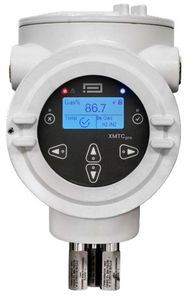

... The new XMTCpro is a compact, rugged, online thermal conductivity transmitter that measures the concentration of binary gas mixtures including hydrogen, carbon dioxide, methane, helium and many others. Featuring real-time error detection and enhanced ...
Panametrics
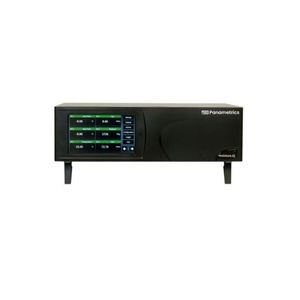
... Panametrics, a Baker Hughes business, offers a broad spectrum of moisture analyzers. These are available in intrinsically safe and explosion-proof configurations to measure the moisture content in gases and non-aqueous liquids in any environment. From ...
Panametrics
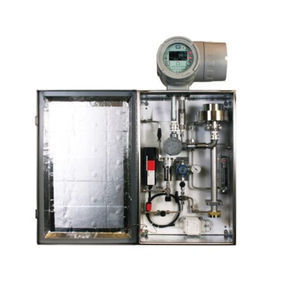
Our industrial TDLAS analyzer, Aurora, provides moisture measurements from low PPM to high percentage levels. Its accurate measurements detect moisture in many applications such as natural gas TEG dehydration, natural gas storage, transmission and custody ...
Panametrics
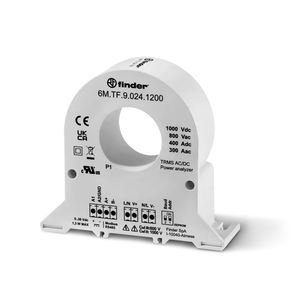

... Modbus Power Analyzer Products. The range includes: Type 6M.Tx – Single phase Modbus quality power Monitors. All-in-one CT, Power/Energy meter and Supply quality monitor + Modbus communications. Technical features: • True-RMS AC and DC measurements ...


... The BELSORP-max II is a versatile instrument which measures specific surface area/pore size distribution, vapor adsorption and chemisorption. The BELSORP-max II analyzer allows for comprehensive surface characterization such as micropore analysis by ...
MICROTRAC

... The TURBISCAN TOWER is a 6-sample macroscopic & colloidal stability analyzer and the flagship product of the TURBISCAN range. Based on the powerful SMLS technology it offers fast, precise, and quantitative stability measurement of formulations (emulsions, ...
MICROTRAC

... Fully automated density measurement of powders and porous materials The BELPYCNO L allows the accurate measurement of skeleton density of solids and powders as well as the true density of pastes and liquids. The combination of an internal temperature ...
MICROTRAC


The Konica Minolta CA-527 is our next generation Display Color Analyzer from Konica Minolta Sensing, offering reliability, faster measurements, and ultra-low luminance. Its expanded measurement dynamic range covers the range from ultra-low to high luminance, ...
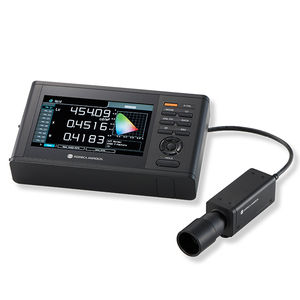
... Enhanced-accuracy & repeatability with high-speed that is capable of measuring a wider range of the latest displays Konica Minolta’s Display Color Analyzer Series has become the standard within the display industry. In addition, the latest display ...
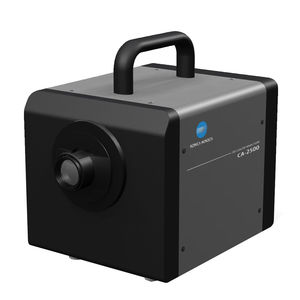
... The CA-2500 2D Color Analyzer is ideal for the evaluation and inspection of a variety of display technologies, such as smartphones and tablet PCs. This instrument uses XYZ filters that closely match the CIE 1931 color-matching functions to provide ...


Vulcan is a handheld LIBS (laser induced breakdown spectroscopy) analyzer, which allows users to perform rapid metal analysis and is available with a 3-year warranty. Just squeeze the trigger and one second later the result appears. As it uses LIBS technology, ...
Hitachi High-Tech Analytical Science

... High-performance metals analysis made affordable
The OE750 and the NEW OE720 are ground-breaking OES metals analyzers. They cover the complete spectrum of elements in metal* with low detection limits and state-of-the-art multi-CMOS ...
Hitachi High-Tech Analytical Science

... Smart coatings analysis for faster, connected measurement The FT200 Series benchtop XRF analyzers have been designed to significantly reduce the time taken to make a measurement. Recognizing that the most time is taken with sample setup and measurement ...
Hitachi High-Tech Analytical Science


... Near-infrared spectrometer for liquid, solid, and viscous samples. Developed and produced in accordance with Swiss quality standards, the OMNIS NIR Analyzer is the near-infrared spectroscopy (NIRS) solution for routine analysis along the entire production ...
Metrohm

The 2060 The NIR-R Analyzer is the next generation of process spectroscopy instruments from Metrohm Process Analytics. With its unique and proven design from the inside out, it delivers accurate results every 10 seconds. It can provide non-destructive ...
Metrohm

... The 2060 IC Process Analyzer enables customized online ion chromatography monitoring of industrial processes with multiple parameters and streams. Based on the 2060 online analysis platform, the 2060 IC Process Analyzer is a complete and flexible system ...
Metrohm
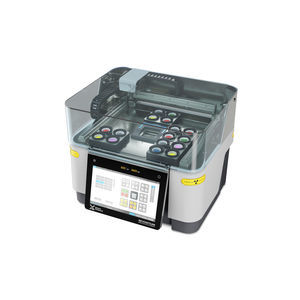

... Revontium™ is a compact X-ray fluorescence (XRF) analyzer that delivers high-quality elemental analysis in a compact, tabletop format. It bridges the performance of floor-standing XRF and the versatility of table-top instruments. Compact XRF offers ...
Malvern Panalytical
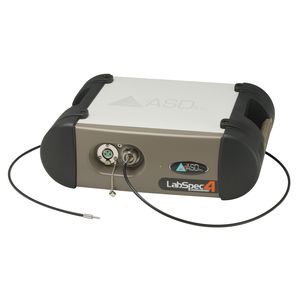
The 3 nm VNIR, 10 nm SWIR spectral resolution of the ASD LabSpec 4 Standard-Res lab analyzer is ideal for precise spectral analysis of a wide range of materials. The 10 nm SWIR spectral resolution provides the basis for building accurate spectral models ...
Malvern Panalytical
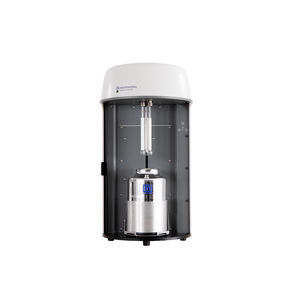
... High throughput BET surface area analyzer Rapid analysis and true parallel operation enhances laboratory throughput Reliable accuracy for the highest decision-making and reporting confidence Trusted worldwide: every 3 seconds, a BET surface ...
Malvern Panalytical
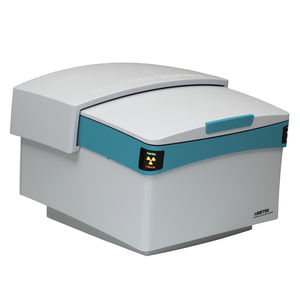

... An elemental analyzer designed for demanding applications – the SPECTRO XEPOS energy dispersive X-ray fluorescence (ED-XRF) spectrometer redefines XRF analysis with exceptional new levels of performance OVERVIEW Outstanding sensitivity leads to ...
SPECTRO Analytical Instruments
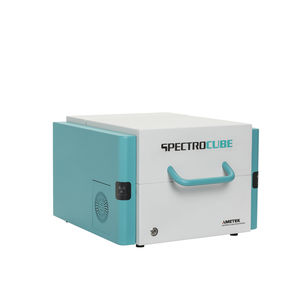
... The SPECTROCUBE ED-XRF analyzer delivers easy, reliable, accurate, high-throughput analysis for a variety of applications OVERVIEW Fastest in its class: Twice as fast as typical testing, high precision with high speed Excels in scope and accuracy: ...
SPECTRO Analytical Instruments
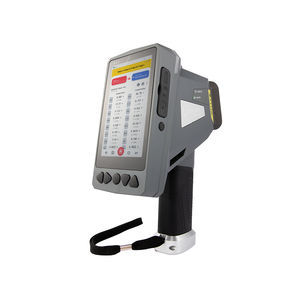
... Ideal for the analysis of ores, concentrates, and tailings, for environmental screening, compliance testing and quick screening of metallic and non-metallic samples Designed for all-day single hand use: Balanced, size-optimized, comfortable, ...
SPECTRO Analytical Instruments


... Select the smallest mass range with which the set measuring tasks can be performed. This ensures maximum sensitivity. Product description • - Gas inlet with stainless steel capillary and inlet valve OmniStar® GSD 350 O1, 1–100 u • - Mass range 1–100 ...
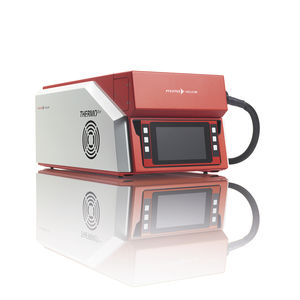
... Select the smallest mass range with which the set measuring tasks can be performed. This ensures maximum sensitivity. Product description • - Gas inlet with quartz capillary, continuously open ThermoStar® GSD 350 T1, 1–100 u • - Mass range 1–100 ...