|
|
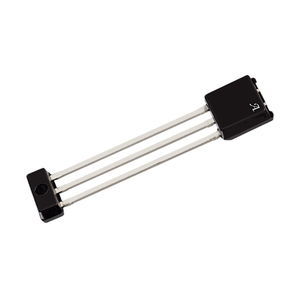
High Performance Microstepping Controller ASIC
The IM2000S is a high performance microstepping controller that incorporates a sine/cosine signal generator, anti-resonance circuitry, PWM current control and much more in one monolithic IC. The IM2000S combines hardware intense functions together with innovative features to provide designers with a powerful yet simple solution for their high volume OEM products.
|
|
|
The industry standard ARM architecture is the most widely used 32-bit microprocessor architecture ever with billions of products shipped. Actel has partnered with ARM to make ARM processors available for our customers to use in Actel's Flash-based FPGAs. The processors are fully implemented in the FPGA fabric, and designers have full access to the cores, so they can add IP and implement them in their embedded applications. By offering the processors without license fees or royalties and without the need to negotiate contracts, Actel is dramatically increasing our customer's access to 32-bit ARM processors. FPGA users no longer have to settle for a proprietary 32-bit processor core. Instead, they can use an industry standard ARM processor with the well-known architecture and popular instruction set. With its FPGA optimized ARM processor offering, Actel is truly bringing ARM to the masses.
|
|
Broadcom offers custom silicon design capability for applications where customers want to integrate their own intellectual property with Broadcom's proprietary intellectual property cores. We have successfully developed custom chips for LAN, WAN and PC applications. These chips are complex mixed-signal designs that leverage Broadcom's advanced design processes.
|
|
|
Freescale Semiconductor offers Application Specific Integrated Circuits (ASIC) as well as highly integrated, customized System-on-Chip System (SoC) solutions for the printing and imaging, broadband, network, and storage markets. The Application Specific Products operation develops ASIC and SoC products built on a foundation of standard Freescale processor cores and proven peripheral intellectual property (IP). The offering is designed to provide customers with the benefits of scalable performance, fast time to market, low system cost, and flexible, System-on-Chip platforms that allow easy migration to next-generation system designs.
|
|
|
Custom ASICs allow the ultimate combination of interfaces, processing capability, power and cost effectiveness enabling differentiated products that add real value to your end customer.
|
|
Featuring Our SiGe (Silicon Germanium) Processes
Customer-Designed RF ASICs
Foundry Services
Five SiGe Processes!
4th Generation SiGe Technology Available
SiGe QuickChip%u2122 For Low NRE
Maxim is uniquely qualified to solve your high-frequency ASIC needs with our Complementary Bipolar, Bipolar, BiCMOS, SiGe (Silicon Germanium), or SiGe BiCMOS process technologies. Our RF ASIC offering includes Customer Owned Tooling (COT) and Foundry Services. Maxim offers:
Experience with more than 1000 mixed-signal and RF ASICs
Thirty years of ASIC experience
Leading-edge process technologies. Choose from five SiGe (Silicon Germanium) processes.
Accurate device models that have allowed a >90% first-pass success rate
Full custom or semi-custom (QuickChip) design methods
|
|
AMI Semiconductor is a leading supplier of structured asic and cell-based digital solutions supporting a wide range of applications in the military/aerospace, high voltage communication, automotive, medical, and industrial markets.
|
|
|
|
|
|
Our product range includes Gate Arrays that address the need for fast turnaround at low IC development costs, Standard Cells that make System Solutions possible at the lowest unit price, and Embedded Arrays that combine the fast turnaround time for Gate Arrays with the ability to implement system level funcionality on-chip available with Standard Cell.
The Gate Array is a member of the ASIC family that offers Quick Turn Around Time during the development cycle at the lowest development cost. This is achieved by Epson stocking pre-fabricating Base/Bulk wafers that have transistors arranged in the form of an array. Our customers design the "wiring", that connects the transistors, that bring specific functionality to the design of the ASIC.
Bulk wafers are prefabricated with a different numbers of transistors giving customers a wide range of choices to implement their circuits, thereby giving customers a choice of adding or subtracting functionality from the design offering flexibility.
The Embedded Array combines the fast turn around time of gate arrays with the ability to implement system level functionality available in Standard Cell. The fast turn around is accomplished by starting some of the wafer fabrication processes in parallel with the Embedded array design process. In selecting an Embedded Array approach, the designer trades off the ability to change the Bulk in the last minute, possible with a gate array, with the need to implement system level functionality, with gate array like turn around.
By offering Gate Array, Standard Cells, and Embedded Arrays;Epson offers a choice to meet the individual needs of our customers.
|
|
As a leading global ASIC provider and total-solutions provider, Fujitsu delivers innovative solutions that enable customers to differentiate their products and maximise their time-to-market advantage.
Together with skilled engineers, this builds up the environment required to develop and produce advanced ASIC designs
|
|
ST offers our partners direct access to advanced technologies through a comprehensive set of libraries and CAD environments to achieve competitive time-to-volume performance.
ASIC/semicustom products play a key role in the IC industry in that they give to customers the ability to access leading edge silicon and packaging technologies and to use advanced IPs to give added value to their equipments.
In our concept customers remain the owners of their IC architecture, having the capability to define and drive their products autonomously, gaining the full control of product differentiation versus competition.
ST's semicustom organization structure focusses on getting your product into volume production in the shortest possible time.
|
|
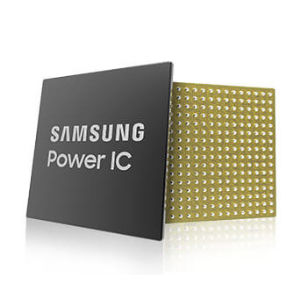
Samsung delivers a total solution, including deep sub-micron design expertise, an unequalled IP portfolio, high-volume silicon manufacturing, and advanced packaging and testing capabilities. The result is a shortened design cycle, lower risk and a much higher likelihood of first-time silicon success.
ASIC solutions at a glance:
Advanced process technology and complete design services
Leader in mixed-signal designs, with silicon-proven IP
Broad expertise to enable product differentiation:
- SoC
- Embedded DRAM & Flash
- SerDes
- ARM processors
Support of key applications such as:
- Mobile devices (smartphones, PDAs, GPS)
- Storage (disc drives, enterprise storage)
- Printers (ink jet, laser jet)
Advanced packaging & testing services featuring:
- System-in-Package (SiP)
- Fine-pitch BGA
- Flip Chip
Regional design centers help speed development
|
|
Toshiba offers a large family of application specific integrated circuit (ASIC) covers from ASIC 0.009µm (TC-300 family) to ASIC 0.3 µm (TC-220 family).
The TC300 family of ASICs are designed for the highest-performance, next-generation products ranging from networking and server applications to digital multimedia devices that manage audio/video information and portable devices that require the lowest power consumption. The TC300 family delivers approximately a 100% increase in gate integration, 20% increase is gate speed and a 50% reduction in power consumption compared to previous generation 130nm process technology. It's built on Toshiba's proven CMOS process technology (CMOS4) that permits easy mixing of mixed signal, DRAM and applications specific IP cores on the same chip. It supports two types of DRAM cores optimized for speed or density, Toshiba qualified primitives, I/Os and SRAMs, as well as a high-speed SerDes for a range of applications.
|
|
Features
* 4-20 GHz High Isolation SPDT
* <0.9 dB Typical Insertion Loss
* 35 dB Nominal Isolation
* 12 dB Typical Return Loss
* On-Chip Bias Network
* DC blocked at RF ports
* Chip dimensions: 2.24 x 1.63 x 0.10 mm (0.087 x 0.063 x 0.004 in)
|
|
austriamicrosystems is a leading supplier of analog and mixed signal ASICs (Application Specific Integrated Circuits), designed for global leaders in the Automotive, Communications, Industry and Healthcare markets.
Our goal is to ensure a strategic partnership for a secure long-term source of supply.
Available ASIC Building Blocks
Power Management
Mobile Entertainment
Wireline Communication
Bus Systems
Car Access
Metering
Sensors / Sensor Interfaces
Medical
High Voltage
General Digital IPs
General Analog IPs
|
|
|
Physical effects of semiconductors are becoming more and more interrelated. Each design decision can create unintended consequences. In addition to the old problems generated by wire capacitance, engineers can no longer manually balance the myriad effects such as leakage current, inductive noise or IR drop. Manufacturing processes and environmental variation can render your functional chip useless or economically unviable. Market forces are creating demands of higher volumes at lower and lower price points. Investors are losing their appetite for risk and paying a premium for predictable success. Designers must walk a tightrope of price and performance to reach their time-to-market goals.
|
|
The award winning PolarPro families of programmable platforms, including PolarPro and PolarPro II, were purposely architected to meet the interconnect and system logic requirements of power sensitive and portable applications. It is based on QuickLogic patented ViaLink® technology to offer programmability with ASIC-like power consumption. The PolarPro family offers a spectrum of platforms with ranging from 8 to 240 Customizable Building Blocks (CBBs), embedded SRAM and advanced clock management. Very Low Power (VLP) mode puts the entire device in sleep mode, drawing as low as 2.2µA, while maintaining I/O status and internal register values.
The PolarPro has won multiple industry awards. Packages as small as 5x5mm BGA package are designed specifically for mobile applications.
|
|
SPIDA is the Smart Programmable Integrated Data Aggregator technology that is at the heart of QuickLogic’s strategic initiative to bring a better user experience to the mobile consumer market. SPIDA is a scalable, proven system block that can be implemented in any of QuickLogic’s solution platforms, establishing a direct data path between peripheral and mass storage interfaces.
By decoupling the data transfers from the system’s main memory, transfers can happen in less than half the time and with substantially less power consumption and CPU loading. The first generation SPIDA engine is based on QuickLogic’s patented programmable fabric, allowing QuickLogic’s System Solution Group (SSG) to tune the SPIDA engine to the exact specifications of the mobile processor and peripherals being used in the system. The SPIDA engine is compatible with ArcticLink II VX, ArcticLink, PolarPro II and PolarPro solution platforms.
|
|
VEE-enabled Platform Optimized For Qualcomm Mobile Processors
The ArcticLink II VX4C solution platform integrates two main Proven System Blocks (2nd generation VEE and MDDI v1.2 Type 2 Client with PHY) coupled with CellularRAM Frame Buffer and Programmable Fabric. This highly integrated, yet flexible architecture makes it the ideal platform to implement Customer Specific Standard Product (CSSP) solutions in the display and connectivity subsystems of Smartphones, Netbooks, Mobile Internet Devices (MIDs), Mobile Computing Devices (MCDs) and Pocketable Computing Devices (PCDs) using Qualcomm’s latest Mobile Station Modem™ (MSM™) MSM7xxx-series and MSM8xxx-series mobile processors, including the recently announced Snapdragon family.
|
|
|
|
|
|
ArcticLink is a programmable solution platform designed specifically to meet the unique connectivity requirements of handheld devices.
With the explosion of new handheld applications and devices, customers are demanding multiple functions to be performed at optimal levels by a single device. As a result, designers of handheld products such as Smartphones, Personal Media Players and Portable Navigation Devices are faced with the challenge of integrating enhanced wireless connectivity and digital storage features, among others.
ArcticLink addresses these issues in two ways: first by providing hardwired building blocks such as Hi-Speed USB 2.0 On-The-Go (OTG), SD, SDIO, MMC and CE-ATA, and secondly with an embedded, ultra-low power array of Customizable Building Blocks (CBBs) for additional connectivity and custom functions.
The flexible programmable fabric up to 20 CBBs combined with the hardwired building blocks provides a compact, single-chip solution that reduces BOM costs, saves board space, eases system-level design trade-offs and increases the end product’s time-to-market.
ArcticLink Solution Platform has two small package options; 8x8mm package for space constrained application and 12x12mm package for high pin count applications. Wafer level CSP is also available.
|
|
|
|
|
|
How to conserve power when playing back video content is a significant issue when designing mobile media devices. A common solution is to lower the backlight level of the LCD as it consumes 30% to 60% of the total system power. This solution significantly diminishes the viewing experience with details lost due to the lowered contrast ratio. QuickLogic’s proprietary VEE Proven System Block (PSB) enhances both image and video quality by optimizing the dynamic range, contrast, and color saturation pixel-by-pixel to provide a natural viewing experience under low backlight or bright ambient light conditions. Seamlessly integrated into the display path, VEE enhances the user’s mobile multimedia visual experience while drastically reducing backlight power to extend battery life.
All members of the ArcticLink II family of solution platform family embeds the recently announced 2nd Generation VEE technology, combined with programmable fabric. QuickLogic and Apical Limited partnered to architect and develop the optimal blend of algorithms with QuickLogic’s PSBs and patented ViaLink programmable fabric for mobile and portable multimedia products.
The core of the VEE technology is based on the proven iridix® algorithms licensed from Apical Limited, which is substantiated by nearly a decade of scientific research. These algorithms implement a model of human perception; resulting in a displayed image that retains detail, color and vitality even under variable viewing conditions. It specifically addresses the problem of the low contrast ratio of mobile Liquid Crystal Displays (LCD) to bring a more TV-like viewing experience to the mobile devices.
|
|
Cypress' PSoC(R) mixed-signal arrays are programmable systems-on-chips (SOCs) that integrate a microcontroller and the analog and digital components that typically surround it in an embedded system. A single PSoC device can integrate as many as 100 peripheral functions with a microcontroller, saving customers design time, board space, power consumption, and from 5 cents to as much as $10 in system costs.
Easy-to-use development tools enable designers to select the precise peripheral functionality they desire, including : Analog functions (amplifiers, ADCs, DACs, filters and comparators) ; Digital functions (timers, counters, PWMs, SPI and UARTs) ; Communications interface (I2C, SPI, USB...).
PSoC devices include : Up to 32 KB of flash memory
2 KB of SRAM ; An 8x8 multiplier with 32-bit accumulator and Power and sleep monitoring circuits.
|
|
|
|
|
|
System-on-chip technology is the ability to place multiple function "systems" on a single silicon chip, cutting development cycle while increasing product functionality, performance and quality. Even if the semiconductor industry achieved increasing levels of integration, the success of this double integration - processes and functions -- involves more capabilities than originally expected.
STMicroelectronics is a leader in system-on-chip technology thanks to an unrivalled combination of silicon and system expertise, manufacturing strength, wide IP portfolio and strategic partners.
The manufacturing strength of ST, technology and process know-how are combined to minimize time-to-volume. ST offers a complete solution that takes you from design right through to production. This solution integrates pre-characterised semicustom libraries, a wide package portfolio running from fine-pitch BGA as well as ultra-small leadless packages, a high performance BiCMOS process Silicon-Germanium HBT which marries the advantages of SiGe - speed, low noise and low power consumption - with state-of-the art CMOS in a high volume manufacturing structure.
|
|
|
An epoxy resin or a silicone coating is then applied on top of the die to encapsulate and protect. This is a manufacturing solution that allows fast modification of existing product designs, even where space is at a premium. COB provides high packing density, quick turnaround, enhanced thermal characteristics, can be adapted to high frequencies, can mix standard assembly technologies and is applicable to most substrates.
|
|
|
MCM technology is applicable to many markets. Substrate technology includes: Thick Film ceramic, LTCC, Thin Film and for benign environments, epoxy laminates, such as FR4. For the harshest environments, chip and wire MCMs on ceramic are hermetically sealed in metal or ceramic packages. For lower cost applications, epoxy or silicone glob top is often used to provide protection of wire bonding or flip-chip assemblies.
|
|
| ... products without technical information |
| |
|
|