|
|
|
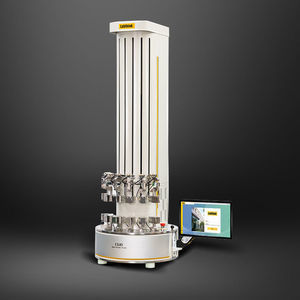
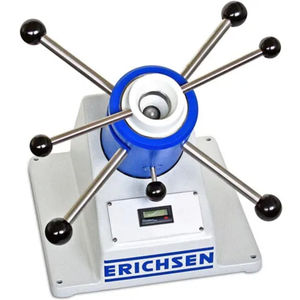
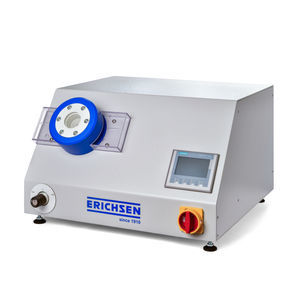
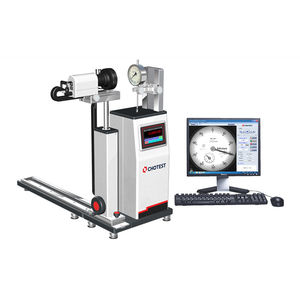
The TABER® Rotary Platform Abraser (Abrader) was developed to perform accelerated wear testing. First introduced in the 1930's, this precision built instrument rapidly became the world standard for evaluating abrasion resistance. Since its inception, the Taber Abraser has been used for quality & process control, research & development and material evaluation. Used to test a wide spectrum of materials, the abraser (abrader) has been referenced in numerous standards and specifications and is frequently called a Rotary Platform Dual (Double) Head Tester
|
|
|
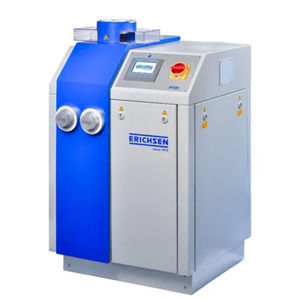
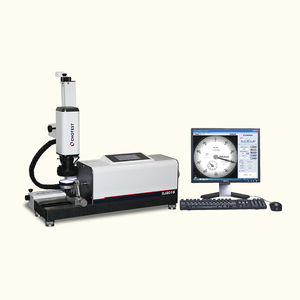
This tester is used for measuring the abrasion of plastic, rubber, paint, decorative plywood, leather and paper.
|
|
Washability and Scrub Resistance Tester, Model 494
Robust instrument for standard tests of washability and scrubbability of emulsion paints and similar coating materials. Available accessories: standard brushes, PVC foils (Leneta® equivalent ), dosing pump.
|
|
|
The vertical universal friction and wear testing machine model MMW-1A, is designed to develop all kinds of medium and high grade hydraulic oil and evaluate inspection testing machine, and the application and function is similar to FALEX No. 6 multi-function testing and measuring testing machine. This machine is standard testing machine to evaluate anti-wear character for lubrication grease or oil with ASTM D 4172-82, ASTM D 2266-81. And also is standard apparatus for evaluating oil, with hydraulic lubricant, anti-friction character in general petroleum and chemistry industry Corporation. With XBE34007-87. the above method is used four ball friction couple measuring relative anti-wear character for lubrication agent under the special testing condition. It is widely used in developing anti-wear hydraulic oil products.
|
|
|
The TABER Oscillating Abrasion Tester – Model 6100 is best known as an “oscillating sand tester” and is used to measure the resistance of a material to surface abrasion and scratching. It’s primary application is for transparent materials and coatings utilized in windows and lenses, but it can also be used to evaluate organic coatings, plastics, metals and other materials.
|
|
|
|
|
|
Coated and uncoated surfaces need to be tested for resistance to abrasion caused by a brush, sponge, or other means. Examples for testing include interior paints, wall coverings, carpets, floor tiles, polishes, bath tubs, shower stalls, and furniture.
Abrasion instruments producing repeated small-scale patterns of damage caused by attrition or erosion under controlled conditions simulate best everyday use or wear patterns. The rubbing method may also be used to test efficiencies of detergents or cleansers or to test the durability of an abrading or cleaning device such as a scouring pad.
The BYK-Gardner Abrasion Tester helps evaluate washability and abrasion resistance of a material. The tester reciprocates an abrasive force linearly over the sample.
- Reciprocating linear motion at 37.0 ±1 cycles per minute with a constant speed over a 10 inch travel
- Utilizes a brush, sponge, or abrasive paper to simulate real life situations that must meet several standards
- Completely enclosed electrical and mechanical components - for dry or wet testing
- Preset count-down counter with automatic shut-off and standard cycle counter provided for versatile testing
- Heavy-duty drive system allows for easy maintenance and a long-life
- Meets ASTM D 2486
The drive mechanism consists of a gearhead motor driving the motor drive pulley gear. The rotary motion of this gear drives a smaller gear, the chain drive pulley, using a timing belt. The smaller gear drives a set of sprockets and continuous loop mechanism. The cable pair ends are attached to the virtual center of the chain, transforming the rotary motion of the chain into the reciprocating linear motion.
|
|
|
|
|
|
PosiTest AT - Adhesion Tester
This hydraulic pull-off tester measures the adhesion (bond strength) of coatings to metal, wood, concrete and other rigid substrates. Now available in 2 models . . . Manual or Automatic. Kit comes complete with everything needed to perform tests with 20mm aluminum dollies.
Both Models Feature . . .
·+/- 1% accuracy
·Internal memory stores maximum pull-off pressure, rate of pull, test duration and dolly size for up to 200 pulls
·Self aligning dolly enables accurate measurements on smooth or uneven surfaces
·Range: 0 - 3000 psi (0 - 20 MPa) with included 20mm dollies (20)
·Optional 50 mm Accessory Kit pulls larger dollies for greater resolution. Ideal for lower bond strength finishes such as on concrete. Range 0 - 500 psi (3.5 MPa)
·Optional software and RS232 cable for downloading to a PC
·Includes carry case, epoxy, cutting tool, video, and Calibration Certificate
PosiTest AT Manual
.Heavy-duty manual hydraulic pump designed to apply smooth and continuous pull-off pressure with a single stroke
.Pull Rate Indicator to manually monitor and adjust the rate of pull
PosiTest AT-A Automatic
.New electronically controlled hydraulic pump automatically applies smooth and continuous pull-off pressure at a user-specified rate
.Test with the simple push of a button. No twisting, pumping, cranking. No valves to close, needles to reset, or scales to adjust
.User selectable pull rates ensure compliance with international test methods for a variety of industries
. Built-in rechargeable batteries perform over 200 tests per charge. Continue testing with AC power while batteries recharge. Supplied with universal AC adapter
|
|
Adhesion Test Apparatus, Model 525
for Pull Off Tests
To measure adhesion of coatings in accordance with ASTM D 4541 by pulling off stuck on dolly. Robust unit requiring no electrical supply and therefore particularly suited to application in the field. Complete test case with necessary accessories. 3 versions for measuring ranges 5/10/25 N/mm2.
Adhesion Test Apparatus, Model 525-B
Special pull off test instrument version for concrete surfaces with 50 mm diameter dollies and measuring range up to 4.5 N/mm2.
|
|
The Lab Master Loop Tack Tester is designed for precise measurement of adhesion, tack, quick stick and cohesion. Force is measured to 0.1 gram resolution and 0.02% fullscale accuracy. Thousands of data points per test are used to generate force/distance curves that reveal material behavior during test.
APPLICATIONS
Adhesives, Tapes and Pressure Sensitive Labels
SPECIFICATIONS
Meets ASTM D 2979
Force
Range & Resolution 2270 gf x 0.1 gf
Measurement Accuracy ±0.5 gf or 0.5% of reading
Control Accuracy ±0.68 gf steady state
Position
Range & Resolution 160 mm x 0.1µm
Measurement Accuracy
(cumulative) ±1.0 µm, ±1.0 µm/60mm
|
|
he Lab Master Probe Tack Tester is designed for precise measurement of adhesion, tack, quick stick and cohesion. Force is measured to 0.1 gram resolution and 0.02% full-scale accuracy. Thousands of data points per test are used to generate force/distance curves that reveal material behavior during test.
APPLICATIONS
Adhesives, Tapes, Pressure Sensitive Labels, Glue, Coatings and Seals
SPECIFICATIONS
* Meets ASTM D 2979
FEATURES
* User-selectable contact pressure, position, rate of separation, and duration of test
* Display test results as numbers and curves
* Graph test results and display calculated values
* Configure for R&D analysis or one-touch automated process control
* RS-232 output
* Includes Windows operating system and touch screen flat panel display in a compact, network-ready unit
* Innovative design (patent pending) maintains accuracy over changing loads and frequent use
|
|
With the S-20 Tungsten Carbide Tool, Taber's Shear/Scratch Tester can evaluate coating adhesion on a variety of materials. A precision cutting tool is attached to a balanced and calibrated scale beam, then placed on the specimen. As the turntable rotates the specimen, the cutting tool will shear the coating, allowing you to verify proper adhesion. By changing the load on the cutting tool, you can determine the point of failure.
|
|
|
|
|
|
The model ADF-Automated Yarn Strength tester is a robust, single end yarn tester designed to exceed the most stringent testing requirements for measuring yarn strength. The ADF-Automated Yarn Strength tester is capable of providing a variety of calculations including tensile strength, elongation, tenacity, work and modulus of an extensive range of yarns.
The unit is a fully automatic yarn tester and can continuously measure up to 20 bobbins of different types of yarns. Test result and data storage is made possible through the instruments serial port to a PC to collect test information. Advanced software provides multiple plots, force/elongation histogram, linear regression and average force curve of a bobbin.
STANDARDS
Meets ASTM 2256, BS 1932/1, DIN 53834/1, UNI EN ISO 206
SPECIFICATIONS
ADFW Automatic Yarn strength tester complete with one cell load, one set of clamps with faces, 20 positions creel - max. diameter 250 mm (9.8 in)
Measure Method C.R.E.- Constant Rate of Extension
Available Load Cells 20N, 50N, 200N, 500N
Speeds 20-5000 mm/min. (.78-197 in/min.)
Specimen Length 100-500 mm (3.9- 19.6 in)
Bobbins Can test up to 20
Power Supply 110V/60 Hz or 220 V/50Hz
|
|
|
|
|
|
A user-friendly microprocessor-controlled instrument to determine the bending resistance of paper and paperboard!
The Bending Resistance Tester is designed to determine the bending resistance of paper and paperboard using the 2-point bending method.
SPECIFICATIONS
* Choice of 10N or 1000mN load cell
* Min. force sensitivity: 0.5mN with 1000mN load cell
* Selectable bending angle 5.0-90° and test length 5-50mm
* Meets ISO 2493, AS/NZ 1301-4535, BS 3748, DIN 53121, SCAN P29, TAPPI T556
* RS232 serial data output, printer output and analog signal output
* Can be directly calibrated to traceable National standards
FEATURES
* Direct sample to load cell contact aids accurate measurement
* Easy selection of test pararameters from a comprehensive range through a setup menu
* Motorized test length setting
* Instrument can calculate Taber Stiffness units
* Pneumatic clamps with fast release provide consistent clamping pressures for fast, repeatable results
* Large, clear display showing peak value and the angle at which it was achieved
* Load cell fitted with overload protection
* Analog output (use for X-Y recorder—not included)
|
|
|
|
|
|
FTC STANDARD SHEAR COMPRESSION CELL (CS-1)
The Kramer Shear Cell from Food Technology Corporation is the single most successful test fixture used for food texture measurement as it faithfully reproduces what happens when a product is consumed. The objective measurements made are very closely related to the human experience of chewing foods and is used throughout the world to grade the textural properties of food products ranging from apples to zucchini.
The fixture compresses, shears and extrudes the sample to measure firmness, fibrousness, tenderness and similar mouthfeel properties of food products.
The use of the Kramer Shear Cell means a larger sample size can be tested, which helps to minimise standard deviations in test results, common to tests measuring fewer samples. Particulates, in particular can be easily assessed using this fixture to measure them in bulk rather than more awkwardly in single form.
The FTC Standard Shear Compression Cell or “Kramer” Shear Cell (CS-1) consists of a sample holder, slotted lid and movable blade assembly. The inside of the sample holder measures 2.6” (66mm) wide by 2.6” (66mm) long by 2.5” (64mm) deep, and holds a volume of 16.9 cubic inches (227ml). The cell lid has 10 slots, which accommodate the 10 parallel, 1/8” (3.2mm) thick blades. The movable blades are attached to the load cell and are forced through the test sample producing a force proportional to the sum of both the shear and compression failure point of the test sample.
To find out more about this product, contact FTC now.
|
|
|
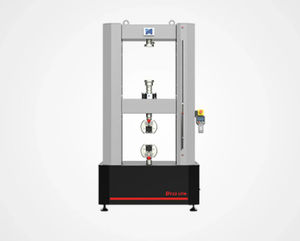
Compression testing can be carried out on Lloyd Instruments extensive range of materials testing machines from 1kN-300kN. Ideal for routine quality control testing or complex multi-stage tests. Our 'Plus' Series machines are flexible and simple to use, providing high accuracy load measurement and are capable of a rapid 8 kHz data acquisition rate. The stand alone system can store up to 600 test results from 10 programmable test set-ups or, with PC integration with Lloyd Instruments powerful NEXYGENPlus material test and data analysis software, can perform advanced data analysis.
|
|
Model: YAW4305, YAW4605, YAW4106, YAW4206, YAW4306
Capacity: 300kN, 600kN, 1000kN, 2000kN, 3000kN
Features:
This testing machine is mainly used to test compression strength of cement, concrete and rocks. Meanwhile they can perform shear test, anti-break test, and Elastic Modules test of concrete with special compression fixtures and measurement assembly.
YAW series' systems are guaranteed to meet ISO 15579-2000, ISO679, ISO 7438-1985 and other international and national specifications. With advanced, precise, full digital and graphic displaying instruments, it can be used to determine compression-resistance strength of building materials such as bricks, stones, concretes, cements and so on. When equipped with corresponding grips and measuring devices, it can perform break-resistance test, split test of concretes, as well can be used to carry out compression and punch break test of metals.
|
|
|
This series is mainly designed for compression test of building materials (such as cement and concrete, etc.) and metallic & non-metallic materials. Equipped with special accessories, it can do bending test for components. With PC-electro-hydraulic servo control system, it can complete auto-control of test stroke and loading speed. Meanwhile, With PC, it can carry on collecting, processing, displaying, and storing data and it can display test load, the peak value of test load and the curves of test load Time on screen, auto-processor (according to corresponding test method) and store the processing results. With specially designed Window software, it makes the man-machine dialogues more perfectly. By using of mouse input, it operates more easily.
|
|
FEATURES
- Load Capacity 1000 LB (4448 N)
- Platen size 7 x 7 in (178 x 178 mm)
- Test speed 0.2- 20 in/min (5.08-508 mm/min)
- Return speed 4 in/min (± 101 mm/min)
- Color LCD Display
- Menu-driven software
- Test results and statistics are displayed on a large high contrast color LCD screen
- Preset keys for all relevant tests
- Automatic fast return platen saves testing time
- Multi-language programmed- 7 languages
- 8 Corrugated Test Methods for quick access
- Measuring units include: N, N/m², lb, lb/in², kg, or kg/m²
- RS232C serial data output
- Built-in Printer
|
|
The Short Span Compression Tester is an advanced microprocessor-controlled instrument for determining the compression strength of fluting medium or test liner, and offers unrivalled repeatability and reproducibility. Considerable cost savings are possible through accurate prediction of corrugated component performance.
APPLICATIONS
Paperboard, Paper, Liner, Medium, Paper/Film/Foil, Laminations
SPECIFICATIONS
* Load cell range: 0-500N
* Clamp length: 1.2 in (30 mm)
* Free span: 0.03 in (0.70 mm)
* Adjustable clamping force
* Load cell capacity: 100 lb (444 N) with overload
protection
* Conforms to TAPPI T-826, ISO 9895, SCAN P46,
AS/NZ 1301.4SO RP, BS 7325, DIN 54518
FEATURES
* Unique clamping mechanism
* Test statistics at the push of a button
* Selectable units kN/m, lb/inch, N
* Load cell with overload protection
* Easy to read display
* Traceable calibration
* RS232 serial data output
|
|
|
This machine adopts loading hydraulically with accurate and reliable test data. In order to guarantee the accuracy of test load readout, it adopts oil pressure transducer to measure the load, after amplifying, the test load, peak value and loading speed can be displayed digitally. The oil source is installed at the bottom of control cabinet in which there is a double-flow high-pressure piston pump driven by the motor. The hydraulic system is controlled manually with the functions of easy operation, safety and reliability.
|
|
|
|
|
|
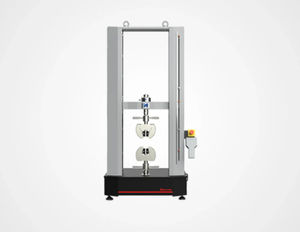
Mecmesin offer a range of sophisticated Computer-controlled Test Frames. The Multi-test-i is available in a range of capacities to accommodate all your testing requirements, from the entry level MultiTest 1-i through to the advanced twin column test frames that have been specifically designed to test large or high load samples or products.
Intelligent loadcells mounted to the test frame allow the MultiTest-i to download data directly to a PC via the serial port at a rate of 2000 times a second. If your test requirements change then the MultiTest-i can easily be upgraded with a different load cell that meet your new testing requirements.
Emperor, Mecmesin’s powerful yet user-friendly control software, provides both a simple platform for routine analyses on the factory floor, as well as an advanced platform for sophisticated laboratory test routines. Programmable functions include running a test to a pre-determined force/torque, displacement, time or to break, as well as graphical interrogation of results.
Applications
The MultiTest-i range of motorised test stands can be used for many different applications including:-
Compressive testing
Deformation testing
Extension testing
Materials testing
Medical device testing
Packaging testing
Spring testing
Tensile testing
Textile testing
Top-load testing
Mecmesin offer a wide range of standard grips and fixtures, to hold your specimen. Alternatively, a custom-built fixture can be designed for your specific application.
|
|
|
|
|
|
Constant Tension Tester, CTT is the only yarn test instrument that is available as a mini textile laboratory. The machine allows more than 10 different yarn quality control tests to be run on the same machine.
The unique CTT design provides the ability to test natural and synthetic yarns as well as the high performance yarns such as carbon, glass or hybrid yarns that cannot be tested with conventional capacitive based systems. The CTT uses dynamic test principle to measure the yarn properties. This means every section of the yarn will be tested as the tension on the yarn remains constant.
The CTT test list includes Dynamic Tensile Strength, Elongation, Shrinkage, Friction (Yarn to Pin and Yarn to Yarn),Stick/Slip, Abrasion, Entanglement Count, Lint and Optical Yarn Evenness for hairiness, thick places, thin places, neps and slub count, which are all done on the same machine using different attachments. Switching from one test to another is very easy and it only takes seconds.
Operation
Maintains a pre-selected tension, between 0.5g and 700g, at a selected speed, up to 360 m/min. This function provides the capability to perform different test configurations. It also eliminates the tension variation of the yarn coming off the package.
Versatility
Any measuring head or testing apparatus can be mounted on the basic CTT unit and inserted into the constant tension zone.
Measures every millimeter of yarn at speeds up to 20 km/hour. The basic unit performs two significant tests:
* A. Dynamic Breaking Strength
* B. Weak Spot Detection
Endusers: Yarn manufacturers, fiber producers, weavers and knitters.
|
|
Cylindrical Mandrel Bending Tester, Model 266
To test adhesion and flexibility. Instrument with bending lever and 14 easily exchangeable cylindrical bending mandrels (2-32 mm dia.). To establish the smallest diameter of mandrel which causes the specimen
coating to fail after bending. Special adjustment and plastic bending roller for quick reproducible test results.
|
|
|
|
|
|
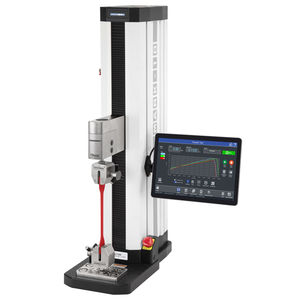
The Chatillon® TCD225 Series is an advanced force testing system optimized for production, quality control and engineering applications.
The TCD System consists of a powerful, yet easy-to-use console; a rugged frame with high performance, closed-loop motion control; and an intelligent load sensing system with measuring accuracies better than 0.1% full scale. The TCD console features a high resolution color graphical display featuring menus, function and numeric keys and status indicators that assist the user in setup, operation and analysis. Information may be displayed in large-format tabular and graphical formats for easy viewing.
The frame operates from 0.001 to 50.0-inches per minute (0.01 to 1270 mm/minute) and employs an advanced closed-loop PID controller for precision travel (accuracy better than 0.25% unloaded), ideal for applications such as spring testing where exact distance control is required. The TCD System permits the user to measure heights based on a datum or absolute position. Deflection compensation is standard. Standard test setups for load limits, distance limits, time limits, break tests, rupture tests, cycling and loop tests are included.
No Computers. No Software. No Compromises.
|
|
|
|
|
|
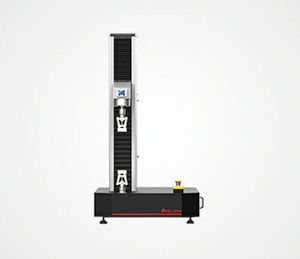
The Programmable Force Tester is a highly configurable motorized test stand for tension and compression testing applications up to 1.5kN (300 lb). The stand can be controlled from the front panel or via a computer and is fully compatible with Nexygen™ TCD software. The Programmable Force Tester is engineered on a unique modular platform, allowing for “build-your-own” configurability. Features can be ordered individually at time of order or activated in the field. Integrated travel indication, overload protection, and a host of programmable parameters makes the tester quite sophisticated, while its intuitive menu structure allows for quick, simple setup and operation. A password can be programmed to prevent unauthorized changes. With a rugged and modular design, the Programmable Force Tester is a compelling solution for applications in laboratory and production environments.
Standard Features
- LCD display with UP, DOWN, STOP, and emergency stop buttons and soft keys
- Selectable speed units of measurement (mm/min & in/min)
- Password protection of test parameters, to prevent unauthorized changes
- Integrated travel limit switches
- Removable fixture mounting plate with matrix of threaded holes
- Stepper motor-driven, produces 0% speed variation with load
- Mounting holes for bench mounting
- Unique mechanical design significantly reduces column bending
|
|
|
|
|
|
DIL 402 CD - Vacuum-tight, horizontal pushrod dilatometer
Are higher sample throughput, direct comparison of samples, and online calibration of expansion measurements important requirements for you? With the new dilatometer DIL 402 CD we handle these tasks perfectly with our unique, new instrument concept.
The measuring system employs two high resolution inductive displacement transducers; with its design using low-expansion invar and broad thermostatic control for highest accuracy, reproducibility and long term stability, it is capable of application temperatures up to 1600°C
The horizontal instrument construction offers specific advantages, especially for the dual sample arrangement: homogeneous heating of both samples, simple sample insertion, safety during sample decomposition or melting, and effective protection of the measuring system by gas flow. The operation remains simple and safe through exact sample arrangement at the specific sample support in the cutout of the tube sample support, the individual motorized movement and zero setting of both push rods and the easy to move furnace. Various furnace systems allow optimal adjustment at specific measuring tasks.
Routine measurements with high sample throughput and accurate comparison measurements are two further important application fields of this new dual- and differential dilatometer.
|
|
|
|
|
|
A range of drop weight impact testers for measuring the fracture characteristics and fracture ductility of steel specimens according to the following standards: API recommended practice 5L3, EN 10274, ASTM-E 436 and ‘Pellini’
Key features:
Very robust construction stands up to the rigours of high energy testing to provide high reliability with a minimum of downtime.
Easily interchangeable contact parts simplify maintenance and reduce cost of ownership.
State-of-the-art testing accommodates impact energies up to 100,000J and specimens up to 50mm thick.
Very high levels of safety employing multiply redundant systems, compliant with 89/392/EEC and 91/368/EEC machinery safety directives.
Automated specimen loading provides compliance with cycle times required by test methods, while maintaining operator safety.
Very rigid base and anvils ensures very low flexure under high test loads.
Guided mass system to ensure that the impact geometry is correct throughout the entire test.
Highly accurate and repeatable drop parameters.
High quality, easy to use control software ensures consistency and enhances throughput.
Optional instrumentation package to measure impact force up to 1500kN.
Provides values for peak force and energy to fail, together with a high resolution force-deflection curve to analyse failure mode.
Optional variable mass system to provide precise control over impact parameters.
Optional high speed, fully integrated video system to provide visualization of specimen failure mode.
Optional liquid cooled temperature conditioning bath.
Responsive life-time technical support.
|
|
Features
·Adjusting impact energy by adjusting the lifting height and mass of the weights.
·The buffer is equipped to absorb the residual energy after breaking the specimen to protect
the weight and anvil from destroying. Also install the safe outfit, such as safety net, safe pin for
maintenance and hanger locking.
·Equipped with the specimen-carrying outfit, anti-falling of outfit for the specimen, centering
outfit to guarantee quick, accurate and reliable tests.
|
|
The test facilities ElectroPuls are pointed systems which function without hydraulics, intended for the dynamic and static tests of materials and the components. They include/understand an advanced numerical control, the last Console software and improvement of the technology of the tests: count with grooves in T for the flexibility of configuration of the tests, jacks electric for the ordering of the cross-piece and a crowd of other ergonomic functions. They are completely electric and do not require any connection with the compressed air, hydraulics, water nor with any other fluid of service.
E3000:
Dynamic capacity: ±3000 NR (±675 lbf)
Static capacity: ±2100 NR (±472 lbf)
Race: 60 mm (2.36 in)
Space available (max.): 855 mm (33.6 in) maximum with jack with semi-race
Power supply: Single-phase power pack
Configuration: Two columns with jack on higher cross-piece
Adjustment of the cross-piece: Electric elevators and latch bars manual
|
|
|
Dynamic and static testing machine is suitable for materials and components test. Frequency from 0.005 upto 50Hz. Load capacity from 50kN up to 1000kN.
|
|
|
|