


{{product.productLabel}} {{product.model}}
{{#if product.featureValues}}{{product.productPrice.formattedPrice}} {{#if product.productPrice.priceType === "PRICE_RANGE" }} - {{product.productPrice.formattedPriceMax}} {{/if}}
{{#each product.specData:i}}
{{name}}: {{value}}
{{#i!=(product.specData.length-1)}}
{{/end}}
{{/each}}
{{{product.idpText}}}
{{product.productLabel}} {{product.model}}
{{#if product.featureValues}}{{product.productPrice.formattedPrice}} {{#if product.productPrice.priceType === "PRICE_RANGE" }} - {{product.productPrice.formattedPriceMax}} {{/if}}
{{#each product.specData:i}}
{{name}}: {{value}}
{{#i!=(product.specData.length-1)}}
{{/end}}
{{/each}}
{{{product.idpText}}}
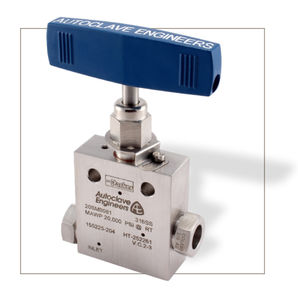

DN: 6.35 mm - 25.4 mm
Pressure: 10,000 psi - 20,000 psi
... Parker Autoclave SM Series needle valves are designed with large ports for high flow applications. These valves have a non-rotating rising stem bar stock design with working pressures to 20,000 psi (1379 ...
Parker Hannifin France SAS
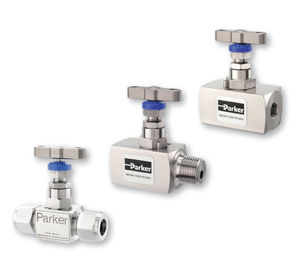
DN: 0.063 in - 0.118 in
Pressure: 0 psi - 6,000 psi
Temperature: -54 °C - 538 °C
... Parker's bar stock HNV and HNAV Sériés hand valves with small ports and needle stem tip allow précisé flow régulation for a wide variety of media in low flow applications. They feature an anti-blowout stem, a self centering, ...
Parker Hannifin France SAS
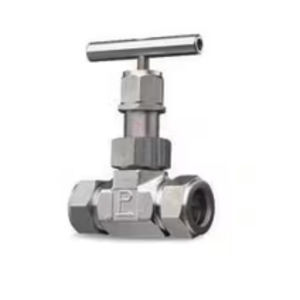
DN: 0.063 in - 0.118 in
Pressure: 0 psi - 6,000 psi
Temperature: -54 °C - 450 °C
... Parker's union bonnet needle valves, U Series have been engineered for use in high pressure and high temperature instrumentation and industrial applications. These severe service needle valves ...
Parker Hannifin France SAS
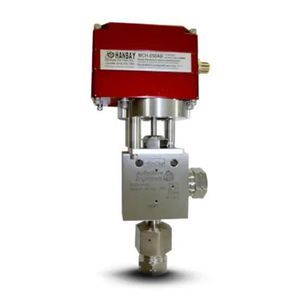

DN: 14.287 mm - 14.287 mm
Pressure: 2,757.9 bar - 2,757.9 bar
... Product overview
- Valve: 40VM9882
- Valve manufacturer: Parker
- Valve type: Angle needle valve
- Valve material:
Rotork
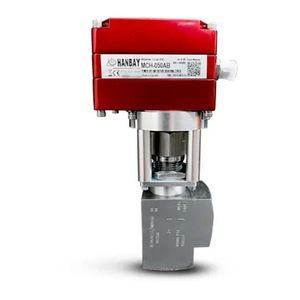
DN: 25.4 mm - 25.4 mm
Pressure: 689.5 bar - 689.5 bar
... N1358
Rotork
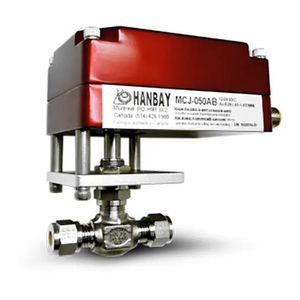
DN: 6.35 mm - 6.35 mm
Pressure: 344.7 bar - 344.7 bar
... Turck M12 connector with 20 ft cable
Technical specifications
- Valve: 1335G4Y
- Manufacturer: Hoke
- Type: Metering valve
- Material: Stainless Steel 316
- Connection:
Rotork

... our handheld dispensing valves. Features • Available in the following versions: • 0.003 - 0.2ml (based on needle metering valve) • 0.05 - 0.5ml (based on chamber metering valve) • ...
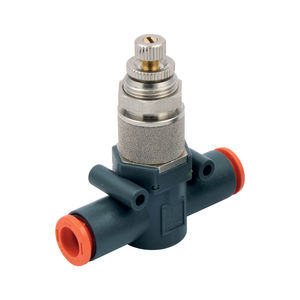

DN: 6, 8, 4 mm
Pressure: 1 bar - 10 bar
Temperature: -20 °C - 60 °C
... thread and push-in fitting. The main feature of these valves is that the discharge flow can be adjusted via a pin regulator. This allows you to control the speed of the actuator connected to the valve, giving a higher ...


DN: 5 mm
Pressure: 0 Pa - 400,000 Pa
Temperature: 5 °C - 70 °C
... EVI 005 S, Mini Angle Valve, Manually Actuated • - Two connections required as accessories • - Bellows-sealed • - Service life: 1.5 million operating cycles ...

DN: 0.125 in
Pressure: 21 bar
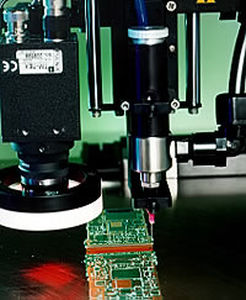
... The DV-09 valve is an air-operated, adjustable needle valve. It is designed to apply precise, repeatable deposits from a fraction of a microliter up to continuous stripes of low to high viscosity fluids. ...


DN: 1.5 mm - 12 mm
Pressure: 1 bar - 10 bar
Temperature: 0 °C - 80 °C
... unidirectional and bidirectional flow controllers have been designed as small as possible so as to be mounted directly on valves or cylinders. The great variety of adjustable fittings makes it possible to complete the regulator with ...
CAMOZZI AUTOMATION


DN: 0.125 in - 0.75 in
... Type - Straight Connection Size - 1/8” Outlet Connection - Female BSPT Thread Inlet Connection - Female BSPT Thread Max Pressure - 207 bar 3000 psi Body Material - Brass CV - 0.37 Handle Type - Metal Bar ...
HAM-LET
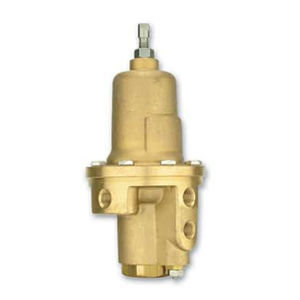

... pressure reducing circuit, the pilot modulates closed as downstream pressure rises above set point. An integral needle valve acts as an upstream flow restrictor as well as a closing speed control. PRODUCT FEATURES ...


DN: 4, 5, 6, 8, 10 mm
Pressure: 10 bar - 400 bar
Temperature: -20 °C - 100 °C
... Slightly Corrosive Industrial Fluids Technologies: • - Pressure relief valve • - Industrial valves • - Gauge valve • - Brass needle valve • - Stainless Steel ...


DN: 10 mm
Pressure: 300 bar
Temperature: -20 °C - 70 °C
... -MaterialBody: Brass -Shaft Gasket: O-ring package, FSI -Seat -Line Valve: PA 6.6, O2: Vespel® Inlet & Outlet Connection -Line Valve: G 1/2 female Weight -Line Valve: 1.4 lbs / 0.65 kg Additional ...
Emerson Automation Solutions - TESCOM


DN: 5 mm - 32 mm
Pressure: 10 bar
Temperature: 0 °C - 80 °C
... Connection 1 + 2 metric cylindrical outer thread Sealing form 1 + 2 24° inner cone Material Brass ...


DN: 0 mm - 1.5 mm
Pressure: 0 bar - 34.7 bar
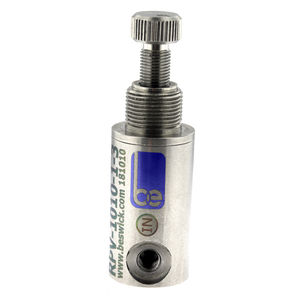
... The needle valve is an adjustable orifice, which can be used to control flow rates, mini-cylinders, nozzles, timing circuits, filling heads, bleed vents, and in many other applications. The adjusted flow remains stable ...
Beswick Engineering Co, Inc.
DN: 0.375, 0.07 in
Pressure: 0 psi - 250 psi
... used to protect a pneumatic actuator such as a chuck, press, or gripper from sudden bursts of high pressure. The internal needle valve restricts the initial movement of the actuator to a user defined speed, and then opens ...
Beswick Engineering Co, Inc.
DN: 0 mm - 0.81 mm
Pressure: 0 bar - 34.7 bar
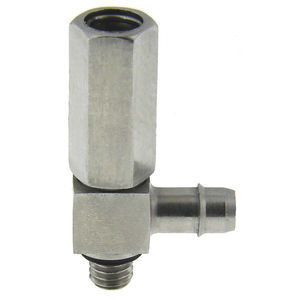
... available. The valve body (elbow) swivels 360 degrees to facilitate installation and orientation. Features: Stainless steel valve seat allows flows to remain steady despite changes in temperature Compact ...
Beswick Engineering Co, Inc.

DN: 0.75 in
Pressure: 5 bar
Temperature: -25 °C - 85 °C
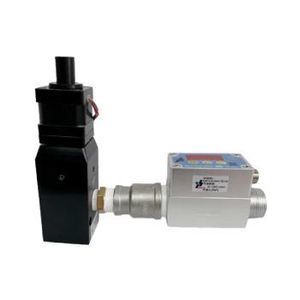
... proportional flow control valve FC1500 and a MEMS gas flow meter. FC1500 is a highly refined needle valve driven by a micro step stepper motor. Turndown ratio can reach up to 400:1, with high accuracy, ...
KaoLu
DN: 0.125, 0.375, 0.5 in
Pressure: 7, 5, 10, 20 bar
Temperature: -20 °C - 84 °C
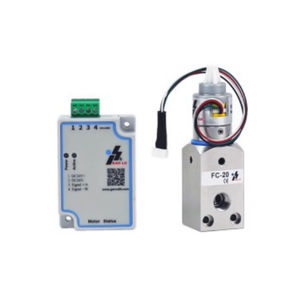
... Proportional Flow Control Valve consists of PM series driver and FC series proportional flow valve. With an input signal either through analogue or digital, the needle inside the proportional valve ...
KaoLu

DN: 0.375 in
Pressure: -1 bar - 10 bar
Temperature: -20 °C - 84 °C
... Proportional Flow Control Valve consists of PM series driver and FC series proportional flow valve. With an input signal either through analogue or digital, the needle inside the proportional valve ...
KaoLu

DN: 0 mm - 10,000 mm
Pressure: 2,500 bar - 4,200 bar
Temperature: 5 °C - 50 °C
... Product description
Needle
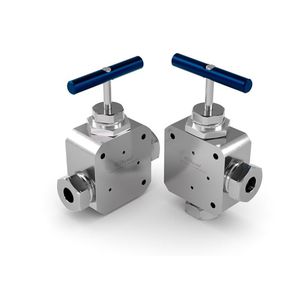
valves provide a reliable means to shut off and regulate media. Designed specifically for extreme high‑pressure applications, these
valves are used in demanding hydraulic ...
WEH GmbH Verbindungstechnik
DN: 3.18 mm - 14.27 mm
Pressure: 1.4 bar - 6.9 bar
... WEH® pneumatic
needle
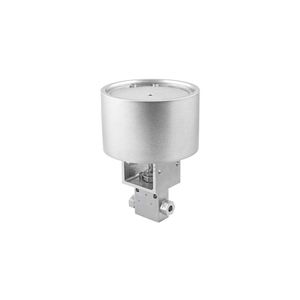
valves are equipped with a V-tip for rapid opening and closing. For flow regulation, hand-operated
needle
valves with regulating tips are recommended.
Technical ...
WEH GmbH Verbindungstechnik
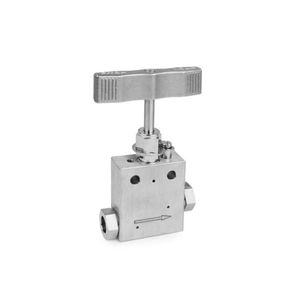
DN: 3.18 mm
Pressure: 1.4 bar
Temperature: -73 °C - 232 °C
... both directions, WEH® needle valves perform this function with absolute reliability. The valves are extremely smooth-running and durable, as the valve needle and the ...
WEH GmbH Verbindungstechnik


DN: 0.5 in - 3 in
Pressure: 600 psi
... Investment casting, ASTM-A351, CF8M, Class 600, inside screw and screwed bonnet wedge dise. Intégral seat, Nonrising stem, and Handwheel. Body - CF8M Bonnet - CF8M Disc - CF8M Stem - SUS316 Gasket - Teflon Snap Ring - SUS316 Washer - SUS316 Packing ...

DN: 0.25 in - 1 in
Pressure: 10,000 psi
Temperature: -50 °C - 230 °C
... BAR STOCK Body Material: SS316 Size Ranging: %B~r (DN8-DN25) End Connections: PF / BSPT / NPT With T Handle Opération ...


DN: 8 mm - 15 mm
Pressure: 320 bar
Temperature: -60 °C - 210 °C
... Type 7042 – Low Flow Valve The low flow valve type 7042 with integrated positioner is ideal for precise control at high pressures and very low flow rates. As a safe shut-off valve, the low flow valve ...
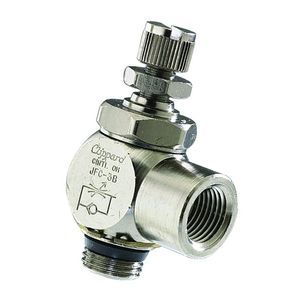

DN: 0.125 in
Pressure: 100 bar
Temperature: 32 °F - 230 °F
... The JFC-2A Threaded Flow Control has a maximum operating pressure of 150psig, a temperature range of 32 to 230 degrees Fahrenheit and a 1/8" port. This device also has 10.5scfm airflow adjustable at 100psig. It is a highly efficient and reliable device ...
Clippard
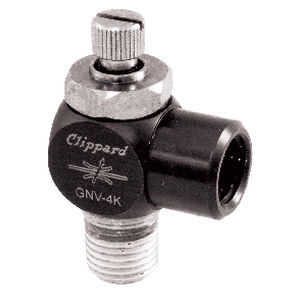
Pressure: 21 bar
... Needle Valves are used to control the rate of flow in a pneumatic system by controlling flow in both directions. Material enters the input port, travels through an adjustable orifice and out the output port. Features ...
Clippard

DN: 0.125 in
Pressure: 50, 100 psi
Temperature: 32 °F - 230 °F
... Adjustable control needle valves restrict flow in both directions. There are four models offered, all with #10-32 ports, but with various needle configurations to provide coarse or fine flow adjustment. ...
Clippard
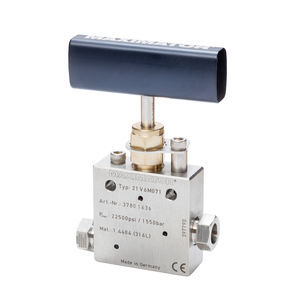

DN: 0.75, 0.562, 0.375, 0.25, 1 in
Pressure: 1,550 bar
Temperature: -50 °C - 230 °C
... a high reliability of the valve. MAXIMATOR valves of the 21V series have a cold-machined stainless steel body. Valve bodies are available in six different designs and can be equipped with regulating ...
Maximator GmbH

DN: 0.11 in - 0.56 in
Pressure: 1,550 bar
Temperature: -50 °C - 230 °C
... thus a high reliability of the valve. MAXIMATOR valves of the 21V series have a cold-machined stainless steel body. Valve bodies are available in six different designs and can be equipped with regulating ...
Maximator GmbH
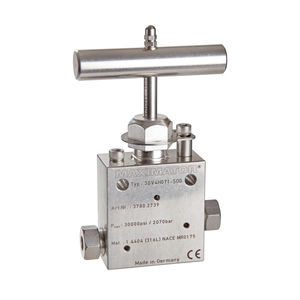
DN: 0.25 in - 14.3 in
Pressure: 1,550 bar
... may contain pressure is fabricated from annealed 316 stainless steel that is compliant with NACE MR0175 standards. Needle valves equipped with metal to metal seats have and increased safety and dependability especially ...
Maximator GmbH


DN: 0.063, 0.125 in
Pressure: 8.6 bar
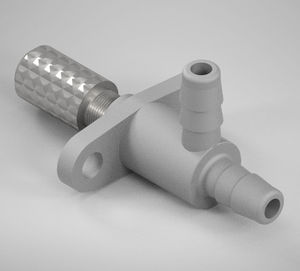
... Metal Needle Valves are an adjustable method of flow control. Internally, the pin and body create an adjustable orifice that restricts flow. Useful for instances when the exact flow rate hasn't been determined or to compensate ...
DN: 0.063, 0.125 in
Pressure: 0 bar - 8.6 bar
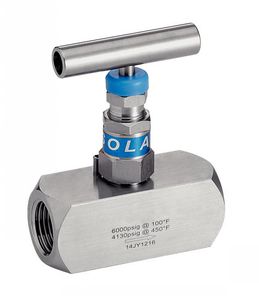
... Plastic Needle Valves are an adjustable method of flow control. Internally, the pin and body create an adjustable orifice that restricts flow. Useful for instances when the exact flow rate hasn't been determined or to ...

DN: 8, 20, 25, 10, 15 mm
Pressure: 400 bar
Temperature: -54 °C - 232 °C
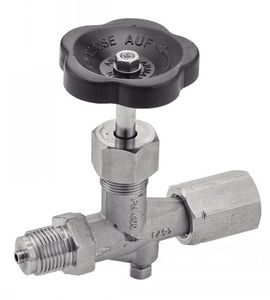
... NEEDLE VALVE SCREWED ENDS - STAINLESS STEEL 316 (Model : 58523/58525) ...
DN: 0.5, 0.25 in
Pressure: 250, 400 bar
Temperature: 0 °C - 200 °C
... BORED NEEDLE VALVE FOR ISOLATION - STAINLESS STEEL 316L ...
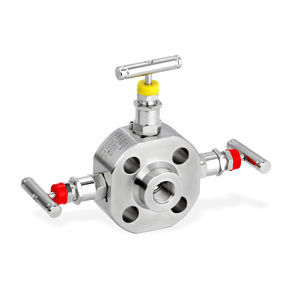

DN: 6.35 mm - 25.4 mm
Pressure: 1,034 bar - 1,378 bar
... SS 316)
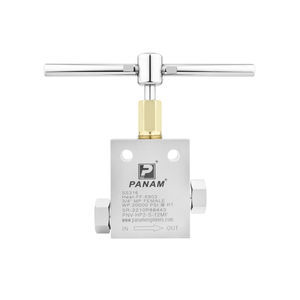
DN: 3.175 mm - 25.4 mm
Pressure: 689.5 bar - 4,136.9 bar
... Overview
Panam HP
needle
valves in SS 316 are available in five pressure series (HP, HP1, HP2, HP3, HP6) for high‑pressure fluid and gas systems. Thread options include NPT, MP Cone and HP Cone. Body configurations ...
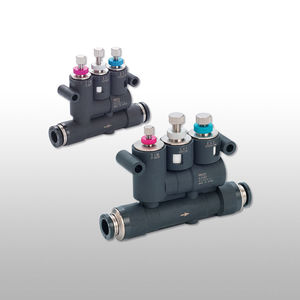

DN: 8, 6, 4, 10 mm
Pressure: 0.2 MPa - 1 MPa
Temperature: 0 °C - 60 °C
... Industry's First! It enables same control as the cylinder with shock absorber. (Patent no. 5578502) Shock absorber is not required. Two-stage exhaust flow rate adjustment is realized. By using 2nd stage exhaust speed to be as cushion (brake), controlling ...
NIHON PISCO CO., Ltd.
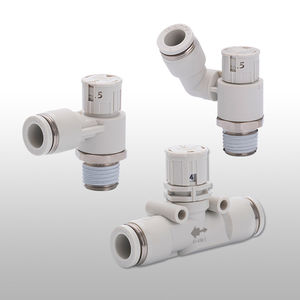
DN: 3 mm - 12 mm
Pressure: 0.1 MPa - 1 MPa
Temperature: 0 °C - 60 °C
... Flow rate can be set with indicator. Reducing the task of initial flow settings or their maintenance / replacement. The scales are on the side (upper / lower) and the top. Flow rate is proportional to the knob turns. 2 types with different flow range ...
NIHON PISCO CO., Ltd.
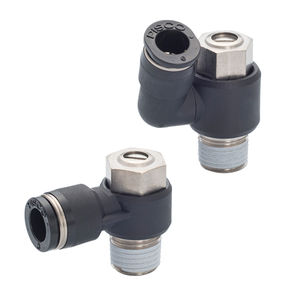
DN: 3 mm - 12 mm
Pressure: 0.1 MPa - 0.9 MPa
Temperature: 0 °C - 60 °C
... unnecessary manual adjustments during the operations. Use a slot screwdriver to adjust the needle (speed adjustment). Design without an external needle for speed adjustment. Approx. 2/3 height of the conventional ...
NIHON PISCO CO., Ltd.
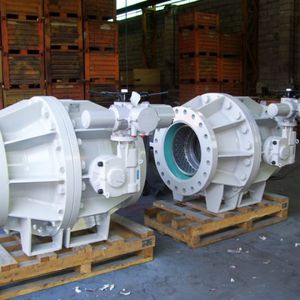

DN: 100 mm - 1,400 mm
Pressure: 2.5 bar - 64 bar
... a very différent excercise pressure. The use of needle valve with the aid of actuators allows to utilize it in control systems with very différent functions. Water flow régulation actuated by needle valve ...
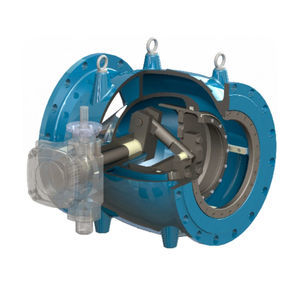

DN: 80 mm - 1,800 mm
Pressure: 10, 40, 16, 25 bar
Temperature: 0 °C - 95 °C
... robust structure and modular design, these valves integrate seamlessly into hydraulic, industrial, and environmental infrastructures. Operating Principle of the Annular Control Valve The annular valve ...
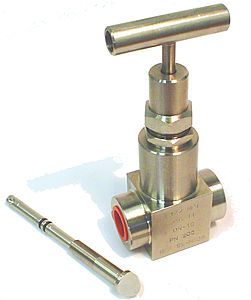
Needle valves are linear devices. The movement of the closure element is perpendicular to the fluid flow.
ApplicationsThese valves are used for precise flow regulation, especially when a low, constant flow is required.
TechnologiesSuch valves have a small orifice with a long, conical seat. The needle-shaped closure element, or plunger fits the seat contours perfectly. Single acting models allow flow control in one direction and free flow in the opposite direction. Double acting valves control flow in both directions.
- Precision
- All-metal construction
- Simplicity
- Stability
- Low flow rate only
the best suppliers