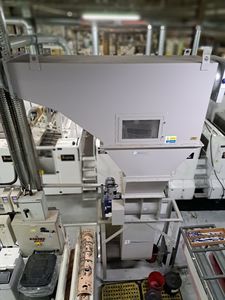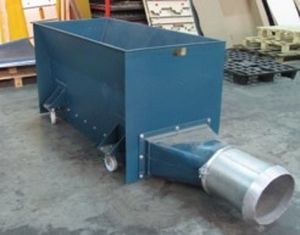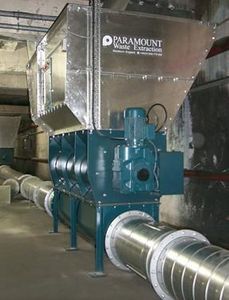
OverviewThe Paramount Rotofeeder is a regulated underfloor waste-transfer system that collects trim, waste and dust from production machines and conveys material into a single high-velocity duct located in a trench beneath processing equipment. It replaces multiple conveyor belts under machines and reduces airborne dust and floor spillages.
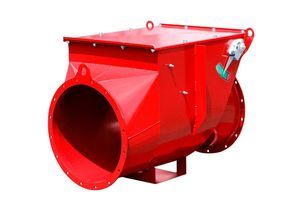
How it worksThe Rotofeeder features an internal rotating paddle assembly with wear-resistant rubber strips at the paddle tips. These strips form rotating sealed voids that move waste into the conveying duct. Feed chutes drop waste directly into the Rotofeeder above the trench to allow close installation at the point of production and minimise spillage and dust release.
Key design features- Regulated transfer into a single high-velocity conveying air duct located in a trench under processing machinery.
- Internal rotating paddle assembly with wear-resistant rubber strips forming sealed conveying voids.
- Rubber strips are flexible to pass unexpectedly large pieces without compromising the conveying air system.
- Capacity is typically specified with margin to handle sudden overloads based on paddle section volume and rotation speed.
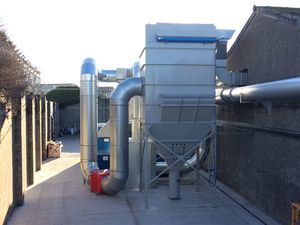
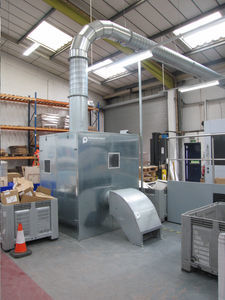
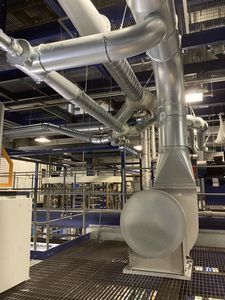
- Fan placement options: upstream of feed-in points for fine dust/small waste, or downstream with a chopper fan to reduce waste size for conveying.
- Option to draw intake air from outside the building (subject to site conditions) to conserve heated internal air.
- Constructed for industrial use with a motorised gearbox mounted on shock-absorbing rubber mounts and an integral motor cut-out for protection.
- Sealed, negative-pressure design contains waste within ductwork to prevent floor release or atmospheric emission.
Operational advantages- One conveying duct can serve multiple feed-in points (typical up to ten), reducing the number of fans and local dust extraction units.
- Eliminates noisy fans adjacent to individual machines and multiple belt conveyors that can jam or spill waste.
- Simplifies the waste-handling system, reducing operating costs, power consumption and maintenance.
- Single slow-moving part in contact with waste minimises wear and lowers the risk of mechanical failure.
- Large-diameter conveying duct reduces blockages and downtime in high-volume production environments.
Benefits- Frees floor space by consolidating services into a single trench.
- Enables easy expansion — additional machines can be integrated without major disruption.
- Improves cleanliness and hygiene, useful for food-quality and sensitive production lines.
Applications / Typical industriesTrim and waste extraction for printing, board, paper, plastics and foil converting and other continuous production environments where underfloor trench conveying is practical.
Technical specifications- Commercial name: Rotofeeder.
- Typical configuration serves up to 10 feed-in points.
- Internal rotating paddle assembly with wear-resistant rubber strips creating sealed conveying voids.
- Design allows passage of larger pieces without compromising downstream conveying.
- Capacity sizing based on paddle volume and rotation speed, usually with overload margin.
- Fan installation configurable: upstream for fine dust/small waste or downstream with chopper fan to reduce waste size.
- Optional external air intake to avoid exhausting heated internal air.
- Motorised gearbox with shock-absorbing rubber mounts and integral motor cut-out.
- Sealed negative-pressure system to contain waste and minimise dust emission.
- Single slow-moving contact part to reduce wear and downtime.