


{{product.productLabel}} {{product.model}}
{{#if product.featureValues}}{{product.productPrice.formattedPrice}} {{#if product.productPrice.priceType === "PRICE_RANGE" }} - {{product.productPrice.formattedPriceMax}} {{/if}}
{{#each product.specData:i}}
{{name}}: {{value}}
{{#i!=(product.specData.length-1)}}
{{/end}}
{{/each}}
{{{product.idpText}}}
{{product.productLabel}} {{product.model}}
{{#if product.featureValues}}{{product.productPrice.formattedPrice}} {{#if product.productPrice.priceType === "PRICE_RANGE" }} - {{product.productPrice.formattedPriceMax}} {{/if}}
{{#each product.specData:i}}
{{name}}: {{value}}
{{#i!=(product.specData.length-1)}}
{{/end}}
{{/each}}
{{{product.idpText}}}
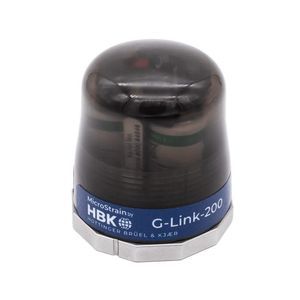

Frequency: 1 kHz
... Product overview
G-Link-200 is a wireless 3-axis
accelerometer rated IP67 for reliable operation in dusty, wet or outdoor industrial environments. It is designed for impact, motion, dynamic vibration and tilt monitoring and ...
Hottinger Brüel & Kjaer
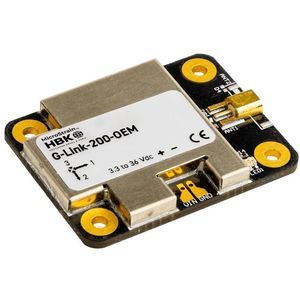
Frequency: 1 kHz
... Product overview
G-Link-200-OEM is a compact wireless 3-axis
accelerometer designed for OEM integration. It provides synchronized sensing for vibration, impact, motion and tilt with ultra-low-noise data suitable for embedded ...
Hottinger Brüel & Kjaer

Acceleration range: 5,000 m/s²
Frequency: 0.1 Hz - 10,000 Hz
... Triaxial Piezoelectric Charge Accelerometer designed for general purpose vibration measurements on larger structures. Type 4321 is a triaxial, piezoelectric, DeltaShear®, Unigain‚ accelerometer with three independent ...
Hottinger Brüel & Kjaer


Acceleration range: -20 m/s² - 20 m/s²
Frequency: 0 Hz - 100 Hz
... Acceleration sensors reliably monitor acceleration of parts in plants or machinery. Due to the two-piece mounting concept, F99 series acceleration sensors from Pepperl+Fuchs are extremely robust and also suited for harsh ...


Frequency: 0 Hz - 16,000 Hz
... Systems for vibration monitoring and diagnostics – accelerometers Accelerometers of the VSA series are used for accurate vibration measurement. They measure the rms value of the acceleration on non-rotating component ...
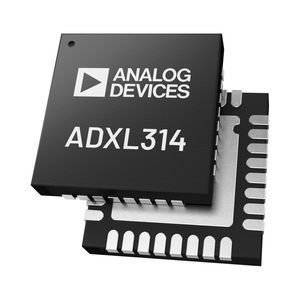

Frequency: 3,200 Hz
... The ADXL314 is a ±200 g range, 13-bit resolution, 3-axis digital accelerometer. The digital output data is formatted as 16-bit, twos complement data and is accessible through a serial peripheral interface (SPI), 3-wire or 4-wire, or an ...
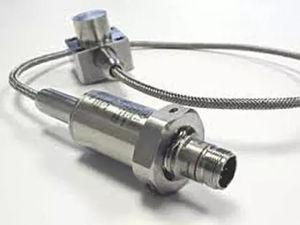

Acceleration range: 785 m/s²
Frequency: 15 Hz - 10,000 Hz
... The 330450 High Temperature Acceleration System (HTAS) segregates the sensing element from signal conditioning electronics with the two permanently connected via hardline cable. Withstands high heat Sensing head can be installed on surfaces up to ...
Condition Monitoring and Protection


Acceleration range: -490 m/s² - 490 m/s²
Frequency: 0.5 Hz - 10,000 Hz
... Sensitivity: (±10%)100 mV/g (10.2 mV/(m/s²)) Broadband Resolution: 0.00015 g rms (0.0015 m/s² rms) Sensing Element: Ceramic Weight: 0.20 oz (5.8 gm) Specification Notes [1] Zero-based, least-squares, straight line method. [2] Typical. [3] Transverse ...
PCB Piezotronics GmbH


... Parker's ACC series is a family of inertial sensors for mobile and other applications. The sensors are analog output and have an inertial range of up to ±1.5G. Two versions are offered to that can be used to indicate acceleration or level position. The ...


Acceleration range: 0 m/s² - 400 m/s²
Frequency: 10 Hz - 10,000 Hz
... function / Peak value measurement / Handheld device for mobile vibration measurement / Automatic ISO 10816-3 evaluation The accelerometer is ideal for maintenance workers to quickly check vibrating parts, machines and systems. This vibration ...
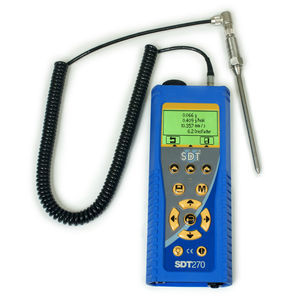

The SDT270 Acceleration Interface is ideally designed with a good quality functionality and performance intended to be used for specific purposes. The system is capable of measuring, alarming and performing vibration data analysis in several applications. ...
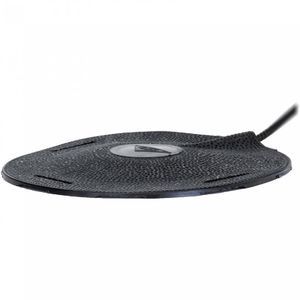

... Product overviewThe KS963B.100-S is a seat pad accelerometer designed for measurement of human exposure to whole-body vibration. It is a piezoelectric accelerometer with integrated electronics providing an analog IEPE-compatible ...
ASC
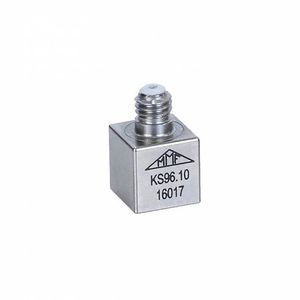
Acceleration range: -4,903 m/s² - 4,903 m/s²
Frequency: 0.4 Hz - 12,000 Hz
... Overview
The KS96B.10 is a compact uniaxial piezoelectric IEPE
accelerometer designed for demanding test and measurement applications. It delivers an analog voltage output and is optimized for structural and modal analysis in ...
ASC
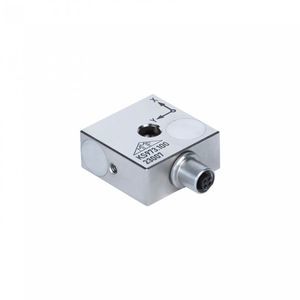
Acceleration range: -588 m/s² - 588 m/s²
Frequency: 300 Hz - 7,000 Hz
... Overview
Triaxial IEPE analog
accelerometer using piezoelectric (PZT) technology with integrated electronics and TEDS (DS2431). Compact and lightweight, designed for demanding test and measurement tasks including structural ...
ASC


Frequency: 0.5 Hz - 5,000 Hz
... Advanced vibration measurement on 3 axes (X, Y, Z) and machine efficiency for protection and condition monitoring CUBE collects and analyzes real-time vibration data, helping shift from reactive to predictive maintenance strategies, reducing unplanned ...
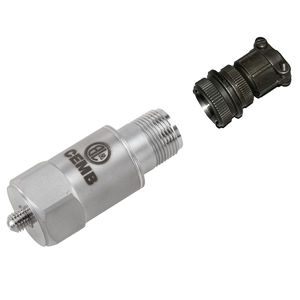
... Piezoelectric Vibration sensors TA series accelerometer transducers The Vibration sensors TA Series seismically measure absolute machine vibrations by directly fastening the vibrating part on the supports. They provide an output signal ...
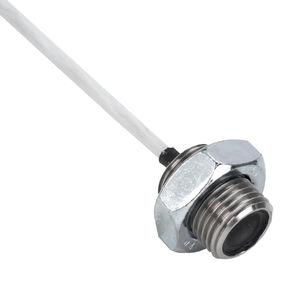
Frequency: 0.1 Hz - 10,000 Hz
... Piezoelectric acceleration sensor Piezoelectric acceleration sensor for absolute vibration monitoring. Small dimensions acceleration sensor particularly suitable for application on electro-spindles ...


Acceleration range: 2 m/s² - 40 m/s²
Frequency: 2.4 kHz - 5.5 kHz
... environmental performance (impact, vibration and temperature) ▶ PRODUCT INTRODUCTION The AKF390 triaxial accelerometer is a voltage output type accelerometer independently developed and produced by RION Technology, which can be used in many fields such as vibration ...
SHENZHEN RION TECHNOLOGY CO.,LTD

Frequency: 2.4 kHz - 5.5 kHz
... MEMS DIGITAL ACCELEROMETER ▶ FEATURE ★ Three-axis (X、Y、Z) ★ output: RS232/RS485/TTL ★ power voltage: 9~36V ★ work temp: -40°C to +85°C ★ Storage temp: -40°C ...
SHENZHEN RION TECHNOLOGY CO.,LTD
Acceleration range: -392 m/s² - 392 m/s²
Frequency: 0 Hz - 1,000 Hz
... Product description
The AKM390 is a three-axis MEMS
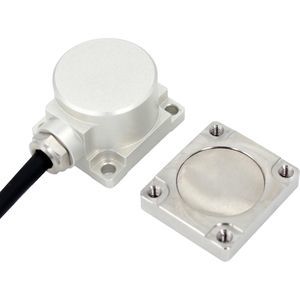
accelerometer with analog voltage output designed for industrial vibration and impact measurement. It integrates a single‑crystal silicon capacitive sensor, a low‑power ASIC ...
SHENZHEN RION TECHNOLOGY CO.,LTD


... The Polytec VibroOne® laser Doppler vibrometer is the one-box solution for non-contact vibration measurement. With VibroOne® you analyze acoustics, dynamics and vibration issues in both R&D and industrial quality control with laser precision. VibroOne® ...
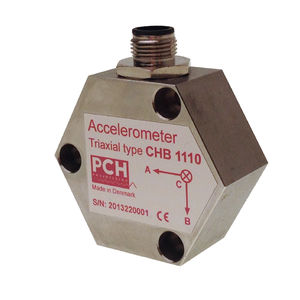

... We offer two 3-directional low frequency accelerometers CHB 1110 (6g) or CHB 1126 (16g) for seismic and structural monitoring of vibrations in machinery or buildings. CHB 1110 and CHB 1126 have a M12 8-pole connector and are suitable ...
PCH Engineering A/S
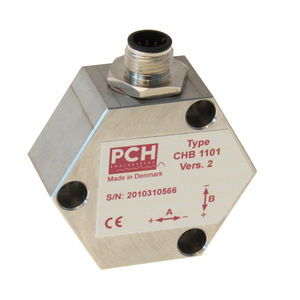
In addition to the internal sensors the PCH 1026 can also be connected to both one, two and three directional external sensors like the CHB 1102/17 and the CHB 1101. When using these options, the monitor will be able to monitor tasks like nacelle differential ...
PCH Engineering A/S

In addition to the internal sensors the PCH 1026 can also be connected to both one, two and three directional external sensors like the CHB 1102/17 and the CHB 1101. When using these options, the monitor will be able to monitor tasks like nacelle differential ...
PCH Engineering A/S
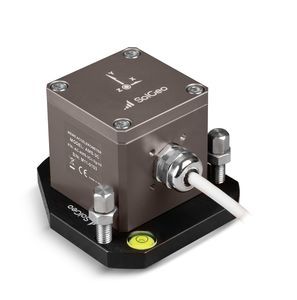

Acceleration range: 19 m/s² - 49 m/s²
Frequency: 0 Hz - 700 Hz
... AMS MEMS seismic accelerometer with high sensitivity suitable for any environmental condition and designed for the measurement and study of low intensity accelerations in the range 0-700Hz. AMS models are high-sensitivity sensors designed ...
SOLGEO SRL
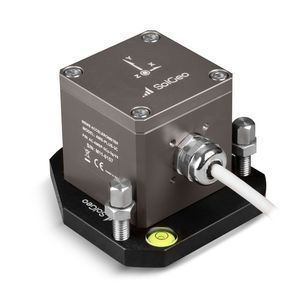
Acceleration range: 60 m/s² - 100 m/s²
Frequency: 0 Hz - 500 Hz
... AMS-PLUS MEMS seismic accelerometer with high sensitivity suitable for any environmental condition and designed for the measurement and study of low intensity accelerations in the range 0-500Hz. AMS-PLUS models are high-sensitivity sensors ...
SOLGEO SRL

Acceleration range: 20 m/s² - 79 m/s²
Frequency: 0 Hz - 500 Hz
... AMD MEMS strong motion seismic accelerometer suitable for any environmental condition and designed for vibration measurement of bridges and viaducts. Solgeo has developed this triaxial mems accelerometer with performances ...
SOLGEO SRL
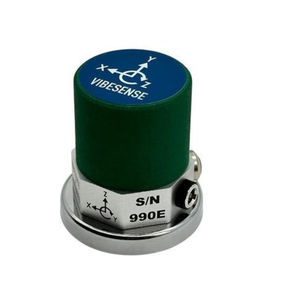

Acceleration range: -392 m/s² - 392 m/s²
Frequency: 1 Hz - 1,000 Hz
... br>VibeSense Tri-axial is a wireless, rechargeable tri-axial accelerometer designed for condition monitoring of rotating and industrial machinery. It integrates a MEMS tri-axial accelerometer with an onboard processor ...
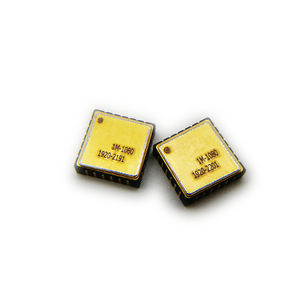

Acceleration range: -100 m/s² - 100 m/s²
Frequency: 100 Hz - 100 Hz
Gyro100-4000 gyroscope is a silicon based MEMS gyroscope independently developed by BEWIS, which has completely independent intellectual property rights.Small size ceramic package, with high precision, wide range, large impact resistance, wide temperat
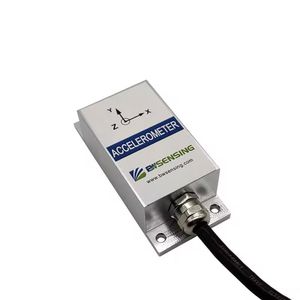
Acceleration range: -15 m/s² - 15 m/s²
Frequency: 100 Hz
... AS400 is a high-sensitivity low-drift digital output tri-axis acceleration sensor developed by BEWIS Sensor. It is suitable for different industrial fields such as vibration monitoring and impact testing. Technical Specifications: Measurement ...
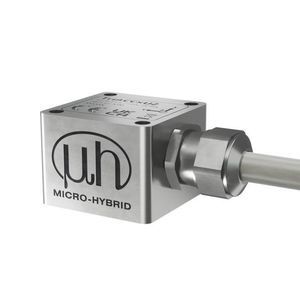

Acceleration range: -78 m/s² - 78 m/s²
Frequency: 0 Hz - 0 Hz
... Short description
The TriACCxU8 is a compact triaxial MEMS
accelerometer in a stainless-steel housing, intended for acceleration measurement in industrial and railway applications. Standard measurement range is ±8 g; alternative ...
Micro-Hybrid Electronic GmbH
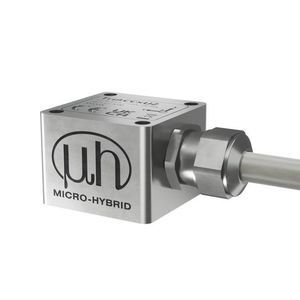
Acceleration range: -392 m/s² - 392 m/s²
...
The TriACCxU40 is a triaxial
accelerometer with voltage output and a ±40 g measurement range, designed for industrial and railway applications.
Key facts
- Triaxial MEMS accelerometer in
Micro-Hybrid Electronic GmbH
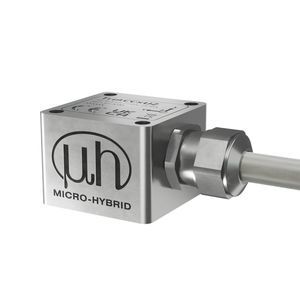
Acceleration range: -39 m/s² - 39 m/s²
... Short description
Triaxial MEMS
acceleration sensor with voltage output, measuring range ±4 g, stainless steel housing, dimensions 20 × 27 × 27 mm. Optional 4-20 mA current output and IP67 cable version. Type-tested to DIN EN ...
Micro-Hybrid Electronic GmbH


... Discover a new vibration analysis experience unique in the world. The VSHOOTER®+-3-WL is the ideal equipment for predictive maintenance of rotating machines. This is a vibration analyzer that works with a wireless triaxial sensor then a rugged smartphone ...

Frequency: 350 Hz - 800 Hz
... ER-QA-03F series quartz flexible accelerometer is a compact, high temperature and vibration resistant accelerometer. The product has excellent repeatability, start-up performance, high temperature and vibration resistance ...
SHAANXI ERICCO INERTIAL TECH. CO., LTD
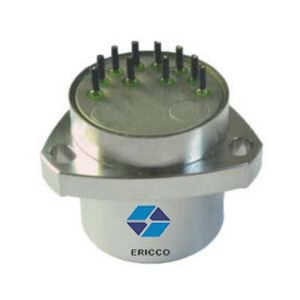
Frequency: 400 Hz - 800 Hz
... Introduction
ER-QA-03A High Performance Quartz
Accelerometer with high reliability, is mainly used in the inertial measurement and test system in the aerospace, aviation fields. It can carry out static test and dynamic ...
SHAANXI ERICCO INERTIAL TECH. CO., LTD
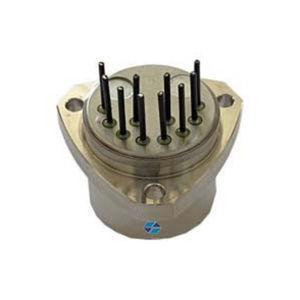
Frequency: 0 Hz - 800 Hz
... ER-QA-01A Aerospace Quartz Accelerometer with high precision is used in carrier's microgravity measuring system, inertial navigation system, static angle measurement system. Features High Precision High Performance Specifications 1.Bias ...
SHAANXI ERICCO INERTIAL TECH. CO., LTD
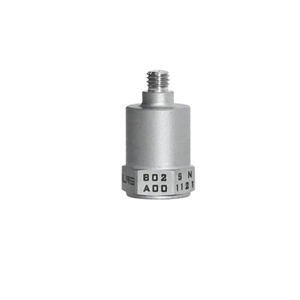

Frequency: 1.2 Hz - 12,000 Hz
... General Purpose IEPE Accelerometer Uniaxial Sensitivity: 10mV/g Range: ±500g Temp Range: -40~120°C Connector: Top Mount: 10-32/M5 Female Sensitivity (mV/g) - 10 Range (g) - 500 Broadband Resolution (g rms) - 0.001 Linearity ...
LNS Dynamics LLC
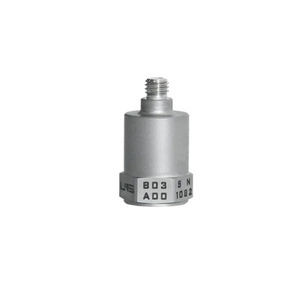
Frequency: 1 Hz - 10,000 Hz
... General Purpose IEPE Accelerometer Uniaxial Sensitivity: 20mV/g Range: ±250g Temp Range: -40~120°C Connector: Top Mount: 10-32/M5 Female Sensitivity (mV/g) - 20 Range (g) - 250 Broadband Resolution (g rms) - 0.0005 Linearity ...
LNS Dynamics LLC
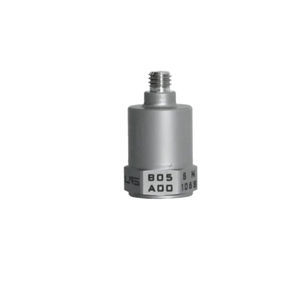
Frequency: 1 Hz - 8,000 Hz
... General Purpose IEPE Accelerometer Uniaxial Sensitivity: 50mV/g Range: ±100g Temp Range: -40~120°C Connector: Top Mount: 10-32/M5 Female Sensitivity (mV/g) - 50 Range (g) - 100 Broadband Resolution (g rms) - 0.0002 Linearity ...
LNS Dynamics LLC
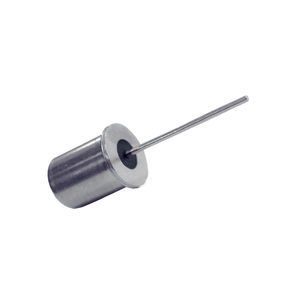

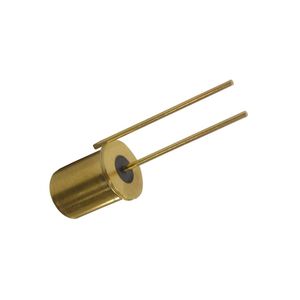
... Contact Form/Style: Normally Open Switching Voltage: 24Vdc Max. Switching Current: 0.25A Max. Switching Capacity: 3VA Max. Activation Level: 3.0-9.0G Contact Resistance: 20 Ohms Max. Size: Over All Length: 0.730in (18.5mm) Diameter: 0.190in (4.7mm) Electrode ...
The Comus Group
Acceleration range: 98 m/s² - 146 m/s²
The ASLS -15 acceleration switch is the normally open contact type. Its contact displays a maximum resistance of 10ohms and is activated at levels of 10.0 to 14.9G. It provides a maximum switching capacity of 5VA. Its maximum voltage and current requirements ...
The Comus Group
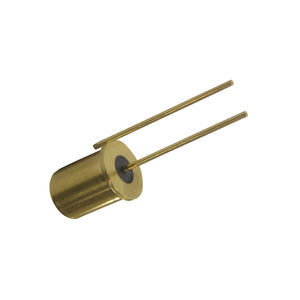
... Contact Form/Style: Normally Open Switching Voltage: 24Vdc Max. Switching Current: 0.25A Max. Switching Capacity: 5VA Max. Activation Level: 10.0-14.9G Contact Resistance: 10 Ohms Max. Size: Over All Length: 0.709in (18.0mm) Diameter: 0.181in (4.6mm) Electrode ...
The Comus Group


Acceleration range: 20 m/s² - 98 m/s²
Frequency: 0 Hz - 800 Hz
... Available in four versions (measurement range: ±2g or ±10g, mounting process: screw or magnetic), the BeanDevice® 2.4GHz AX-3D XRange is a wireless vibration sensor with built-in data logger. Characterized by a waterproof (IP67/Nema 6) and a lightweight ...
BeanAir GmbH
Acceleration range: 12 m/s²
Frequency: 10 Hz
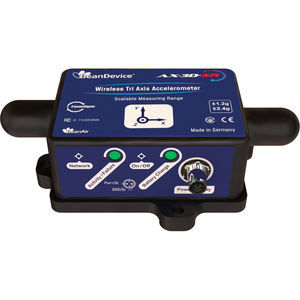
... The BeanDevice® 2.4GHzAX-3D SR is a high-performance wireless vibration sensor with a scalable measuring range (±1.2G and ±2.4G with automatic range adjustment depending on the application). It offers a high level of precision (±0.7mg for ±1.2G range, ...
BeanAir GmbH

Acceleration range: 20 m/s² - 99 m/s²
Frequency: 100 Hz
... well as a tiny radome Omni antenna enabling a maximum wireless range of 200 meters (L.O.S.), this outstanding ULP WIFI accelerometer is dedicated to Structural Health Monitoring, Condition Monitoring and many kind of industrial monitoring ...
BeanAir GmbH
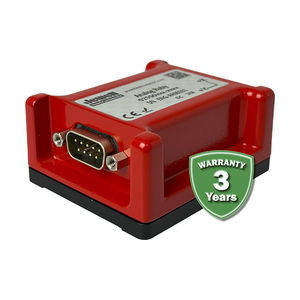

... The NEW Ruby MEMS accelerometers represent the next generation of high-performance inertial sensors from Jewell Instruments. With an improved Price-Performance, the new Ruby inertial sensors offer improved resolution, faster frequency ...
Jewell Instruments

Frequency: 200 Hz
... The ASB Series is an angular accelerometer developed by Jewell Instruments. It is mainly used for mechanical, business and sensing applications. This unit is built with protection rating of IP 65. It features a 200 Hz maximum bandwidths, ...
Jewell Instruments

Frequency: 200 Hz
... The Jewell ASM Series Angular Accelerometer is designed with a 1.05" cube housing size structure that is capable to produce a ± 15 standard input voltage and a 200 Hz bandwidth. It can also produce an input that ranges from ±200.0 to ...
Jewell Instruments


... Combining our accelerometers into a new 3-axis inertial box, used by the worlds leading WRC, F1 and WEC teams. Possible configurations are as follows: - 3 x gas accelerometers. - 2 x capacitive accelerometers, ...
TEXYS

Acceleration range: -196 m/s² - 196 m/s²
Frequency: 1,000 Hz
... lightweight class-leading 3 axis accelerometer. Temperature compensation to 80°C allows our customers an easy installation even in severe conditions. Product Description Compact and lightweight class-leading 3 axis accelerometer. ...
TEXYS

Acceleration range: -490 m/s² - 490 m/s²
Frequency: 1 kHz
... Compact and lightweight class-leading 2 axis accelerometer with a modular design allowing integration with other single or twin axis accelerometers and gyroscopes. Temperature compensation to 80°C allows our customers ...
TEXYS
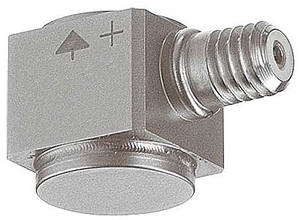
Accelerometers are devices which are used to measure the linear acceleration of an object. They also can be used to measure and detect vibration and inclination.
ApplicationsAccelerometers are used in industry to measure the vibration on vehicles, machines, and buildings.
Other applications include:
- measuring seismic activity
- inclination for aircraft instrumentation
- hospital bed angle gauges
- inclination indicators on sail boats
- safety airbag release in automobiles
There are several different types of accelerometers found in industry today. They vary by sensor type, which can be:
- capacitive
- piezoelectric
- piezoresistive
- Hall effect
- magnetoresistive
When selecting an accelerometer, be sure to specify whether you would like analog or digital outputs. This will depend on the type of hardware used to communicate with the accelerometer.
Other specifications include the number of movement axes and the required accelerometer sensitivity.
the best suppliers