

- Power Transmission - Mechanical components
- Motor and Motor Control
- AC servomotor
- Zhejiang Xinli Electric Technology Co., Ltd.

- Products
- Catalogs
- News & Trends
- Exhibitions
AC servo motor 80ST-M0 series220 Vcompactsmall

Add to favorites
Compare this product
Characteristics
- Type
- AC
- Voltage
- 220 V
- Configuration
- compact, small
- Protection class
- IP65
- Number of poles
- 2-pole
- Applications
- for robotics, for machine tools
- Other characteristics
- precision, motion control
- Power
0.4 kW, 0.73 kW, 0.75 kW, 1 kW
(0.54 hp, 0.99 hp, 1.02 hp, 1.36 hp)- Intensity
2 A, 3 A, 4.4 A
- Torque
1.27 Nm, 2.39 Nm, 3.5 Nm, 4 Nm
(0.936704 ft.lb, 1.762774 ft.lb, 2.581468 ft.lb, 2.950249 ft.lb)- Rotational speed
2,000 rpm, 2,500 rpm, 3,000 rpm
(12,566.3706 rad.min-1, 15,707.9633 rad.min-1, 18,849.5559 rad.min-1)
Description
Servo motor refers to the electric motor that drives the operation of mechanical elements in the servo system.
It is a controllable mechanical electromagnetic device for mechanical energy conversion and signal conversion in the
precision motion control.
A servo motor is a microspecial motor used as an actuator in an automatic control device. Its function is to convert the angular displacement or angular speed of an electrical signal into a rotating shaft. The servo motor, also known as an executive motor, is used as an actuator element in the automatic control system to convert the received electrical signal into an angular displacement or angular speed output on the motor shaft.
"Servo motor" can be understood as a motor that absolutely follows the control signal command: the rotor is still before the control signal is sent; the rotor rotates immediately when the control signal is sent; and the rotor can stop immediately when the control signal disappears.
Low maintenance requirements: Servo motors are often designed to operate for long periods of time without the need for maintenance or repairs, which can help reduce downtime and increase productivity.
Versatility: Servo motors can be used in a wide range of applications, from robotics and automation to industrial machinery and aerospace.
Catalogs
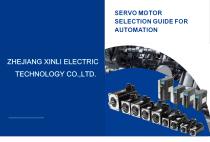
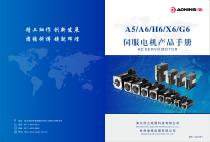
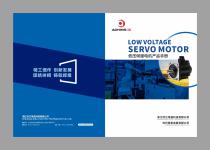
Exhibitions
Meet this supplier at the following exhibition(s):

Other Zhejiang Xinli Electric Technology Co., Ltd. products
Servo Motor


Related Searches
- Electromotor
- Direct current motor
- Synchronous motor
- AC electromotor
- Multipole motor
- Electric gearmotor
- Induction motor
- BLDC motor
- Motor for industrial applications
- 3-phase motor
- Servo motor
- 4-pole electromotor
- Ultra high-efficiency motor
- 2-pole electromotor
- Ultra-compact motor
- Servo-amplifier
- 380 V electromotor
- Permanent magnet motor
- Right angle gearmotor
- Induction motor
*Prices are pre-tax. They exclude delivery charges and customs duties and do not include additional charges for installation or activation options. Prices are indicative only and may vary by country, with changes to the cost of raw materials and exchange rates.